Trump-era overtures revive old shale dreams — and old doubts — as Islamabad weighs geopolitics against geology
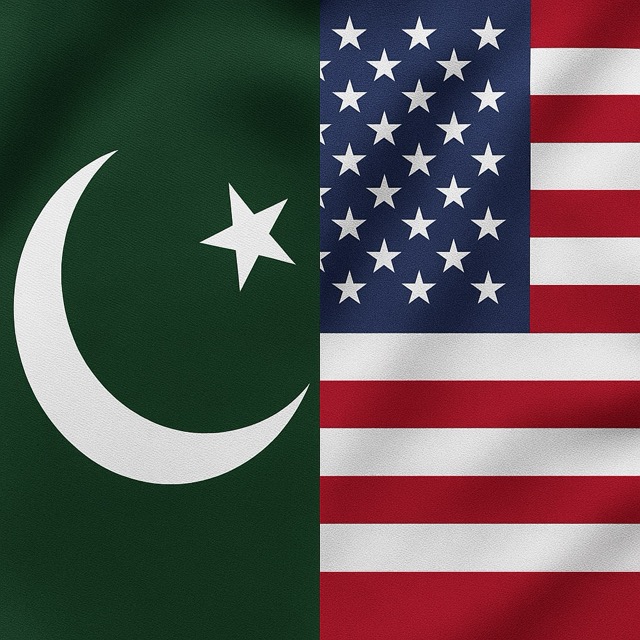
Islamabad/Washington
When President Donald Trump declared that the United States would help Pakistan develop its “massive oil reserves,” the message landed in Islamabad with a mix of curiosity, skepticism and political theater. Pakistan is hungry for energy investment, but its proven oil endowment is small, its production is declining, and the last big exploration wave — from offshore dreams to shale ambitions — largely fizzled. The White House announcement, bundled with a new trade understanding and talk of American companies “lining up,” has revived a long-running question: is there real oil under Pakistan that can be tapped at scale, or is Washington’s plan more about strategy than geology?
For Pakistan, the timing is tantalizing. The country’s factories and refineries are still wrestling with imported crude bills and rolling shortages, while the rupee-denominated cost of energy continues to feed inflation and public anger. Local crude output has trended down for a decade, leaving refiners dependent on Middle Eastern cargoes and sporadic Russian barrels. Any credible path to new domestic barrels would be politically golden. But few in Pakistan’s petroleum bureaucracy can say where the “massive” reserves cited in Washington actually are — or why they would suddenly be easier to extract in 2025 than they were five or ten years ago.
The kernel of truth behind the hype sits in old technical studies. A U.S. Energy Information Administration assessment a decade ago flagged Pakistan’s Lower Indus Basin — formations like the Sembar Shale and the Ranikot — as holding billions of barrels of technically recoverable shale oil, alongside significant shale gas. Those estimates electrified Islamabad at the time, prompting workshops, pilot bids and grand speeches. But “technically recoverable” is not the same as commercially viable. The rock is complex, water is scarce, infrastructure is patchy, and the cost of capital for long-cycle unconventional projects in Pakistan is punishing. When global oil prices softened and security risks persisted, the momentum faded.
Industry veterans also remember the offshore saga. In 2019, a high-profile consortium drilled the Kekra-1 well in the Arabian Sea amid rumors of a super-giant find. The result was dry. Since then, onshore campaigns have yielded incremental successes but nothing approaching a field that would redefine Pakistan’s energy map. In private, many Pakistani geologists describe the resource as “real but stubborn” — promising on paper, unforgiving in practice.
So why is Washington pushing now? U.S. officials frame it as economic statecraft: a way to deepen ties with a strategically located partner while mobilizing American capital and technology. The pitch to U.S. firms sounds familiar: first-mover advantage in frontier basins, optionality on shale, and a friendlier regulatory lane under a new trade understanding. In public, Trump has added a geopolitical flourish, even suggesting that one day Pakistan could export oil to India — a provocation as much as a prediction given the chill in U.S.–India ties and the fraught state of India–Pakistan relations.
For Islamabad, the fine print matters more than the flourish. Pakistan’s energy planners are juggling three hard constraints: economics, security and sanctions. The country’s most shovel-ready supply project remains the long-stalled Iran–Pakistan gas pipeline, which has run into U.S. sanctions policy for years. Balochistan and Khyber Pakhtunkhwa — home to much of the onshore potential — still face insurgent risk. And even if shale were to be unlocked, Pakistan would need water management, service companies, pipelines, storage and pricing reforms — the invisible plumbing that turns rock into revenue.
In boardrooms, the calculus is equally sober. Shale, once synonymous with fast-cycle growth in the United States, is a slower, more capital-intensive proposition in places without dense infrastructure or deep domestic service markets. The timeline from seismic to first oil can stretch across election cycles. Investors want fiscal certainty — royalties, corporate tax, and repatriation rules that won’t swing with politics — and credible guarantees on security. Even then, Pakistan competes for risk capital against Brazil’s pre-salt, Canada’s oil sands, Argentina’s Vaca Muerta, Guyana’s Stabroek, and a resurgent U.S. patch — all with clearer above-ground conditions.
Still, the White House megaphone has had an effect. Pakistani officials report a spike in inbound queries from mid-tier E&Ps and oilfield-services firms sniffing around the Lower Indus acreage and mature onshore basins. Some see a pragmatic path: start with workovers, artificial lift, and secondary recovery in tired fields; test a handful of shale pilot wells with cost-sharing and tax holidays; and overhaul pipeline and storage bottlenecks that throttle refinery throughput. In parallel, they argue, Pakistan should pull cash out of wasteful subsidies and ring-fence it for transmission upgrades and environmental safeguards around water use — lessons learned, sometimes painfully, in the U.S. shale boom.
Domestic politics will shape the outcome as much as subsurface realities. Any move perceived as carving out sweetheart deals for foreign firms will meet nationalist pushback. Baloch groups demand a greater share of resource revenue and local hiring; without visible benefits, sabotage risk rises. Environmental advocates warn that doubling down on oil risks locking Pakistan into higher emissions and climate vulnerability just as floods and heatwaves are intensifying. The counter-argument from the energy ministry: Pakistan can’t transition away from hydrocarbons it doesn’t yet have; if managed well, incremental domestic barrels could replace dirtier fuel oil imports, cut the import bill and buy time to scale gas, solar and hydropower.
There is also the India question. Trump’s aside about Pakistani oil flowing east was read in New Delhi as a jab amid tariff spats and U.S.–India friction over discounted Russian crude. For Islamabad, the idea of exporting to its rival is politically radioactive today, though pipelines and power lines have a way of reshaping politics over decades. In the near term, a more plausible outlet would be import substitution at home, not exports abroad.
What would success actually look like? Not a gusher that transforms Pakistan into an oil power overnight, but a sequence of modest wins: a few thousand barrels a day of incremental onshore oil from enhanced recovery, a small cluster of commercially proved shale wells, better utilization at refineries due to more predictable crude supply, and a gradual decline in the dollar value of oil imports. Measured that way, the bar is achievable — if policy holds steady and security allows fieldwork to proceed.
What would failure look like? A replay of the last boomlet: splashy MOUs, exploratory wells drilled in a rush, cost overruns, and then a quiet wind-down as investors migrate to easier barrels elsewhere. The risk is that the promise of “massive reserves” morphs into a political slogan that crowds out the harder work of reform — from fixing circular debt to modernizing pricing and permitting — that would make any discovery replicable and bankable.
Pakistan’s energy story has always been a tug-of-war between ambition and constraint. Washington’s new plan, and the attention it has brought, could be the catalyst for a smarter version of that story: data-led exploration, transparent contracts, serious community engagement, and clear-eyed timelines. Or it could be another chapter in a genre Pakistan knows too well — headlines today, heartburn tomorrow. The geology will not change; the policy choices can. In the coming months, watch for the quiet signals that matter: whether Islamabad publishes a shale pilot framework with credible water and environmental safeguards; whether U.S. mid-caps actually bid on blocks; whether security escorts become routine rather than exceptional; and whether the import bill finally bends. Until then, “massive” remains a promise measured more in paragraphs than in barrels.


 The Tower Post