As President Trump’s second-term reforms recast federal disaster aid, court fights, staffing tumult and a looming storm surge test America’s emergency backstop.
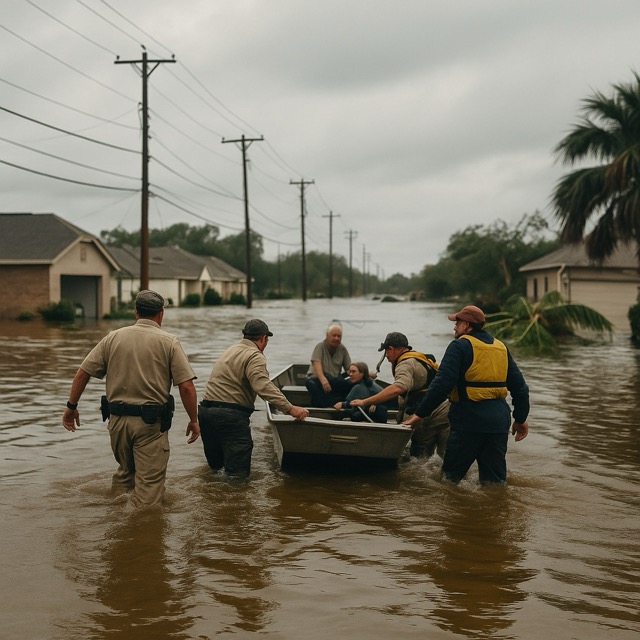
The Atlantic is warming, the tropics are churning, and the United States’ disaster safety net is being rewired mid-storm. With peak hurricane season now underway—and one major hurricane, Erin, already having spun across the basin in mid‑August—the Federal Emergency Management Agency faces its sternest test since Katrina. But after seven months of upheaval under President Donald Trump’s second term, emergency managers, local officials and even FEMA’s own staff are asking whether the agency still has the muscle and mandate to deliver when catastrophe strikes.
Trump began the year by ordering up a FEMA Review Council to reassess the agency’s scope and speed. Public meetings have emphasized a philosophy of “locally executed, state managed, federally supported” disaster response—coupled with ideas like block grants and parametric insurance—that would shift more responsibility to states while slimming Washington’s role. Supporters say the goal is to cut red tape and get money moving faster. Skeptics hear something else: a prelude to hollowing out the federal backstop that communities depend on when they are overwhelmed.
Leadership churn has deepened the anxiety. In May, the acting FEMA administrator was ushered out days after telling lawmakers he opposed eliminating the agency. He was replaced on an acting basis by David Richardson, a former Marine Corps officer and Homeland Security official with scant disaster‑management experience who, as of August, has continued to juggle FEMA leadership with a second portfolio overseeing the department’s Countering Weapons of Mass Destruction office. On Capitol Hill, even typically supportive Republicans have quietly pressed the White House to nominate a seasoned emergency manager before the storms stack up.
Policy reversals have been just as dramatic. In March, FEMA formally rolled back the Federal Flood Risk Management Standard for federally funded projects—a climate‑era safeguard meant to keep new construction out of harm’s way—citing the President’s January executive order rescinding dozens of rules deemed burdensome. And in the spring, the administration moved to terminate BRIC, the Building Resilient Infrastructure and Communities program, which for years seeded levees, drainage upgrades and home buyouts before disasters hit. States and cities sued; in early August a federal judge blocked the administration from diverting billions in BRIC dollars, at least for now. The legal limbo has left dozens of mitigation projects on ice just as heavy‑rain and surge risks rise.
Money and manpower are the other pressure points. FEMA’s Disaster Relief Fund—the checkbook for debris removal, temporary housing and rebuilding—has seesawed for months, with internal reports warning of tight balances absent supplemental appropriations. Meanwhile, morale has frayed. In late August, more than 180 current and former FEMA employees delivered an extraordinary open letter warning that cuts, leadership vacancies and political interference are eroding readiness; several current staff who signed by name were swiftly placed on administrative leave. The agency says it’s rooting out inefficiency, not punishing dissent. The optics, though, are unmistakable: front‑line specialists are waving a red flag as the weather worsens.
Nowhere did the stakes feel more immediate than in Texas, where catastrophic Hill Country flooding around the July 4 weekend killed at least 135 people. State leaders praised first responders and pressed for federal aid, but the response became a political flashpoint after reporting suggested new cost‑control directives slowed early contracting and reimbursement decisions. FEMA leaders disputed the characterization in congressional testimony, calling the operation a model of coordination; local officials and survivors interviewed by regional outlets described days of confusion and a heavy reliance on volunteers. The back‑and‑forth previewed what may become a familiar pattern this season: dueling narratives about speed and competence as communities dig out.
Inside government, the argument is increasingly philosophical. Homeland Security leaders and Review Council co‑chairs have cast FEMA’s evolution as a return to first principles: states lead, the federal government backs them up. Many emergency managers agree in theory—but warn that the country’s disaster burden has outgrown that tidy blueprint. Climate‑juiced rainfall and rapid‑intensification hurricanes routinely overwhelm even well‑resourced states; rural and low‑income communities depend on federal caseworkers, logistics and grants that a block‑grant model could scatter or shrink. “Local control” is a virtue, county officials say, until your tax base is underwater.
Congress, for its part, has moved to seize the pen. A bipartisan bill branded the Fixing Emergency Management for Americans (FEMA) Act would elevate the agency’s status, overhaul its Public Assistance rules and, in some drafts, convert some mitigation aid to formulas that reward risk reduction ahead of landfall. Backers argue that spelling out responsibilities in statute—rather than by executive order—could depoliticize disaster work. Even so, the House and Senate remain divided over how large FEMA should be and where it should sit inside the federal bureaucracy.
The seasonal backdrop is unforgiving. NOAA’s August outlook still points to an above‑normal Atlantic hurricane season, and the National Hurricane Center’s running tally shows six named storms by September 1, including one major hurricane. That’s not a blockbuster pace—but meteorologists caution that most of the season’s power historically arrives from late August through October, when the Atlantic is at its warmest and steering currents can pinball storms toward the Gulf and East Coasts. In other words: whatever FEMA will be this year, it must be that now.
Proponents of the administration’s course insist that is precisely the point. DHS has trumpeted faster debris‑removal timelines and a more assertive deployment of the U.S. Army Corps of Engineers after recent storms, arguing that fewer procedural chokepoints mean boots and bulldozers get moving sooner. Critics counter that speed without safeguards is a false economy—especially if flood‑plain protections are relaxed and mitigation dollars are stranded in litigation. The cost of rebuilding the same neighborhoods after each flood, they say, dwarfs the price of elevating homes, hardening substations and buying out the most repeatedly inundated properties.
What would “gutting” FEMA actually look like on the ground? Veteran field leaders sketch a three‑part risk. First, fewer seasoned logisticians and applicants’ assistance staff means slower intake, inspections and casework when a big disaster hits. Second, if contract approvals and grant draws are recentralized in Washington—or funneled through a small cadre of political appointees—states will struggle to lock in debris and shelter vendors quickly, especially when multiple states are competing in the same supply chain. Third, retreating from pre‑disaster mitigation would all but guarantee that debris piles grow taller with each storm.
Yet not everything is bleak. The emergency‑management community—from rural co‑ops to city engineers—has gotten more sophisticated since Katrina. States have built stronger mutual‑aid compacts and pre‑positioned contracts; private utilities have refined restoration playbooks; local NGOs have become indispensable in getting food and shelter to survivors before FEMA caseworkers even arrive. If Congress can stabilize FEMA’s funding and the White House settles on qualified, empowered leadership, the federal‑state‑local ecosystem can still work.
For families in harm’s way, these governance debates are both abstract and intensely personal. The only measure that matters is what happens in the first 72 hours after landfall or flash flood. Do search‑and‑rescue boats show up? Are shelters accessible to people with disabilities and elders? Are translators on hand? Is there a clear path to temporary housing and rebuilding? Those questions will be answered this autumn by FEMA as it is—not as any stakeholder would prefer it to be. If the agency falters, the political appetite for dismantling it may fade fast. If it excels, reformers will claim vindication. Either way, the season will supply a verdict.
Until then, coastal and inland communities alike are relearning a lesson: preparedness is local, equity must be intentional, and the federal government’s role remains vital when the unimaginable becomes the everyday. FEMA has been remade before—in the ashes of Hurricane Andrew and again after Katrina. In August 2025, with waters rising and tempers high, the question is not whether the agency should change, but whether it will change in time.
—
Sources (selected): AP News reporting on FEMA leadership changes (May 8, 2025); White House and DHS documents establishing and staffing the FEMA Review Council (Jan. 24 and Apr. 28, 2025); FEMA press release on rescinding the Federal Flood Risk Management Standard (Mar. 25, 2025); Federal court orders halting the termination or reallocation of BRIC funds (Aug. 5–6, 2025); FEMA Disaster Relief Fund monthly reports (Aug. 2025); NOAA August hurricane outlook and NHC season summary (Aug. 7 and Sept. 1, 2025); coverage of the July 2025 Central Texas floods and ensuing oversight hearings (July–Aug. 2025).



 The Tower Post