The designer’s death at 91 puts a meticulous succession plan to the test—and could redefine independent luxury.
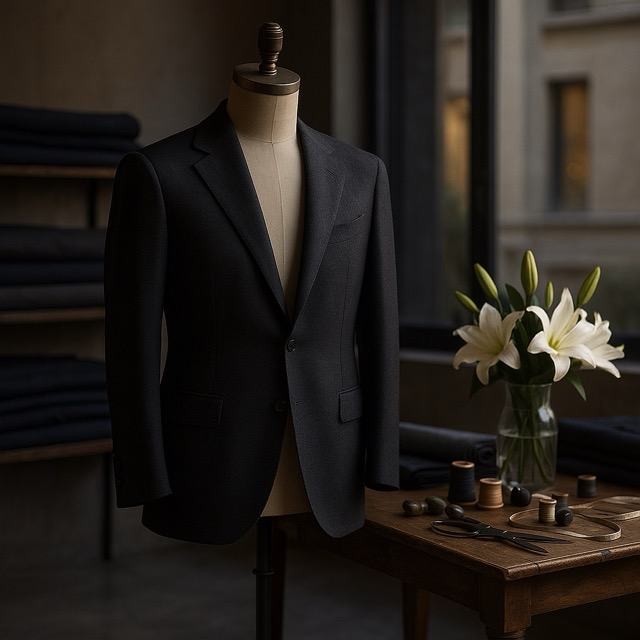
Giorgio Armani died on September 4 at the age of 91, closing a chapter that shaped the very idea of modern elegance. For half a century, the designer turned quiet confidence into a global business—from softly structured jackets and monochrome palettes to fragrances, interiors, hotels and even a storied basketball club. His passing now activates an unusually detailed blueprint for the future of the privately held Giorgio Armani Group. The central question is not whether the brand survives—Armani planned for that—but how faithfully his successors can preserve independence and restraint in a luxury market that rewards speed, scale and spectacle.
Armani founded his label in Milan in 1975 alongside Sergio Galeotti, crafting a new language of tailoring that filtered Italian rigor through a relaxed, lived‑in sensibility. He became a Hollywood habit in the 1980s and 1990s, dressing stars on and off screen while expanding carefully into accessories, beauty (through long‑standing licensing partnerships), home and hospitality. Unlike many peers, he resisted consolidation and stock‑market pressures, maintaining full control and an ethos that prized coherence over growth for growth’s sake. That independence is both the brand’s calling card and its chief strategic dilemma in the post‑Armani era.
A Legacy Engineered for Independence
Years before his death, Armani codified the group’s future. In 2016 he created the Giorgio Armani Foundation to serve as an anchor shareholder and guardian of the house’s principles. Internal bylaws drafted in subsequent years sketch out a conservative governance model: a moratorium on any potential initial public offering for at least five years; strict limits on acquisitions to avoid mission creep; and a board empowered to prioritize product integrity and brand coherence over short‑term metrics. The foundation’s stake was intentionally modest while he lived, but it is expected to expand as his estate is settled, ensuring a stabilizing vote in corporate decisions. In effect, Armani sought to emulate the long‑horizon stewardship associated with Europe’s foundation‑controlled luxury icons while keeping the company unmistakably Italian and independent.
That architecture matters because the gravitational pull of the megagroups has never been stronger. The past two years have tested discretionary spending, slowed China’s recovery, and squeezed profitability across the sector. Armani’s own results reflect the climate: 2024 revenues slipped to roughly €2.3 billion and core profit receded, even as the company maintained a substantial net cash cushion and kept investing in renovations and flagships. The governance he designed buys time—time to keep cadence with the market without surrendering the DNA that made ‘Armani’ a global shorthand for understatement.
Who’s at the Helm Now
Armani leaves no children. Instead, leadership and ownership are set to pass to a tight circle of relatives and longtime lieutenants who have worked beside him for decades. His sister, Rosanna, remains a symbolic matriarch; his nieces, Silvana and Roberta, and his nephew, Andrea Camerana, have held operational and brand roles inside the group; and Leo (Pantaleo) Dell’Orco—Armani’s closest collaborator since the late 1970s—is widely viewed as a linchpin in the handover. Silvana has overseen womenswear; Dell’Orco heads menswear across the main lines; Roberta has acted as the house’s conduit to Hollywood and the entertainment world; and Andrea has worked in sustainability and management capacities. The foundation will sit alongside them as a ballast against abrupt strategic shifts.
Crucially, Armani himself telegraphed a “gradual transition” in recent interviews, describing a careful distribution of creative and managerial responsibilities among this inner circle. That phrasing suggests continuity: the style offices—rather than a single star designer parachuted from outside—are likely to preserve the soft shoulders, muted palettes and human‑scaled luxury that made the brand distinct. Continuity does not mean stasis, however. The next phase will test whether a committee structure can still set the agenda in a social‑media‑accelerated industry that prizes singular personalities and viral moments.
The Numbers Behind the Poetry
Investors and rivals will parse the balance sheet as closely as the runway. The group entered 2025 with healthy liquidity after years of cautious expansion and self‑funded growth. Even with softer demand, particularly in wholesale and parts of Asia, Armani’s net cash position—rare among major fashion houses—offers resilience. That buffer provides the freedom to finish multi‑year store renovations, modernize the digital stack, and selectively upgrade the retail network without courting outside capital. It also gives the new leadership room to calibrate pricing and assortments with less pressure than publicly traded peers confronting quarterly targets.
Beauty remains an essential engine via licensing, while hospitality and interiors extend the brand’s lifestyle promise. These adjacent businesses reinforce the core ready‑to‑wear and accessories lines by staging Armani’s sensibility in the round—from hotel lobbies to fragrance counters. Expect the family‑plus‑foundation governance to keep these businesses aligned rather than chasing unrelated expansions. If the company explores partnerships or minority investments, they will almost certainly be incremental and reversible, consistent with the house’s preference for optionality over irreversible bets.
Scenarios to Watch
First, creative cadence. The women’s and men’s style offices, steered by Silvana Armani and Leo Dell’Orco, are positioned to run the runway collections and diffusion lines with minimal disruption. Watch for subtle evolutions—a widening of the color vocabulary, a renewed push in accessories—rather than an abrupt aesthetic pivot. Second, governance signals. Board appointments and any disclosure about the foundation’s voting rights will reveal how much centralized authority the heirs intend to exercise. Third, distribution and retail. With renovations underway in key flagships, the group may double down on high‑service, high‑productivity stores and tighten wholesale to protect pricing and presentation.
The fourth scenario is capital markets. The internal rules explicitly slow‑walk any talk of an IPO until the end of the decade at the earliest; a sale to a megagroup is even less likely in the near term given the founder’s wishes and the foundation’s role. Instead, expect incremental modernization: data‑driven merchandising, more efficient supply‑chain execution, and measured category pushes—particularly in leather goods—where the brand has permission to grow.
What Won’t Change
Armani built a universe anchored in restraint: the whisper of luxury rather than its shout. Even competitors acknowledge that the brand’s value lies in consistency—tailoring that moves with the body, fluid eveningwear, and daywear that reads as quietly exacting. The risk in any transition is dilution—too many lines, too many capsules, too many collaborations. The structure he designed is meant to prevent that. Consumers should expect the house to continue narrating a particular way of living—pared‑back, urbane, and innately Italian—while the business side takes a deliberately boring approach to strategy. In an era hypersaturated with novelty, that may be the boldest move of all.
In the coming weeks, Milan will grieve and celebrate a life that bridged couture ateliers and stadium lights. The 50th‑anniversary tributes planned for this month will inevitably carry a different charge. Yet the most consequential tribute will be organizational: whether the family‑and‑foundation framework can carry forward a vision that never depended on shock, only on precision. Armani often said that true elegance is not about being noticed, but remembered. The house that bears his name now has the tools—and the mandate—to make that true in business as well as on the red carpet.
Sources: Reuters; Associated Press; Vogue; Business of Fashion; Bloomberg; Vogue Business; Reuters (2016/2023 succession reporting).




 The Tower Post