White House official says an executive order is imminent; move revives a pre 1949 name and ignites a new debate over America’s military identity
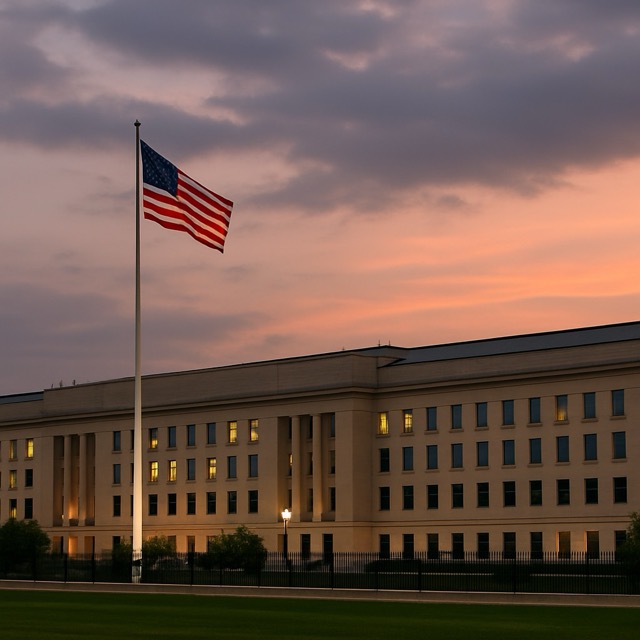
The White House is preparing an executive order that would allow the Pentagon to rebrand the U.S. Department of Defense as the “Department of War,” according to a senior administration official familiar with the plan. The order, expected in the coming days, would authorize the use of the historic name as a secondary title across official communications and ceremonial settings while the administration seeks a permanent change through Congress. The official, who spoke on condition of anonymity because the decision has not been publicly announced, framed the move as part of a broader effort to project what aides call a “warrior ethos” across the defense establishment.
If signed, the order would mark the most consequential symbolic shift at the Pentagon in decades—one that reaches back to the department’s origins. From the Republic’s founding in 1789 until the early Cold War, America ran its military through a Department of War. In 1947 and 1949, post–World War II reforms created the National Military Establishment—soon renamed the Department of Defense—reflecting a new architecture of civilian control, a unified command structure, and a vocabulary emphasizing deterrence and collective security.
Administration allies argue that returning to the old moniker—at least in practice—amounts to truth in advertising. “We should say out loud what our military is for,” said one adviser, echoing language used by senior officials in recent weeks. They contend that the word “defense” invites complacency in an era of hard-power competition with China, Russia, Iran, and other adversaries, and that clarity of mission will strengthen recruiting, readiness, and procurement priorities.
Critics counter that the rebrand risks normalizing perpetual conflict and alienating allies who favor the language of collective defense. They also warn that the practical costs—rewriting doctrine, updating seals and signage, and retooling thousands of digital systems—could dwarf any messaging benefits. Some lawmakers say the administration is overstating its authority: the formal legal name of a cabinet department is set in statute, meaning only Congress can make a permanent change. Any executive action, they argue, would be limited to styling and internal usage.
The expected order would nonetheless have real effects inside the building. Draft guidance reviewed by officials would permit the defense secretary and other senior leaders to use the title “Secretary of War” in certain contexts, direct agencies to adopt the historical name in web headers and press materials, and require a comprehensive plan for a statutory renaming. The Pentagon would also be tasked with delivering a cost estimate for implementing the rebrand across installations, contracts, and enterprise IT.
The push is the latest in a series of cultural interventions by the administration. Earlier this year, Defense Secretary Pete Hegseth moved to reverse several Biden-era initiatives, including aspects of base renaming and diversity programming, arguing they distracted from combat readiness. Supporters see a course correction; opponents call it politicization of the ranks. The “Department of War” branding is now the most visible emblem of that clash.
Outside government, reaction has been swift. Veterans’ groups are divided: some applaud the candor of the older name, while others fear it could stigmatize service members as occupiers rather than defenders. Industry executives, meanwhile, are reading the tea leaves for budget signals. A shift in language rarely moves money on its own, but it can foreshadow emphasis: long-range strike, munitions stockpiles, and warfighting enablers over soft-power initiatives. On Capitol Hill, Republicans appear largely supportive of the president’s authority to re-style executive branch communications, even as they acknowledge that a formal renaming will require a vote. Most Democrats have condemned the plan as costly symbolism that could complicate diplomacy.
Abroad, allies are weighing the optics. NATO capitals have grown accustomed to Washington’s oscillations in tone; a rhetorical pivot toward “war” will be parsed in Brussels and beyond. Some defense analysts point out that several countries historically used “War” ministries before adopting the more anodyne “Defense,” a transition that reflected not only public sensibilities but also the legal evolution of collective security systems. Reversing that linguistic trend, even partially, would be notable.
Legal scholars say the distinction between a rebrand and a renaming is more than semantic. Federal agencies can adopt secondary titles and revise style guides through executive action, but statutory names appear in countless places—from budget accounts and authorization acts to contracting authorities and personnel regulations. Changing those references would require legislation, and even then, agencies would need years to sweep the code and compliance documents.
Inside the Pentagon, planners are already mapping scenarios. Public affairs teams would have to align press releases, social media handles, and seals; human resources systems would need to accommodate title changes; and the Defense Information Systems Agency would inventory where the department’s name sits in code and data schemas. Installation commanders could face near-term choices about signage as headquarters move forward with new branding.
The political calculus is clear enough. For the White House, the prospect of an executive order offers an action-forcing mechanism ahead of the autumn legislative calendar. It also provides a rallying point for supporters who see the post-9/11 era as one in which America too often telegraphed restraint even as adversaries tested red lines. Detractors say the opposite lesson applies—that the United States must husband its legitimacy and that language matters as much as force in winning allies and deterring foes.
Historical resonance is part of the pitch. Advocates note that the United States fought and won its most existential wars under the War Department banner, a period they say embodied clarity of purpose. Skeptics reply that the post-1949 “Defense” framing emerged from hard-earned lessons: that security is as much about alliances, crisis management, and nuclear stability as it is about battlefield victory.
What happens next will turn, in large part, on Congress. Even with sympathetic committee chairs, a formal renaming would consume bandwidth in a crowded session and carry appropriations implications. Swing-district members in both parties may be reluctant to defend a vote that invites attacks about “warmongering” or, conversely, about “weakness” if they oppose it. That uncertainty is one reason the administration appears ready to proceed with a dual-track approach: immediate rebranding by executive action and a longer campaign for statutory change.
Beyond the symbolism, the underlying strategic questions remain. Will the United States invest at the speed and scale required to deter a two-theater challenge? Can the services reform acquisition fast enough to field attritable systems, autonomous swarms, and resilient logistics? Does the force have the people it needs when recruiting remains tight? Whatever the letterhead says, those answers will define America’s military posture—and the stakes—for years to come.
What to watch next
• The exact scope of the executive order and whether it authorizes “Department of War” as a secondary title across agencies.
• Early cost estimates for signage, seals, IT systems, and legal updates—and who pays for them.
• The speed and appetite in Congress for a statutory renaming, and any trade-offs in the defense authorization or appropriations process.
• International responses from NATO and Indo-Pacific allies as they parse the political and policy signals.



 The Tower Post