The world’s biggest stablecoin issuer has quietly piled up billions in bullion and is now eyeing investments across the entire gold supply chain — drawing surprise, skepticism and a new clash between crypto cashflows and old‑school mining.
Tether, the issuer of the USD₮ stablecoin, has held discussions with mining and investment groups about putting money to work across the gold value chain — from mine financing and refining to trading houses and royalty companies — according to four people familiar with the recent talks. The conversations come after the company amassed a large bullion position that it uses as part of the collateral underpinning its stablecoin operations.
Chief executive Paolo Ardoino has openly praised gold, framing it as a complement to bitcoin. At industry events this year he has likened the metal to “natural bitcoin”, while arguing that gold remains a safer asset than any single sovereign currency and a prudent hedge alongside the company’s bitcoin reserves.
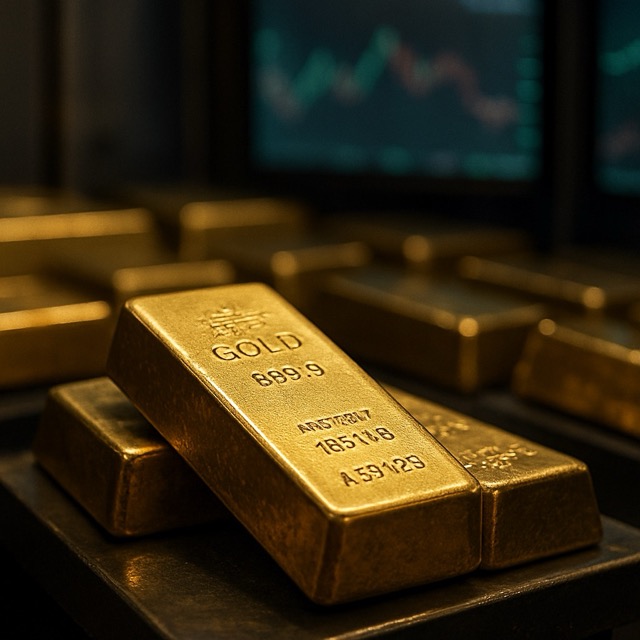
Behind the rhetoric sits a vast stockpile. Tether’s latest financial statements show about $8.7 billion worth of gold bars held in a Swiss vault in Zurich, part of a diversified reserve portfolio that also includes substantial U.S. Treasury exposure and bitcoin. The bullion is not a separate product pitch; it is used in practice as collateral that helps backstop redemption confidence in USD₮.
People close to the company say the new push is aimed at deploying record profits from the stablecoin business into real‑asset cashflows that do not depend on crypto cycles. Royalty agreements and offtake financing — common structures in the mining world — are said to be on the table. Tether has already taken a minority stake in a listed royalty group and has sounded out specialty financiers and junior producers about potential deals.
The approach has startled parts of the conservative gold sector. “They like gold. I don’t think they have a strategy,” said one mining executive who has interacted with the company and asked not to be named to speak candidly. Another commodity industry executive, equally wary, put it more bluntly: “It is the weirdest company I have ever dealt with.”
Skeptics point to Tether’s unconventional profile: a crypto firm headquartered in El Salvador, best known for a dollar‑pegged token that now dominates stablecoin liquidity worldwide. Critics wonder whether the company’s pace and style — rapid, opportunistic, and often secretive — can mesh with an industry where permitting, logistics and community relations can stretch plans across decades.
Supporters counter that the metal and the money are already intertwined. Tether runs XAU₮, a tokenized gold product, and says its bullion exposure provides a natural hedge that aligns with how central banks and many institutional treasuries have behaved in recent years. In that view, allocating profits to royalties and mine finance is less a gamble than a long‑dated way to turn crypto‑era cash generation into inflation‑resistant income.
The attraction of royalties is obvious: rather than operating mines, investors provide upfront capital and in return receive a slice of future production or revenue. In a period when gold prices have repeatedly tested record highs, royalty portfolios can scale quickly without the engineering risk of digging and processing ore. For a cash‑rich balance sheet like Tether’s, royalties and streams offer exposure to upside with defined downside protections.
Yet execution risks are real. Converting crypto profits into mine‑site value means navigating ESG screens, local politics, and the mine‑by‑mine realities of geology and water. It also means competing with incumbent royalty specialists and major producers for quality deals. Several people briefed on the discussions said traditional counterparties have pressed for greater transparency on governance and conflicts, and for clear ring‑fencing between Tether’s reserve assets and any new investment vehicles.
Regulation looms in the background. Stablecoin oversight is tightening across key markets, and critics argue that large, illiquid holdings could complicate redemptions in a stress event. Tether responds that its bullion is a modest share of overall reserves and that its attested surplus capital and liquid Treasuries provide ample buffers. Even so, any deeper foray into the gold chain — especially direct mine finance — will invite a fresh round of scrutiny from both financial and mining regulators.
Strategically, a full‑spectrum gold initiative would mark an inflection point for the industry. Crypto capital, once viewed as flighty, is now targeting decades‑long assets that underpin sovereign reserves. If Tether proceeds, miners that have struggled to tap traditional equity and bank markets could find an alternative spigot — albeit one that arrives with a distinctly new set of expectations on speed, flexibility and digital integration.
The immediate next steps are likely to be incremental: additional royalty stakes, project‑level financings, and tie‑ups with refiners and traders to secure supply and offtake. People familiar with recent talks say the company has canvassed opportunities from West Africa to Latin America, with ticket sizes that start small but could scale quickly if initial partnerships perform.
For now, even those who remain skeptical concede that the firm’s war chest is real — and growing. The combination of net interest on vast Treasury holdings, gains on bitcoin and gold, and rising stablecoin volumes has left Tether with the means to be an unorthodox but formidable player in resources finance. Whether that translates into durable influence in the gold patch will depend on its willingness to communicate, to commit for the long haul, and to operate by the sector’s rules when it counts.
What is clear is that the fault lines between old and new money are shifting. A crypto company with a vault full of Good Delivery bars beneath Zurich is now knocking on the doors of miners and royalty desks long accustomed to pension funds and specialist boutiques. If those doors open, the result could be one of 2025’s most unlikely financial crossovers: stablecoin profits underwriting the extraction of the very metal long cast as bitcoin’s analog.
Industry reaction: Surprise and scrutiny
• “They like gold. I don’t think they have a strategy,” said a mining executive involved in early conversations.
• “It is the weirdest company I have ever dealt with,” said a commodity industry executive, questioning whether the newcomer can navigate permitting and ESG demands.
• Others note potential benefits: faster capital and openness to innovative offtake and hedging structures that standard lenders have been reluctant to adopt.
Notes & Sources
– Financial Times, “Stablecoin group Tether holds talks to invest in gold miners,” Sept. 5, 2025.
– Bloomberg, “Tether Holds an $8 Billion Pile of Gold in a Secret Swiss Vault,” July 8, 2025.
– Tether.io, “Q2 2025 Attestation: Net profit ~$4.9B; $127B in U.S. Treasuries; bitcoin and gold gains,” July 31, 2025.
– Elemental Altus Royalties (news releases), June 12 & June 17, 2025 (Tether Investments stake and board changes).
– PANews, “Tether CEO’s Bitcoin 2025 speech: calls gold ‘Bitcoin in nature,’” May 29/June 2025 coverage.
– Yahoo Finance coverage of BDO attestation figures noting ~$8.7B gold, July 31, 2025.




 The Tower Post