White House says move ‘re‑evaluate[s] and realign[s]’ foreign assistance as Europe is pressed to fund more of its own defence
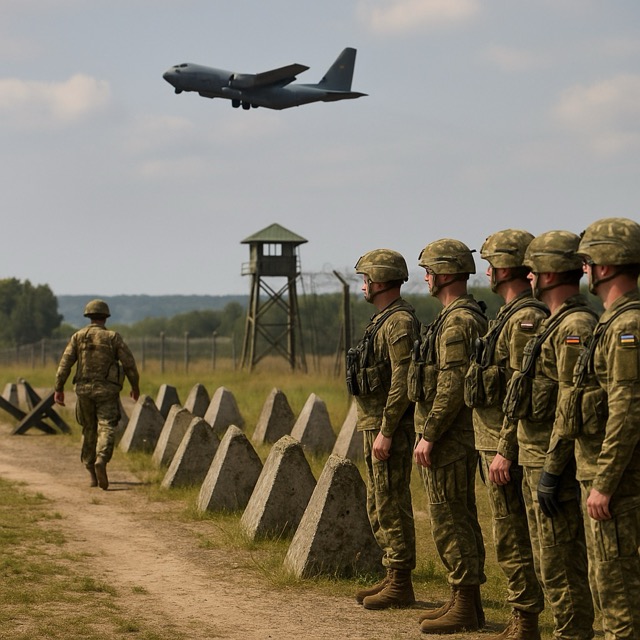
As summer draws to a close, Washington is preparing to wind down a set of security‑assistance programmes that have, for the better part of a decade, helped train and equip the armies of European countries bordering Russia. The shift, which U.S. officials say will unfold over the next budget cycles rather than overnight, marks the clearest signal yet from President Donald Trump’s second‑term national security team: Europe must pay for much more of its own defence.
The programmes in question centre on the U.S. Department of Defense’s “Section 333” authority—money used to build partner capacity via training, equipment and institution‑building—and targeted efforts such as the Baltic Security Initiative (BSI). Together, these lines of effort have channelled hundreds of millions of dollars to NATO’s eastern flank, particularly Estonia, Latvia and Lithuania, where the threat from Russia is felt most acutely. In fiscal year 2024 alone, Congress appropriated $228 million for the BSI, on top of other security cooperation funds.
A White House official, asked about the looming changes, framed them as part of a broader reset. On Trump’s first day back in office in January, he signed an executive order directing agencies to “re‑evaluate and realign” U.S. foreign aid with presidential priorities. The decision now to phase down European security‑assistance programmes, the official said, “aligns with that directive” and with the president’s oft‑stated view that allies should shoulder a far greater share of the burden.
According to people familiar with the planning in Washington and European capitals, the Pentagon has notified allies that it does not intend to seek new money for a number of Section 333 projects in Europe beyond already‑appropriated funds—resources that are expected to carry some activities through to September 2026. Several programmes routed through NATO structures are also being scrutinised. Senior defence officials describe the move as part of a resource shift toward the Indo‑Pacific and replenishment of U.S. stockpiles, even as they stress that America’s treaty commitments will be honoured and U.S. rotational forces will remain on the continent.
For frontline governments, the fine print matters. In the Baltics, Section 333 and BSI funds have underwritten air‑defence, secure communications, logistics, training ranges and counter‑drone capabilities—investments meant to slow any attack until NATO reinforcements arrive.
The political message may prove just as consequential as the balance sheet. Trump has long railed against European “free‑riding” and, since returning to the White House, he has pressed NATO allies to spend far above the alliance’s 2 per cent‑of‑GDP benchmark. European leaders who privately concede the sustainability problem also bristle at blunt conditionality, warning that sudden U.S. policy shifts risk encouraging the Kremlin to test the alliance’s resolve. On Capitol Hill, a bipartisan group of lawmakers argues that the programmes promote interoperability and deterrence at relatively low cost; they have pressed the Pentagon for more transparency on what exactly is being curtailed.
Across Europe, the move lands amid a wider effort to close capability gaps. Brussels has proposed a vast defence‑financing plan—joint loans, more fiscal room and pooled procurement—to speed deliveries of air and missile defence, drones and munitions, with a growing share sourced from European factories.
NATO planners say that if U.S. Section 333 funding and related programmes recede, allies will have to accelerate national spending in three areas above all: integrated air and missile defence; long‑range fires and counter‑battery systems; and the logistics networks—railheads, depots, fuel and bridging—that allow forces to move fast on Europe’s interior lines. The Baltics and Poland also highlight the need for resilient command‑and‑control, hardened communications and stockpiles of short‑range air defence and counter‑UAS systems, given the lessons from Ukraine’s drone‑saturated battlefields.
What would not change, administration officials emphasise, is the U.S. troop presence that underpins deterrence. Rotational brigades in Poland, air‑policing detachments and maritime patrols in the Baltic and North Seas are expected to continue. But fewer U.S. dollars for partner capacity building would almost certainly mean fewer U.S.‑funded training events and slower fielding of new kit—unless European treasuries make up the difference. For smaller allies, the loss of American programme management and contracting support can be just as painful as the loss of money.
The timing of the shift reflects a wider recalibration in Washington. With defence budgets under pressure and service chiefs warning about stretched inventories, the Pentagon wants to concentrate resources on restoring readiness and deterring China. Trump’s advisers also argue that European governments are now in a stronger position than in 2014, with most on track to exceed 2 per cent of GDP for defence and several—Poland first among them—closer to 4 per cent. In their telling, U.S. taxpayers should not be subsidising tasks European treasuries can shoulder themselves.
European officials privately acknowledge the logic while fretting about the landing. “We accept the premise that we cannot outsource our security—but abrupt changes complicate planning,” said a senior diplomat from a frontline state. Procurement cycles are long, industry ramp‑ups are lumpy and national politics can be fickle. Even where money exists, putting it to work quickly requires predictable programmes and a thick pipeline of orders that primes and subcontractors trust will not vanish after the next election.
That is one reason why EU‑level tools have gained traction. By pooling demand, Brussels hopes to get better prices and shorten delivery timelines, while using common financing to steer orders toward European factories. The Commission has also signalled a willingness to relax state‑aid rules to crowd in private capital and to allow more defence‑related borrowing. Meanwhile, a new rhythm of capability reviews—every six months—aims to keep pressure on capitals that have missed procurement targets in air defence, artillery and munitions.
For Washington, the risk is that a poorly executed hand‑off produces exactly what the administration says it wants to avoid: gaps in the eastern‑flank shield that Moscow could exploit. Recent war‑games shared within NATO underscore how sensitive the first 30 days of any crisis would be to the availability of air‑defence interceptors, tactical air power, counter‑drone systems and electronic warfare. If allies are forced to choose between backfilling Ukraine and funding their own rearmament, both efforts could suffer.
The politics on both sides of the Atlantic are mercurial. A bipartisan bloc in Washington still views NATO as a strategic bargain, even as the White House says the U.S. is not “leaving Europe” but focusing finite security‑cooperation dollars elsewhere. Officials point to continued U.S. intelligence, mobility and command‑and‑control support—the high‑end enablers only Washington can provide at scale.
For all the controversy, the underlying trend is unmistakable. Since 2022, Europe has entered a prolonged era of rearmament. Whether driven by fear of Russian revanchism or by doubts about the steadiness of U.S. support, capitals are laying the scaffolding for a generational build‑up. If Washington follows through on its plan to phase out key security‑assistance programmes in Europe, it will accelerate that trajectory—and test European claims of strategic maturity. The immediate task for both sides is to choreograph the transition without creating seams that invite risk. The burden of adaptation now lies primarily with Europe. How the continent responds over the next 12 to 18 months will shape the security architecture of the 2030s—and tell Moscow whether the shield along NATO’s frontier is stiffening, or sprouting seams.



 The Tower Post