With the Ukraine war grinding on and economic pressures mounting, Belarus tests a limited thaw with Washington. But will prisoner releases and diplomatic overtures be enough to persuade Western leaders to ease sanctions?

MINSK / VILNIUS
Belarusian President Alexander Lukashenko is trying something he has rarely risked since throwing his lot in with the Kremlin at the outset of Russia’s full‑scale invasion of Ukraine: a tentative, transactional outreach to the West. The timing is no mystery. A fourth year of war has reordered trade flows, frozen long‑standing Western markets, and left Minsk ever more reliant on Russia’s money, markets and security umbrella. At home, the macro picture is shifting from the post‑sanctions rebound of 2023–24 toward a more fragile 2025 marked by slower growth, tight labor supply and lingering inflation anxieties. For a regime that prizes autonomy and leverage, the dependence carries strategic and political costs.
The clearest sign of a new diplomatic lane opened in June, when Minsk released Siarhei Tsikhanouski—the husband of exiled opposition leader Sviatlana Tsikhanouskaya—along with more than a dozen other detainees, after a rare, high‑level visit by a U.S. envoy. The scene of freed Belarusians stepping into the U.S. embassy in Lithuania was designed for maximum signaling: Lukashenko can still make decisions the West cares about, and he wants that to count. The move drew cautious praise in European capitals and Washington, but also immediate pushback from civic groups and figures like Tsikhanouski himself, who argued that releases must not substitute for reforms while well over a thousand political prisoners remain behind bars.
If the political optics were ambiguous, the economic incentives behind the outreach are straightforward. Belarus’s two traditional hard‑currency engines—potash and refined oil products—remain heavily impaired by European bans and U.S. measures. Minsk has rerouted exports through Russian ports, deepened industrial supply chains with Russian components, and tilted manufacturing even more decisively toward the Russian market. That pivot cushioned the initial shock: official data show activity recovering in 2023–24 on the back of state‑directed production and surging sales to Russia. But by mid‑2025 growth was cooling, and the efficiency costs of price controls, administrative targets and restricted market access were increasingly visible on factory floors.
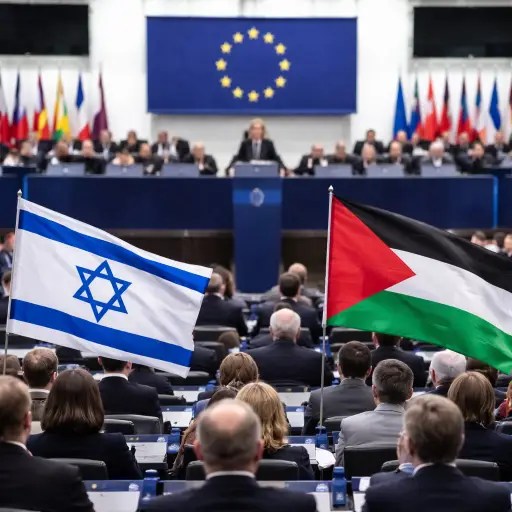
Sanctions dynamics are also moving in the opposite direction to Minsk’s wishes. In March, the European Union expanded listings tied to Belarus’s erosion of the rule of law and complicity in Russia’s war. In July, Brussels’ 18th sanctions package—primarily aimed at Russia—added complementary measures designed to close circumvention pathways through Belarus. The European Parliament backed steep tariff hikes on fertilizers and selected farm imports from both Russia and Belarus. In Washington, Treasury has refreshed guidance under the Belarus program while keeping core restrictions on potash, state‑owned enterprises, and the security apparatus. The signal from policymakers is consistent: humanitarian gestures will be noted, but sanctions relief hinges on structural steps that Minsk has so far avoided.
Lukashenko, for his part, insists he is not “begging” for concessions. In late August he told state media that Belarus had made “several steps” toward the United States and now expects reciprocal moves. The message is familiar: the government will take limited steps that do not threaten regime stability while advertising an openness to pragmatic ties on issues of mutual interest. His diplomatic machinery is testing what that list could include: additional prisoner releases; cooperation on consular cases; selective coordination against smuggling and sanctions evasion; and technical dialogue on aviation, customs and border management. Yet on the fundamentals that matter most to Western capitals—freeing all political prisoners, ending new repressions, and reducing Belarus’s material support for Russia’s war—there has been no convincing movement.
Those fundamentals have hardened since 2022. Russian tactical nuclear weapons were deployed on Belarusian soil in 2023, underscoring the depth of military integration. Belarus has trained with Russia on nuclear use scenarios, and the two countries’ “Union State” programs have advanced—unevenly but persistently—under sanctions pressure. Trade and logistics tell the same story. With EU routes largely closed, Belarus secured multi‑million‑ton capacity at Russian ports to move potash and oil products; rail and trucking links have been rewired eastward; and industrial plants now depend even more on Russian inputs. By 2024, Russia accounted for the bulk of Belarus’s trade, a swing that has narrowed Minsk’s room for maneuver even as it kept assembly lines running.
Could a carefully sequenced bargain shift that calculus? Some European policymakers and analysts argue for a conditional roadmap: free all political prisoners; halt new arrests; allow independent media and civic groups minimal operating space; and take verifiable steps to limit Belarus’s practical support to Russia’s war effort, including transit and dual‑use procurement. In return, the West could stage limited, reversible relief—licensing specific humanitarian or educational channels, restoring narrowly defined trade in non‑dual‑use goods, or easing certain transport restrictions—each step linked to measurable benchmarks and automatic snap‑back if backsliding occurs. Such a pathway would be politically fraught in Brussels and Washington, and it would face resistance in Moscow. But without clear conditions, one‑off gestures risk becoming a pricing exercise rather than a process of de‑escalation.
Belarus’s domestic headwinds complicate any Western strategy. Demographic decline and outward migration have tightened the labor market, particularly in industrial towns. Heavy‑handed price controls and administrative targets suppress visible inflation but distort investment and erode competitiveness. Manufacturers remain exposed to imported components—many from Russia—and to shifts in Russian demand. The state’s central role as employer, creditor and customer leaves limited space for genuine private‑sector expansion. Even well‑intentioned international programs would struggle to gain traction without institutional guarantees that today are absent: independent courts, predictable regulation and credible protections for property and speech.
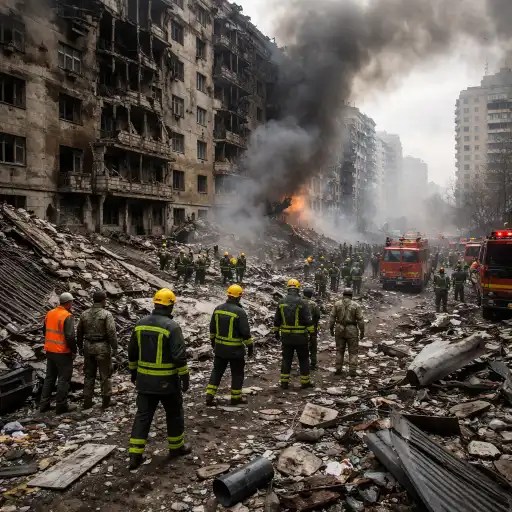
Then there is the security environment. Minsk’s role as Russia’s staging ground in 2022 and its ongoing military integration make a clean geopolitical repositioning implausible while the war continues. Border frictions with EU neighbors—especially over migration—keep tensions high and harden public opinion against rapprochement. Belarus’s cooperation with other Moscow‑aligned states, from energy talks to military exchanges, further feeds skepticism that any opening to the West is more than tactical.
All of this points to a narrow lane for diplomacy—and a long time horizon. In the near term, the likeliest outcome is not a dramatic “Belarus reset” but a managed, tactical de‑escalation: periodic humanitarian gestures; discreet working‑level contacts with U.S. and European officials; and perhaps a handful of technical carve‑outs where easing specific restrictions aligns with Western interests. That could reduce immediate risks and improve channels for crisis management. But it will not on its own alter the strategic ballast: a Belarus whose security, financing and export revenues are anchored in Russia.
The more consequential question is what comes next. If the war’s intensity diminishes and Russia’s leverage weakens, incentives on all sides could shift. Belarus’s long‑term interest is to diversify, lower its vulnerability to external shocks, and reconnect with European markets and standards. Western governments have an interest in a sovereign, stable Belarus that is not a platform for coercion on NATO’s frontier. Building toward that future will require patience, clear conditionality and an honest reckoning with the past five years. Minsk will need to decide whether preserving total political control is worth the economic and strategic costs of permanent isolation. The West will need to calibrate pressure and engagement in ways that punish repression without foreclosing incentives for change.
Can Belarus move out of Russia’s shadow? Not soon, and not without choices that the regime has so far refused to make. For now, Lukashenko’s outreach looks like crisis management: enough to test the price of a limited thaw, not enough to reset relations. The rest will be decided by forces mostly outside Minsk’s control—the arc of the war, the strength of Russia’s economy, and whether a future Belarusian leadership is prepared to trade short‑term political security for longer‑term sovereignty.
 The Tower Post