Late-August maneuvering culminates in an early-September order authorizing a ‘Department of War’ secondary title—framed as a message of victory and resolve to Moscow and Beijing.
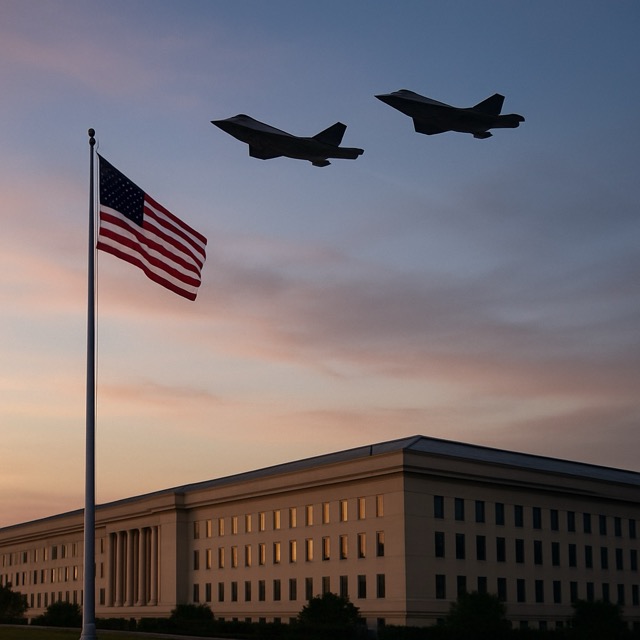
The White House’s long-simmering plan to re-embrace the name “Department of War” reached its decisive phase in late August, as senior officials previewed a rhetorical shift meant to signal U.S. resolve abroad and shake up the Pentagon’s self-conception at home. Framed by allies of the president as a return to a blunt, pre–Cold War lexicon, the move was billed internally as a “message of victory and strength” to rival capitals—above all Moscow and Beijing—after two years of grinding great-power competition.
The rebrand moved from trial balloon to policy within days. By the end of the first week of September, the president had signed an executive order authorizing use of “Department of War” as a secondary title across official communications and ceremonial settings, while conferring the option to adopt “Secretary of War” and related honorifics. Supporters say the sharper language will help restore a warrior ethos and deter adversaries; critics describe it as a slogan masquerading as strategy that risks alienating allies and confusing the chain of command.
Even proponents concede there are legal limits: Congress, not the president, ultimately controls the statutory name of cabinet departments. For now, “Department of War” functions as an overlay atop the Department of Defense, an institution that—on paper—remains unchanged. Yet symbols matter in Washington. Titles shape talking points, and talking points shape budgets, promotion criteria and procurement priorities. If the label sticks in everyday usage, it could, over time, harden into doctrine.
History is inseparable from the debate. The original Department of War, established in 1789 alongside a separate Department of the Navy, oversaw U.S. military affairs through two world wars. In 1947, in the shadow of mushroom clouds and a newly independent Air Force, Congress reorganized the military under a National Military Establishment—a bureaucratic bridge that, in 1949 under President Harry S. Truman, became the Department of Defense. The semantic pivot from “war” to “defense” reflected an age that sought to prevent cataclysmic conflict as much as to fight it. Today’s reversal is as much about narrative as it is about structure.
Inside the Pentagon, the new terminology is being treated as both a marching order and a test. Senior civilians have signaled that embracing the secondary title should be matched with visible changes—more aggressive strategic communications; tighter timelines on readiness targets; and a renewed emphasis on offensive capabilities in war plans. Some uniformed leaders worry a rebrand will become a substitute for resourcing and reform: modernizing munitions production, fixing the acquisition pipeline, funding shipyard capacity and hardening space and cyber infrastructure against peer threats. The nameplate on the E-ring is easier to swap than an industrial base.
Abroad, the messaging landed in a week dominated by displays of Sino-Russian comity. As Vladimir Putin arrived in China for a security summit, Chinese state media amplified the notion that Washington’s move signals a harder edge. Beijing’s analysts suggested the terminology confirms what they long alleged: that U.S. power is fundamentally coercive. In Moscow, the Kremlin publicly shrugged at the label while privately portraying it as proof that Washington will not relent on sanctions or military aid to Ukraine. The risk, several European diplomats noted, is that America’s intended deterrence signal is read instead as an embrace of perpetual war.
At home, the optics divide along familiar lines. Backers of the shift cast “Defense” as a product of mid‑century caution that does not fit an era of contested sea lanes, hypersonic arms races and gray‑zone coercion. They argue that calling things by their bluntest name—war—underscores a willingness to strike first when deterrence fails. Opponents counter that the language is needlessly bellicose, that it blurs civilian control of the military by elevating martial identity, and that it may complicate alliance management just as Washington needs partners for sanctions enforcement, technology controls and Indo‑Pacific logistics.
The budget will be the fastest reality check. If “War Department” rhetoric is to mean more than letterhead, appropriators will have to prioritize stockpiles of long‑range munitions, autonomous undersea systems, survivable forward bases and air‑and‑missile defense for allies from the Baltics to the first island chain. Congressional skeptics have already indicated that they will judge the rebrand by whether it accelerates contracting, reduces cost overruns and curbs performative culture‑war fights that have little to do with lethality. Put more simply: Does it help win, and at what price?
For the White House, the communications calculus is straightforward. In an information war with autocracies whose propaganda thrives on images of Western decline, the phrase “Department of War” is meant to telegraph confidence and staying power. The administration’s critics hear something else: a nostalgia play that could tempt policymakers into maximalist objectives and open‑ended commitments. Both readings can be true—and that is why allies are watching the follow‑through more than the flourish.
Beyond symbolism, the immediate policy questions are concrete. Will the National Defense Strategy be rewritten to reflect a more overtly offensive posture? Do force‑posture decisions in Europe and the Indo‑Pacific shift to accept greater near‑term risk at home in exchange for more forward‑deployed combat power? How will the services balance investments between exquisite platforms and mass‑produced, attritable systems that can survive in a contested electromagnetic spectrum? These choices—not a new name—will reveal whether the United States is serious about deterring, and if necessary defeating, a peer adversary.
Legal and bureaucratic friction also lies ahead. To make the rename permanent, Congress would need to amend the same statutes Truman used to consolidate the modern defense establishment. That process will surface questions few politicians relish: whether the current Unified Command Plan still matches the threats; whether acquisition authorities should be streamlined further; and how to shield long‑term modernization from election‑cycle whiplash. Even if the statutory name never changes, executive‑branch usage can still influence doctrine, public expectations and interagency roles.
Then there is the human terrain. For the young Marine at Twentynine Palms or the Air Force captain in Guam, the name on the ID card matters less than unit readiness, spare‑parts availability and a promotion system that prizes competence over clout. Morale rises when training is realistic, families are supported and deployments are predictable. If the “War Department” label energizes a focus on those fundamentals—and not just a fresh round of signage—the rebrand could have practical effect. If not, it will fade into the long list of Washington debates that consumed headlines and changed little.
In the end, the revival of a bygone title is a mirror held up to American statecraft. It reveals a country wrestling with how to project power in an age of nuclear‑armed rivals, digital battlefields and fragile supply chains. It highlights the tension between reassuring allies and unnerving adversaries, between domestic political theater and deterrence that works. Words alone will not decide that balance. Budgets, basing, logistics and hard choices will. The world—especially Moscow and Beijing—will judge the United States not by what it calls its defense establishment, but by whether it can mobilize, surge and prevail if deterrence fails.
For now, the White House has the line it wanted: a message, in its telling, of victory and strength. The test starts where every slogan ends—on the factory floor, the flight line and the waterfront, far from the podiums where names are changed and wars are, with luck, deterred.




 The Tower Post