After a U.S. judge rejects structural remedies in the search monopoly case, Alphabet is poised to press its advantage in generative AI—even as new guardrails alter the playing field.
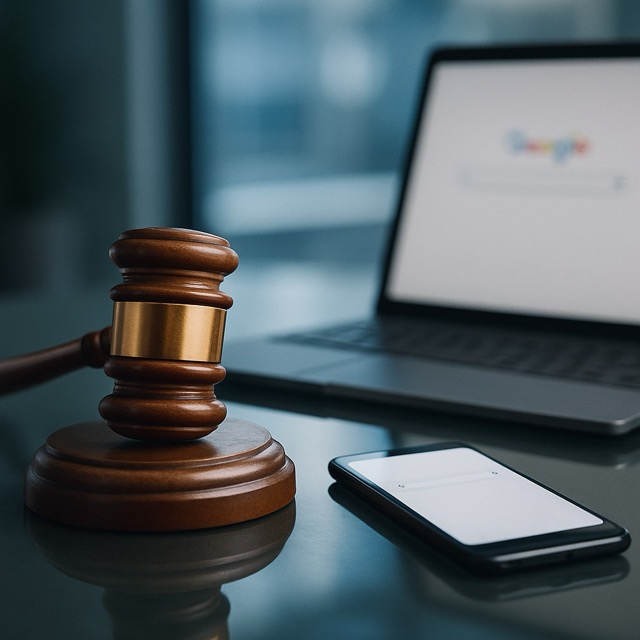
Executives at Google are breathing easier this week after a U.S. federal court declined to break up the company in the long‑running antitrust case over its search dominance. In a remedies decision issued on Tuesday, September 2, 2025, the court rejected the government’s most aggressive proposals—chief among them a forced divestiture of the Chrome browser—and instead ordered a package of behavioral changes aimed at loosening Google’s grip on distribution and data.
The ruling, delivered by U.S. District Judge Amit P. Mehta in Washington, follows his August 2024 liability finding that Google illegally maintained a monopoly in general search services. This week’s decision stops short of dismantling Alphabet but requires the company to end exclusive arrangements that made Google the default search option in key channels and to share certain search data with qualified competitors under court supervision. The judge framed the remedies as targeted and flexible, stressing that rapid shifts in artificial intelligence may already be reshaping the competitive landscape.
For Google’s C‑suite, the outcome averts a nightmare scenario and removes immediate uncertainty around the structure of its core consumer business. It also preserves the company’s ability to keep integrating its Gemini models across Search, Android and Workspace—an effort the company argues will deliver faster, more relevant results and new forms of multimodal interaction. Investors seemed to agree: Alphabet’s shares rallied to record levels in the days after the decision, reflecting relief that the firm avoided sweeping structural relief.
But the ruling is not a free pass. By curbing exclusive deals and mandating data access, the court seeks to give rival search and AI services a shot at scale. Start‑ups like Perplexity and established players such as DuckDuckGo—along with model providers that feed their systems with open web signals—stand to benefit if the data‑sharing framework broadens the pool of high‑quality queries and clicks. The court also signaled it will monitor compliance closely, leaving open the door to tighten remedies if Google’s behavior fails to promote meaningful competition.
In practical terms, the decision means Google can continue to compete hard for default placement—an advantage that historically delivered massive traffic—but it cannot lock up distribution through exclusivity. Device makers and browser partners may test alternative arrangements or rotate choices more frequently, particularly in regions where regulators already require choice screens. For Apple, the world’s most coveted distribution partner, the ruling preserves a lucrative relationship while raising fresh questions about how much freedom it will have to surface competing AI assistants and search endpoints on iOS.
The timing is consequential. Generative AI is transforming how people retrieve information, shifting queries from links and keywords to task‑oriented prompts, summaries and agents. Microsoft has embedded Copilot across Windows and Bing; OpenAI is courting publishers and e‑commerce platforms as it experiments with retrieval‑augmented experiences; and Meta, Amazon and a parade of open‑source models are racing to make assistants ambient. Google’s ability to keep Search intact while it re‑tools the product around Gemini—from AI Overviews to agentic “do it for me” features—gives it a runway to orchestrate the next interface without the distraction of a breakup.
Still, there are strategic risks. If AI‑generated answers increasingly absorb traffic that would have flowed to the open web, the dispute over how Google ranks, cites and compensates sources will intensify. Publishers will demand better attribution and revenue sharing; rivals will argue that default placement and data advantages transfer Google’s search power into AI; and privacy advocates will scrutinize any court‑ordered data sharing that might inadvertently expand surveillance or re‑identify users. The ruling largely punts those hard trade‑offs to regulators and market evolution.
The Justice Department must now decide whether to appeal, a path that could extend the case for years. Critics of the decision argue that light‑touch remedies are inadequate after a finding of monopoly maintenance, warning that behavioral rules are easy to evade and hard to enforce. Supporters counter that forced divestitures are blunt instruments—especially in fast‑moving digital markets where AI could erode incumbency on its own. Either way, the court’s emphasis on AI’s disruptive potential is a notable turn in antitrust reasoning: the technology is not just the subject of competition, but a factor shaping the remedy itself.
For consumers, the near‑term impact may be subtle. You may see more opportunities to choose your default search provider when setting up a device or browser; some results may draw from a wider pool of sources as data portability expands; and AI‑forward features will continue to proliferate across Google’s ecosystem. The larger question—whether the market will produce a durable alternative to Google at scale—will hinge on whether rivals can convert distribution openings and new data access into better products, not just regulatory wins.
The global context matters, too. Europe’s Digital Markets Act already forces gatekeepers, including Google, to open certain interfaces and give users more control over defaults, with enforcement and design debates still ongoing. If U.S. remedies lead to similar product changes worldwide, developers could benefit from more consistent integration paths, while consumers gain clearer, more transparent choices about how search and assistants operate on their devices.
Bottom line: Google avoided a breakup that would have fractured its consumer platform at the very moment AI is redefining search. The company keeps the strategic cohesion to pursue ambitious Gemini‑driven plans—and the cash flows to fund them—while accepting new limits intended to ease competitors’ path. Whether those guardrails are enough to bend the market is the next test for the court’s approach, the Justice Department’s resolve, and Google’s ability to innovate without foreclosing the next generation of challengers.
Sources
Reuters, Sept. 3, 2025: Alphabet shares surged after judge declined to order a breakup; ruling cited rise of AI tools.
Business Insider, Sept. 2, 2025: Judge spared Google from breakup; no forced sale of Chrome; limits on exclusive search deals.
Bloomberg, Sept. 2 & 5, 2025: Court rejected DOJ’s call to sell Chrome; analysis of AI as a competitive check.
Associated Press (syndicated), Sept. 2, 2025: Judge ordered a search ‘shake‑up’ while rebuffing breakup; data‑sharing requirements.
DLA Piper client alert, Sept. 4, 2025: Summary of remedies order; no structural divestiture.
The Guardian, Sept. 3, 2025: Critics decry ‘slap on the wrist’; limits on exclusive contracts and data‑sharing detail.




 The Tower Post