From crisis-era contrarian to 2025’s standout performer, Magnetar’s multi‑billion‑dollar wager on CoreWeave reshapes the hedge fund’s identity — and tests its risk limits.
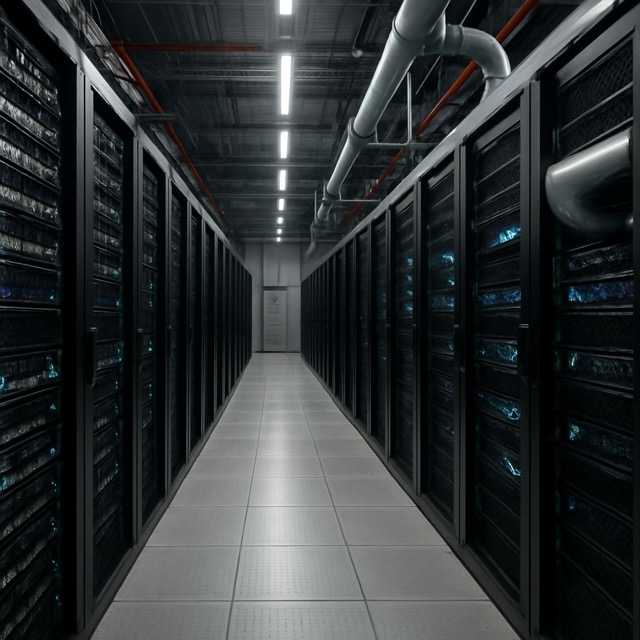
If you know Magnetar at all, it is probably for the way the Illinois‑based hedge fund thrived during the 2008 financial crisis, spotting mispricings in the equity tranches of mortgage CDOs and hedging them with protection on safer layers. Seventeen years on, the once‑secretive structured‑credit specialist is again at the center of a market story — this time for a very different kind of asset. Magnetar has placed a towering bet on CoreWeave, the fast‑growing operator of AI‑focused data centers, helping fuel one of the industry’s strongest runs of 2025 and sparking a debate about concentration, liquidity and the future shape of hedge funds in the age of artificial intelligence.
The position did not start with a splashy equity purchase. Back in 2021, when CoreWeave was still best known in finance circles for renting GPU power to crypto miners, Magnetar nudged in through the debt markets. What began as a relatively small loan — a classic Magnetar move — morphed into a comprehensive capital partnership as the company pivoted to AI workloads, snapped up scarce Nvidia‑class chips and raced to add capacity. By mid‑2024, Magnetar was a co‑lead on a multi‑billion‑dollar debt facility that underwrote the build‑out of new sites and power, the lifeblood of hyperscale computing.
That credit‑first approach gave Magnetar a privileged vantage point and, ultimately, the conviction to scale into equity. When CoreWeave went public in March 2025, the stock ripped higher as investors scrambled for liquid exposure to pure‑play AI infrastructure. As the shares surged, Magnetar’s stake swelled into a headline position measured in the tens of millions of shares. By late summer, the firm’s year‑to‑date performance had vaulted to the top tier of the hedge‑fund league tables, propelled by paper gains in CoreWeave and a careful overlay of options designed to cushion drawdowns.
For a fund that built its reputation on complex relative‑value trades, the optics were arresting: a single name accounting for an unusually large slice of firmwide risk. Investors, thrilled by double‑digit monthly marks in the spring, began asking familiar questions by August: How liquid is this position? What happens when lock‑ups expire? Can a strategy known for nimbleness really carry such weight in one stock without compromising its identity? Magnetar’s answer, according to people familiar with the firm’s thinking, is that this is still a credit‑informed trade — and that its hedges, collars and periodic trims are designed to keep the bet asymmetric.
CoreWeave’s appeal is straightforward to AI insiders and suddenly obvious to everyone else: training and serving large models requires oceans of parallel compute, short‑lead access to state‑of‑the‑art GPUs, and physical plants engineered for massive power density. The company stitched together long‑term chip supply, contracted megawatts of power in key markets and signed marquee customers for multiyear capacity. That cocktail translated into a backlog measured in the tens of billions of dollars and growth rates that legacy cloud providers could plausibly envy — at least in the niche of AI‑optimized infrastructure.
But the business is brutally capital intensive. Each new hall demands scarce transformers, grid interconnects, chillers and land; each tranche of GPUs ties up billions in purchase commitments. CoreWeave’s answer has been financial engineering of a practical kind: term loans backed by GPU fleets, project‑style financing matched to sites, and convertible structures that let equity holders scale without constantly returning to the market. It is here that Magnetar’s structured‑credit DNA arguably matters most. The firm has specialized in turning hard‑to‑finance assets into bespoke securities; GPUs, it turns out, can be modeled not so differently from turbines or aircraft engines when tied to contracted cash flows.
The market narrative, however, is not a straight line up and to the right. By August the post‑IPO honeymoon was cracking as insider selling arrived with the end of lock‑ups, trading volumes spiked, and short interest climbed. Several directors and early backers filed sales. Magnetar, too, began to lighten portions of its holdings and layered on options to collar near‑term downside. One reading is tactical — bank some gains, re‑risk later if the fundamental thesis tightens — rather than a change of heart. Another is more cautionary: even great businesses can stumble when supply chains, power permits or customer deployments slip a quarter.
To understand why Magnetar is comfortable being so public about a trade built in private markets, follow the cash flows. AI demand remains lumpy at the application layer but has been remarkably visible at the infrastructure layer, where large customers sign multi‑year contracts for baseline capacity. That gives financiers line of sight into utilization and revenue that equity markets sometimes lack. When that visibility blurs — because of delays in chip deliveries, construction or power hookups — the equity can whipsaw while the credit is buffered by covenants and collateral. In that spread, Magnetar sees what it has always hunted: a way to be paid for solving complexity.
The comparison to 2008 is tempting but imperfect. Then, Magnetar’s core edge was in structuring and hedging exposures that mainstream investors misread. Today, the edge is more industrial: a command of power markets, data‑center engineering and supply‑chain risk, married to capital stacks that can flex as assets move from build to ramp to steady‑state. It is a different kind of contrarianism — not betting against a bubble, but financing the infrastructure that others struggle to value.
Of course, CoreWeave’s fortunes are tethered to a still‑young ecosystem. The availability and pricing of advanced GPUs remain constraints, even as new chip entrants jockey for share. Utilities are cautious on load forecasts; regulators in multiple jurisdictions are sharpening scrutiny on data‑center siting, water use and grid impacts. And hyperscalers are not idle counterparties; they can shift workloads, renegotiate, or build in‑house capacity if economics change. For an investor like Magnetar, the mitigants include diversification across sites and contracts, and a view that the secular curve — more model training, more inference — still arcs upward.
If the bet continues to work, it could mark a hinge moment for the hedge‑fund industry. For years, the conventional split put private‑market infrastructure in the realm of buyout and credit specialists while equity long/short funds battled daily with earnings beats and misses. The AI supply chain is forcing those categories to blur. Structured‑credit managers who can originate and then scale into equity may find themselves with first‑look access to assets the public markets only later discover. That is essentially the Magnetar playbook: show up early with solutions, not slogans, and keep the optionality to convert credit insight into equity return.
Skeptics counter that concentration risk is real, and that a stock with a tight public float can prove an unforgiving exit door in a downturn. They note that AI cycles have a habit of moving in bursts, that public enthusiasm can fade as quickly as it arrives, and that hedges cut both ways when volatility collapses. Those are not idle warnings. They are, however, the kind of risks a firm built on risk management is deliberately choosing — and paying for — to take. The more existential risk for Magnetar might be reputational: after a year in which performance owes so much to one name, can the fund return to its multi‑pronged, less concentrated self without disappointing a new cohort of LPs drawn by the AI glow?
What happens next will be watched well beyond Evanston. If CoreWeave executes on its backlog, if power comes online broadly on schedule, and if supply chains hold, the company could entrench itself as a top‑tier provider of AI compute — a kind of utility for machine intelligence. If, instead, the build‑out collides with bottlenecks or a sharper‑than‑expected cyclical pause, the public stock could remain a roller coaster even as the private financing engine hums. Either way, the template is set: a hedge fund famous for profiting from the last crisis is now financing the infrastructure of the next industrial wave.
For investors trying to read across the trade, there are a few practical lessons. First, the AI boom’s most durable cash flows may sit in metal and megawatts, not mobile apps. Second, access matters — to chips, to power, to customers — and the best financiers are the ones who can underwrite all three. Third, in markets where technology cycles are measured in months and project finance in years, the ability to toggle between credit and equity is not a luxury but a necessity. Magnetar did not abandon its identity to make an equity score; it extended it.
Seventeen years after it turned a niche credit thesis into an outsized win, Magnetar has bet that the next great mispricing lives in the plumbing of AI. Whether the trade ultimately earns legendary status or becomes just another very good year will hinge on execution — CoreWeave’s, the grid’s, and Magnetar’s own. For now, the message to a hedge‑fund industry searching for its footing in a world remade by generative AI is unambiguous: there is alpha in infrastructure, if you know where — and how — to build.



 The Tower Post