From Ancient Babylon to Artificial Intelligence, Fashion Designers Push Boundaries
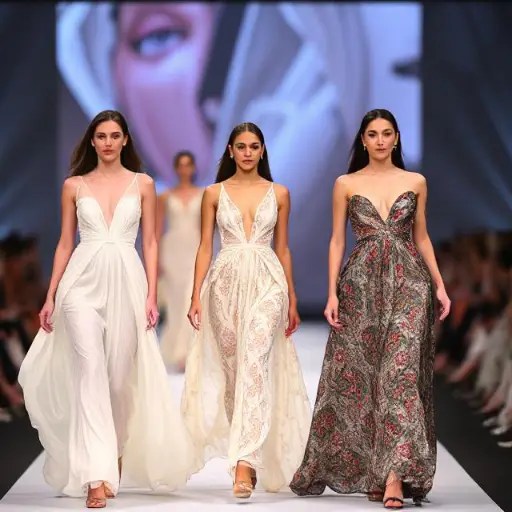
Dubai Fashion Week has wrapped up for another season, showcasing the latest creations from some of the world’s top designers. This year’s event, held at the Dubai Design District, featured a diverse range of collections, from the intricate and hand-embroidered designs of Tara Babylon to the bold and futuristic looks of Les Benjamins.
Tara Babylon’s show, “tea party chic,” was a celebration of Ancient Babylon and Iraqi culture, with intricate rose patterns and delicate embroidery adorning each look. The designer’s attention to detail and commitment to craftsmanship were evident in every piece, with each look taking around 40 artisans two weeks to complete. The collection was a testament to the designer’s passion for her heritage and her ability to translate it into wearable art.
In contrast, Jasper Conran’s collection was a throwback to the 1980s, with a tight selection of simple yet elegant midi dresses in jewel-like tones. The British designer’s use of bold colors and classic silhouettes made for a striking combination that was hard to ignore. Conran’s collection was a masterclass in understated sophistication, with each piece exuding a sense of effortless chic.
Other notable collections included Lili Blanc’s “boss within you” show, which featured sharp cut jackets and shimmery silver looks. The collection was a celebration of female empowerment, with each piece designed to make the wearer feel confident and powerful. Sabrina Mouhieddine, the designer behind the collection, explained that she wanted to create a range of clothes that would allow women to tap into their inner strength and confidence.
Emergency Room’s “Golden (R) Age” collection was a nostalgic and retro-inspired aesthetic, using deadstock and vintage materials to create a sense of timelessness. The designer, Eric Mathieu Ritter, explained that he wanted to celebrate the golden age of Lebanon and Beirut, and to reconnect his audience to the past through the use of vintage materials. The result was a collection that was both nostalgic and forward-thinking, with each piece featuring intricate details and textures.
But amidst the glamour and creativity on display, there was also a sense of unease and uncertainty. The threat of artificial intelligence looms large over the fashion industry, with many models and creatives worried about being replaced by machines. One model, Hannah James, has decided to take matters into her own hands by partnering with an AI startup called Kartel.ai. The company works with models and creatives to license their images and create ads using artificial intelligence, eliminating the need for traditional shoots and allowing brands to work with talent remotely.
James explained that she was worried about the impact of AI on her career, but she also saw it as an opportunity to adapt and evolve. “I was thinking, okay, it’s gonna advance so fast, it’s gonna take us out. Like it’s gonna take everybody out,” she said. “But instead of rolling over and watching AI models replace me, I decided to hop on the trend and started working with an AI startup to license my image and likeness.”
As the fashion industry continues to evolve and adapt to the changing landscape, one thing is clear: creativity and innovation will continue to be at the forefront of every designer’s mind. Whether it’s pushing the boundaries of traditional craftsmanship or embracing the possibilities of artificial intelligence, the future of fashion is looking brighter than ever.
In other news, Dubai Chambers has signed a Memorandum of Understanding (MoU) with the Victorian Chamber of Commerce and Industry in Australia to enhance cooperation in attracting Australian companies to Dubai and supporting the expansion of Dubai Chamber of Commerce members into Victoria. The signing ceremony took place during the 14th World Chambers Congress in Melbourne, Australia, from 2nd to 4th September. The MoU aims to promote economic cooperation and trade between the two regions, and to strengthen the business ties between Dubai and Victoria.
The Dubai Fashion Week 2026 event was also a showcase of the city’s growing reputation as a hub for fashion and design. The event attracted visitors from all over the world, and featured a range of activities and exhibitions that showcased the best of Dubai’s fashion scene. The event was a testament to the city’s commitment to supporting local talent and promoting the growth of the fashion industry.
Overall, the Dubai Fashion Week 2026 was a resounding success, showcasing the creativity, innovation, and passion of the city’s designers and fashion enthusiasts. As the industry continues to evolve and adapt to the changing landscape, one thing is clear: Dubai will remain at the forefront of fashion and design, pushing boundaries and inspiring the world with its unique style and flair.



 The Tower Post