As a bribery scandal engulfs the presidency, voters in the country’s largest province hand a decisive win to Peronist Fuerza Patria, complicating Javier Milei’s reform push ahead of October’s midterms
BUENOS AIRES
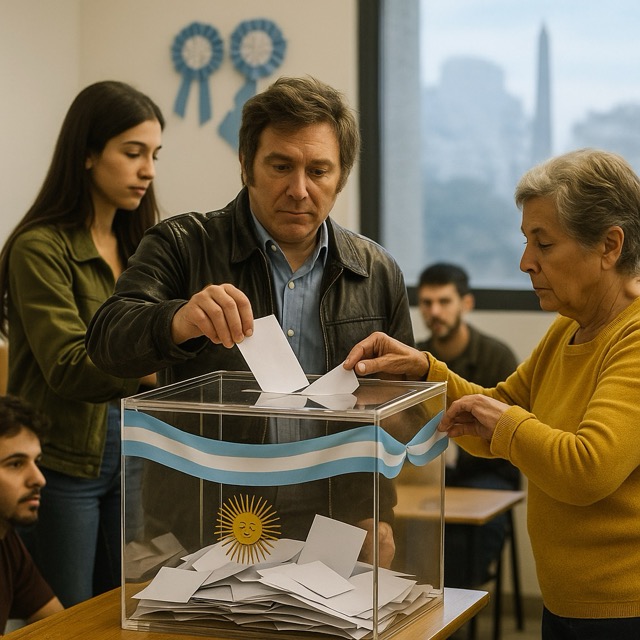
Argentina’s libertarian President Javier Milei suffered a stinging setback in Buenos Aires Province, where the Peronist Fuerza Patria coalition captured 47 percent of the vote against 33.9 percent for Milei’s La Libertad Avanza (LLA), with more than 90 percent of ballots counted, according to preliminary tallies. The 13‑point margin in the country’s most populous district, long a Peronist stronghold, signals a sharp rebuke to the government’s shock‑therapy reform drive just weeks before national midterm elections.
Speaking to supporters in Gonnet, near La Plata, Milei acknowledged a “clear defeat” but vowed to stay the course. “If we’ve made political mistakes, we’ll internalize them,” he said, promising no retreat from fiscal tightening and deregulation.
The provincial election—held to renew seats in the local legislature and hundreds of municipal councils—was closely watched as a bellwether for the October 26 congressional vote. Buenos Aires Province accounts for nearly 40 percent of Argentina’s electorate, and parties that build decisive leads there typically shape the national narrative.
Fuerza Patria’s victory also elevates Axel Kicillof, the powerful Peronist governor, whose allies framed the result as a repudiation of spending cuts that have frozen public works, trimmed social transfers and eliminated tens of thousands of public-sector jobs. “The ballot boxes told Milei that public works cannot be halted,” Kicillof told cheering supporters, urging Peronism to present a united front.
Turnout hovered a little above 60 percent—low by provincial standards—after a bruising campaign marked by escalating allegations of corruption at the heart of the presidency and protests across the densely populated conurbano surrounding the capital.
At the center of the campaign’s final stretch was a bribery scandal fueled by leaked audio recordings. The clips—linked by Argentine media to a former disability agency chief—allegedly describe kickbacks from pharmaceutical suppliers in exchange for state contracts, with Milei’s sister and presidential secretary, Karina Milei, accused of playing a central role. The government has denounced the leaks as an illegal intelligence operation and a smear, and a court order temporarily restricted publication of the audio while prosecutors review the case.
The uproar collided with Milei’s core narrative as an anti‑establishment crusader promising to dismantle cronyism. Even as annual inflation eased from its 2024 peak and currency controls were loosened, household angst over falling real wages, rising unemployment and volatile interest rates has deepened. For many voters in the province’s factory belts and poorer suburbs, the promised private‑investment boom has yet to materialize.
Markets will parse the message from Buenos Aires: With LLA still a minority in Congress, the ruling party must expand its footprint in next month’s midterms to pass sweeping deregulation, privatizations and labor reforms. Peronism, now energized by the provincial result, remains the largest bloc and has already flexed its numbers by advancing social‑spending priorities and testing the administration’s efforts to balance the budget.
The geography of Sunday’s vote underscores the challenge for Milei. LLA posted stronger showings in interior districts of the province, but was swamped across the first and third electoral sections that cover the sprawling working‑class suburbs. Those areas, traditionally Peronist, supplied the margin that turned a race the government once cast as a “technical tie” into a rout.
For the president, the path to legislative gains on October 26 now runs through damage control: a sharper focus on household relief, tighter internal discipline and a rapid clean‑up of corruption allegations touching inner‑circle aides. Otherwise, the Buenos Aires result—what one strategist called “a wake‑up call”—could calcify into a national verdict on his overhaul. Milei insists there will be “no retreat” from his program. After Buenos Aires, he may have little room for error.
Note: Argentina’s midterm legislative elections are scheduled for October 26, 2025.


 The Tower Post