As of September 8, 2025, renewed fighting around Nasir and Upper Nile, a contested foreign military presence, and a deepening humanitarian crisis threaten to unravel the 2018 peace deal.
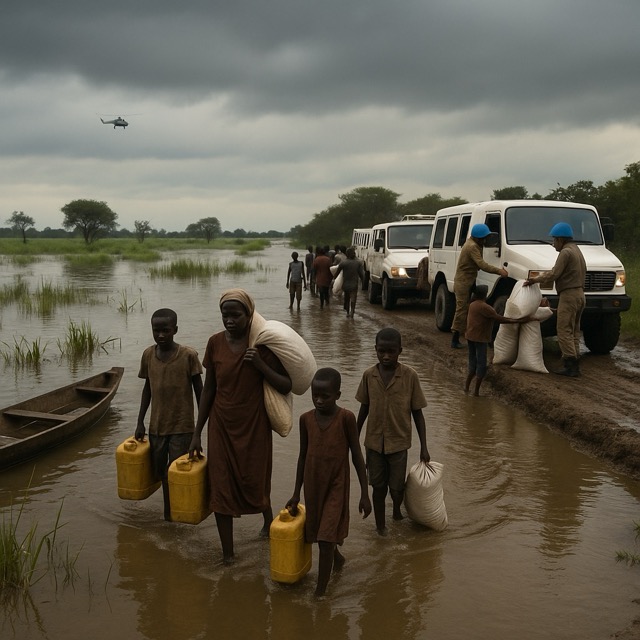
A fragile peace is fraying in South Sudan. Six years after the signing of the Revitalized Agreement on the Resolution of the Conflict in South Sudan (R‑ARCSS), a spasm of violence in Upper Nile state has raised fears of a broader relapse into civil war. The flashpoint is Nasir county on the Sobat River, where clashes between the South Sudan People’s Defence Forces (SSPDF) and the community‑mobilised White Army have simmered since March and spiked again in early September. The renewed fighting comes after an attack on a United Nations helicopter on March 7 that killed one crew member during an SSPDF evacuation — a grim marker in a year of mounting risks.
On September 2, at least fourteen people — four soldiers and ten militia members — were killed in clashes near Nasir, according to authorities and local sources. Government officials blamed the White Army and alleged links to the Sudan People’s Liberation Movement‑in‑Opposition (SPLM‑IO) of First Vice President Riek Machar; Machar’s camp has denied directing the group. The incident came on the heels of a March sweep in the capital, Juba, when security services detained several of Machar’s allies, including Petroleum Minister Puot Kang Chol, intensifying the capital’s political standoff and rattling a country still defined by trauma from the 2013–2018 civil war.
In Juba, the rhetoric is calibrated to avoid outright rupture. President Salva Kiir insists South Sudan will “not go back to war,” even as the security services expand operations in the northeast and state officials reshuffle posts in Upper Nile. Diplomats involved in the peace process describe a dangerous disconnect: both sides publicly reaffirm the agreement while testing red lines on the ground. That gap widened after March 7, when UNMISS said its helicopter came under fire during a rescue mission in Nasir. The attack — which also coincided with fighting that killed a South Sudanese general — prompted embassy drawdowns and urgent Security Council briefings on South Sudan.
Complicating matters is Uganda’s role. Kampala acknowledges deploying personnel to South Sudan in March, saying it responded to Juba’s request to help stabilize a volatile frontier. Opposition figures and rights groups accuse Ugandan units of conducting airstrikes against opposition‑aligned positions in Upper Nile, charges the Ugandan government rejects. Amnesty International and other monitors argue the deployment runs afoul of the UN arms embargo and risks internationalising the conflict dynamics. For communities in the flood‑prone wetlands of Jonglei and Upper Nile, the debate is academic: residents describe helicopters overhead, ground bombardments and sudden displacements that have emptied villages overnight.
The humanitarian footprint tells its own story. Upper Nile is now a hunger hotspot: aid agencies warn that eleven of the state’s thirteen counties face emergency levels of food insecurity, with tens of thousands in catastrophic conditions if access does not improve. Aerial bombardment and armed looting have repeatedly hit health facilities this year. In May, a morning raid shattered an MSF‑supported hospital in Old Fangak, killing and wounding patients and staff; weeks later, escalating threats forced MSF to close its hospital in Ulang and suspend support to more than a dozen primary care sites. Aid workers report attacks on boats moving medical supplies along the Sobat and persistent harassment at checkpoints that slow life‑saving deliveries.
Countrywide, the numbers are stark. Humanitarian planners estimate that roughly 7.7 million people — about 57 percent of the population — face high levels of acute food insecurity this lean season, driven by conflict, floods and disease outbreaks. Funding is badly lagging. As of mid‑August, the 2025 Humanitarian Response Plan was less than one‑third financed, a shortfall that has forced agencies to scale back assistance and pause onward transport from border reception points.
The war in neighbouring Sudan is deepening the strain. Since the fighting between the Sudanese Armed Forces and Rapid Support Forces exploded in April 2023, more than a million people — a majority of them South Sudanese returnees — have crossed into South Sudan, most via the remote Renk corridor. The transit centre at Renk, where aid groups once moved new arrivals onward within days, now swells with families stuck for weeks because money for buses and river barges has dried up. Humanitarian partners say the pause in onward transport has pushed more people to make perilous, self‑arranged journeys, including along waterways contested by armed groups.
Politics is the third rail. Elections — promised repeatedly since independence in 2011 — are now slated for December 22, 2026, after last year’s postponement. Supporters of delay argue the extra time is needed to finish a new constitution, pass electoral laws, deploy a unified national army and conduct a census. Critics say each extension entrenches a bargain between political elites while the security sector remains fragmented and predatory. The arrests in March, which Machar’s allies called a bid to sideline the opposition ahead of campaigning, strengthened fears that the vote could be either unfree or unrealised.
Those concerns are shared at the United Nations. In an August briefing, the Security Council heard warnings that violence is worsening while protection space shrinks. South Sudan remains one of the world’s most dangerous places to deliver aid, with increasing incidents of intimidation, detention and attacks against humanitarians. UN officials have urged regional bodies — the African Union and IGAD — to press the parties to recommit to the R‑ARCSS benchmarks: a unified command structure, clear rules for security forces, and credible timelines for constitutional and electoral milestones.
What happens next will be decided as much in remote river towns as in Juba’s conference rooms. In Nasir and Ulang, community leaders are pleading for local ceasefires to let aid flow and families farm before the rains deepen. Women’s associations have asked for safe corridors to reopen clinics and allow emergency referrals by boat. Traders warn that disruption to river transport will further spike prices for sorghum and fuel, already inflated by currency weakness and regional supply shocks. In Renk, returnees say they cannot rebuild without basic services and security in their home counties.
For now, the default setting is drift — dangerous in a country where small fires can become national conflagrations. The immediate priorities, diplomats and aid workers say, are straightforward: halt aerial attacks and heavy‑weapons use near civilian areas; release or charge detainees picked up in the political sweeps; allow independent access to incident sites, including hospitals; and restore the humanitarian lifeline, from river routes to the Renk transport pipeline. With the lean season biting and elections still distant, South Sudan’s best chance to avoid a return to all‑out war is to cool the front lines and recommit — visibly and verifiably — to the peace deal’s security and governance chapters.
As the country absorbs another shock season, the human stories are a reminder of what is at stake. In Renk’s transit centre, mothers queue for vaccinations while scanning notice boards for their names on onward‑travel lists that no longer move. In Old Fangak, health workers salvaged a few boxes of medicines from a bombed‑out pharmacy and began seeing patients again under canvas. On the Sobat, fishermen in dugouts weigh the risk of crossing contested bends to reach their nets. Whether South Sudan steps back from the brink will depend on decisions in the coming weeks — and on whether the international community pays enough attention to help bend the arc away from war.
Sources
Reuters, ‘South Sudan clash kills 14 in renewed violence in north’ (September 2, 2025).
AP News, ‘UN agencies say a violence-hit part of South Sudan is on the brink of famine’ (July 2025).
UNMISS, ‘UN helicopter attacked in Nasir; one crew member killed’ (March 7, 2025).
UN Press, ‘South Sudan at a Turning Point’ — Security Council briefing (August 18, 2025).
Amnesty International, ‘UN Security Council must renew and enforce arms embargo’ (May 14, 2025).
The New Humanitarian, ‘Army barrel bombs spark exodus as peace deal crumbles’ (May 20, 2025).
Médecins Sans Frontières updates on Ulang and Old Fangak (May–June 2025).
OCHA Humanitarian Response Plan Dashboard (2025) — funding under one‑third as of August.
Al Jazeera, ‘South Sudan postpones December election by two years’ (September 14, 2024); current schedule December 22, 2026.


 The Tower Post