D’Alema, Xi and Putin’s converging narrative on the end of Western hegemony

Beijing — On September 3, 2025, Massimo D’Alema, Italy’s former prime minister, stood on Chang’an Avenue as China marked the 80th anniversary of the end of World War II in Asia with a sweeping military parade. China’s leader Xi Jinping presided from Tiananmen, flanked by Russia’s Vladimir Putin and North Korea’s Kim Jong Un, in a carefully staged tableau of power and defiance. Western leaders were conspicuously absent. In Italy, D’Alema’s presence triggered a political row; critics said he had lent credibility to an anti‑Western front, while the former premier countered that he hoped “a message of peace” would emerge and described China as an element of stability in an unstable world.
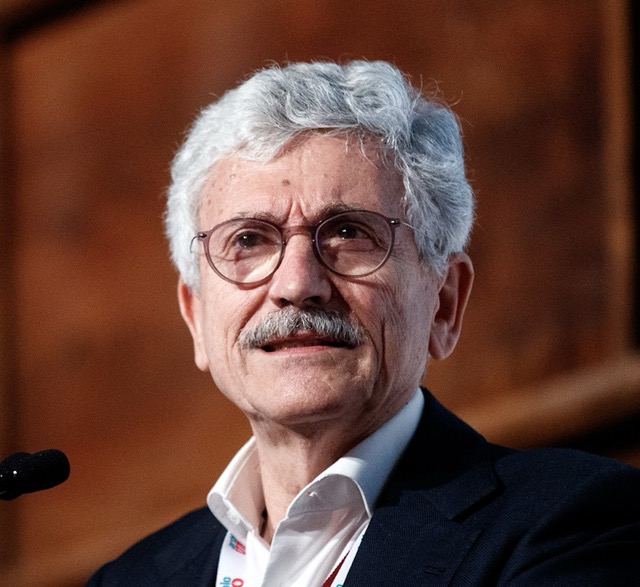
For D’Alema, the Beijing appearance was less an isolated gesture than the continuation of an argument he has advanced for years: that Western—above all U.S.—hegemony is ending, replaced by a multipolar order in which rising powers demand a larger say. More than a year earlier, in March 2024, he took part in the Third International Forum on Democracy in Beijing, a conference organized by the Communist Party of China’s Central Committee. There, in remarks amplified by Chinese media and posted by his own foundation, D’Alema argued that the West’s model of liberal democracy had “lost credibility and attractiveness” and urged dialogue across systems rather than a new ideological confrontation.
The optics of the 2025 parade were unmistakable. China unveiled new missiles, stealth aircraft and AI‑enabled drones, while Xi cast the moment as part of national “rejuvenation” and reiterated Beijing’s hard line on Taiwan. The presence of Putin and Kim—while Moscow prosecutes its war in Ukraine and Pyongyang accelerates its nuclear program—underlined a confrontational posture toward Washington and its allies. Against that backdrop, D’Alema’s words from Beijing were parsed at home as either naïveté or realism, depending on one’s priors.
D’Alema’s thesis is straightforward: the unipolar moment that followed the Cold War has run its course. He argues that the malaise of Western liberal democracies stems less from the aggression of autocracies than from internal economic and social fractures—inequality, dislocation and a loss of trust—exposed by decades of globalized capitalism. From this vantage point, framing global politics as a moral contest between “democracy” and “autocracy” is counterproductive because it collapses diplomacy into a binary and hardens blocs.
Xi and Putin, for their own reasons, have embraced a compatible storyline. In joint appearances and statements, they portray the United States as guardian of an “obsolete” hegemony and extol a world of “multipolarity,” “sovereign equality” and non‑interference. Chinese officials add a normative gloss: democracy, they argue, is a “shared human value” that takes different forms, and no model has a right to universalize itself. It is this bundle of claims—decline of Western primacy, the legitimacy of alternative models, the right of states to choose their own paths—that produces the overlap between D’Alema’s analysis and the narratives promoted from Beijing and Moscow.
Italy’s domestic debate over D’Alema’s trip has been sharp. Carlo Calenda, leader of Azione, called the former premier’s presence “grave,” arguing that standing alongside Putin and Kim while a war rages in Europe betrays Western values. Figures on the left offered a different view: D’Alema is a private citizen with a long diplomatic résumé, they said, and dialogue with Beijing is not endorsement. The controversy revealed a deeper question for Rome and for Europe: whether engagement with China should be curbed to signal values, or pursued to keep channels open as the global order fragments.
The 2024 forum helps explain the intellectual through‑line. Branded the “International Forum on Democracy: the Shared Human Values,” it gathered hundreds of foreign politicians, academics and commentators to argue that democracy is not a Western franchise but a flexible, culturally embedded practice. D’Alema’s intervention—“our model of Western democracy has lost credibility and attractiveness,” he said—fit neatly into the hosts’ message that there is “no one‑size‑fits‑all” model of democratic governance and that exporting systems breeds conflict. In Italian interviews he expanded the point, contending that globalized capitalism has “suffocated” politics and reduced democratic participation in many Western countries.
That convergence of slogans, however, does not equal convergence of interests. China has stayed cautious about deeper entanglement with Russia; it has avoided formal alliances, calibrating support to minimize secondary‑sanctions risk and preserve access to European markets. Moscow, bogged down in Ukraine, seeks Chinese lifelines but balks at junior‑partner status. North Korea craves protection and technology, yet its brinkmanship unnerves even friends. Even if they reject U.S. dominance, Xi, Putin and Kim do not necessarily share the same endgame.
For Europe, the D’Alema episode is a barometer. It lays bare unease over how to navigate a world in which non‑Western powers set agendas and stage optics that dare the West to respond or abstain. It also spotlights a fault line inside the Italian left over Atlanticism’s legacy and the meaning of “peace” in an age of revisionism. Whether one reads D’Alema’s Beijing sojourn as provocation or prudence depends on where one places the balance between values and interests.
The strategic question is whether the European Union can craft a multipolarism of its own—pragmatic where useful, principled where necessary—without sliding into bloc logic or a value vacuum. That would require clear conditionality on rights and coercion, greater European defense capacity, and a united economic stance on de‑risking rather than decoupling. It also calls for a diplomatic grammar that speaks credibly to the Global South, where China’s arguments about sovereignty and development resonate—and where Europe has too often sounded either patronizing or absent.
D’Alema’s Beijing week will not decide that trajectory. But it underscores a narrative battle now unfolding from Beijing to Brussels: whether the end of Western hegemony ushers in a more equitable order or merely licenses stronger states to do as they please. In that contest, parades and forums matter—not because they change facts on the ground, but because they arrange the symbols through which power explains itself. And in 2025, those symbols, more than ever, are being choreographed in the open.