At Cernobbio’s Ambrosetti Forum, Italy’s economy minister says the public accounts are ‘going exactly as we had forecast,’ signaling a steady path to the autumn budget law.
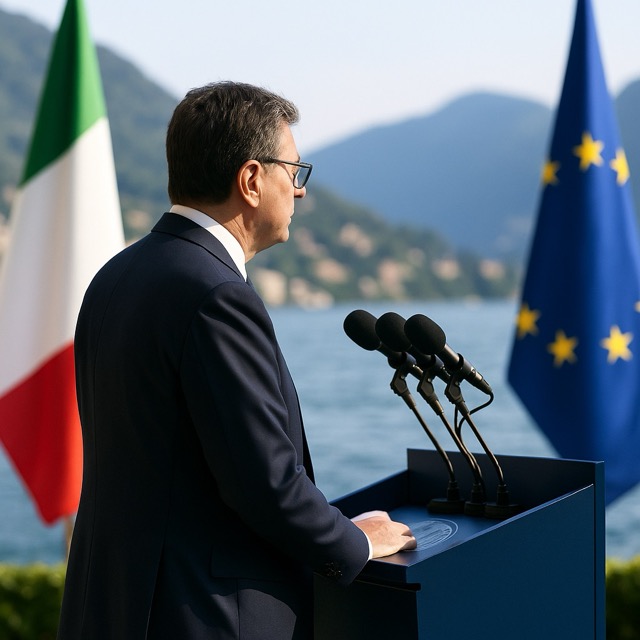
Economy Minister Giancarlo Giorgetti said there will be no need for a corrective budget measure this year, pushing back on weeks of speculation about emergency adjustments to Italy’s public finances. “This year there will be no corrective manoeuvre,” he told the audience of The European House – Ambrosetti Forum in Cernobbio, adding that “the news—perhaps not flashy but important—is that the accounts are going exactly as we had forecast.”
The reassurance aims to steady expectations as the government prepares its autumn Budget Law. Over the summer, rumors multiplied about a potential mid‑year clean‑up of the numbers. Giorgetti dismissed them as “fantastical hypotheses,” insisting that tax revenues and spending are tracking the path set out in the spring.
The minister also stressed a political message familiar to Italians after a decade of stop‑go consolidation: no new “sacrifices” will be required to keep the trajectory intact. That phrase will resonate with households after two years of inflation and tighter credit conditions.
Giorgetti’s words land at a sensitive moment for Rome’s fiscal policy. In late September the government is due to publish its updated public‑finance framework—the NADEF—which will set the benchmark for the 2026 Budget Law to be submitted to Parliament in October. The document will fine‑tune the growth, debt and deficit assumptions, as well as the room for targeted measures on wages, families and business investment.
Behind the messaging is a broader European story. Italy has been working to exit the European Union’s excessive deficit procedure, the corrective arm of the bloc’s fiscal rules, after the pandemic and energy shocks swelled red ink. Signals from Frankfurt and Brussels in recent days have been cautiously supportive: officials say Italy is edging closer to the 3%‑of‑GDP deficit threshold, provided its consolidation plan stays on course.
What exactly does “no corrective manoeuvre” mean? In Italian budget jargon, a correzione is an interim package of tax hikes or spending cuts to compensate for unexpected slippage in the deficit. By ruling it out, Giorgetti is saying that the cash flow pattern—monthly tax receipts, social‑security outlays, interest costs—matches the plan, and that any deviations are currently small enough to be absorbed within existing envelopes.
That doesn’t make the autumn painless. The government still faces hard choices as it allocates limited fiscal space. Indexation of pensions and public‑sector wages, a renewal of the payroll‑tax cut for lower incomes, and selective incentives for investment all compete for scarce resources. The “no surprises” line simply signals that these choices will be made within the ordinary budget process—not under the pressure of an emergency clean‑up.
One clear risk sits outside the budget’s spine: defense spending. The minister acknowledged that the deteriorating international climate, and commitments shared with EU and NATO partners, could put upward pressure on the accounts. Rome has argued for European solutions—including common borrowing—to fund thicker security outlays without punishing countries still operating under EU corrective procedures. For now, the Italian Treasury insists it can reconcile the path to a sub‑3% deficit with a gradual defense ramp‑up, but the margin for error is thin.
Markets, for their part, have been watching for two signals: credible targets in the NADEF and a budget law that honors them. A further narrowing of Italy’s risk premium over German bunds would validate Giorgetti’s case that discipline is priced in; any hint of drift would revive the familiar questions about debt dynamics. In that sense, today’s tone from Cernobbio is less a celebration than a pledge to stick with prudence.
Political arithmetic will matter too. The coalition is heading into a new budget season with competing priorities—from tax simplification to family support to industrial policy. The Forum’s business audience heard a message tailored to them: incremental, predictable policy over flashy announcements. Whether that survives the parliamentary grind will be the test of Giorgetti’s promise to “promise little and deliver more.”
What comes next is procedural but decisive. In the coming weeks the Treasury must finalize macro assumptions—growth, inflation, interest rates—and update the path for debt and deficit over the next three years. On that base, ministers will negotiate the budget’s measures. If the numbers confirm what Giorgetti insists he is seeing in‑year, Rome can present a budget that keeps the deficit shrinking without ad‑hoc repairs. That would allow Italy to strengthen its case for exiting the EU’s corrective procedure on schedule, a milestone that would expand the country’s room for policy and potentially reduce borrowing costs.
For households and firms the message is straightforward: no sudden fiscal shocks, modest support targeted where it’s most effective, and a government betting that steady, boring execution is the safest way out of a long era of emergency budgeting. In a political season that rewards spectacle, Giorgetti’s bet is that prudence can be a headline too.




 The Tower Post