Six killed as top negotiators survive; a rare U.S. rebuke of Israel complicates ceasefire diplomacy
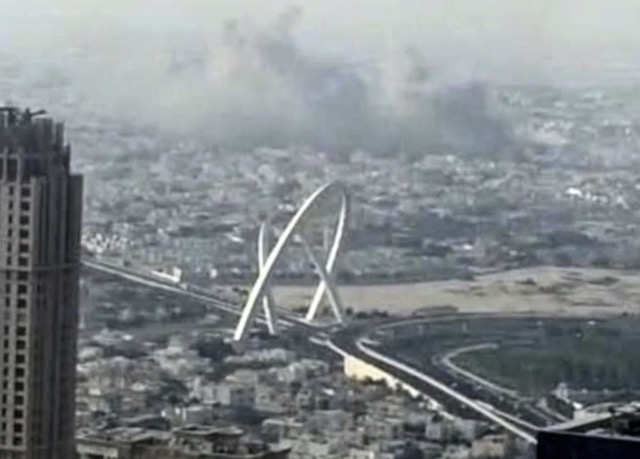
DOHA/WASHINGTON – Israel launched a rare strike inside Qatar on Tuesday, targeting Hamas’s political leadership in the capital, Doha, in an operation that immediately upended fragile diplomacy around a U.S.-backed ceasefire proposal for Gaza. Explosions were heard in the Leqtaifiya district and smoke could be seen rising near a heavily guarded residential compound long associated with Hamas officials. Qatar condemned the attack as a violation of its sovereignty.
Hamas said at least six people were killed. The group named five of its own members among the dead, including the son of senior leader and chief negotiator Khalil al‑Hayya and one of his closest aides. The sixth fatality, Qatari officials said, was a member of the emirate’s security forces. Hamas added that its most senior figures in Doha survived.
Israeli officials said the strikes were aimed at top Hamas figures including al‑Hayya and Zaher Jabarin, a senior member of the movement’s political bureau who is widely seen as a key financier and organizer of West Bank operations. Israel framed the operation as a precise attack on militants it holds responsible for recent deadly assaults, while offering few details on the munitions used or the number of aircraft involved.
The strike landed at a delicate moment. According to multiple officials involved in the talks, Hamas leaders in Doha had convened to consider the latest U.S.-supported outline for a ceasefire and a multi-stage exchange involving Israeli hostages and Palestinian prisoners. Mediators had hoped the meeting would produce a clearer negotiating mandate from the group’s exiled leadership, potentially unlocking a path toward a sustained pause in fighting.
Qatar, a close U.S. ally and hub for the American military’s regional operations, has hosted Hamas’s political leadership for more than a decade at Washington’s request, positioning itself as a conduit for indirect diplomacy with Israel. In an unusually sharp statement, Doha denounced what it called a “cowardly attack” and a “blatant violation” of international law, while vowing that its role as mediator would continue.
In Washington, the White House issued a rare public censure of Israel, saying that bombing inside a sovereign U.S. ally working to broker peace does not advance American or Israeli goals. President Donald Trump told reporters he was “very unhappy about the way that went down,” while adding that eliminating Hamas remains a legitimate objective. Administration officials said the U.S. military learned of the operation shortly before it occurred and relayed a warning to Doha, though Qatari officials disputed the timing and said any alert came only after the blasts began.
The immediate aftershocks were diplomatic. London, Brussels and several Arab capitals criticized the strike; the U.N. Security Council scheduled an emergency session. Qatar’s prime minister pledged that Doha’s mediation efforts would not be deterred and signaled that legal and political responses were under review. Israel, for its part, said it bore sole responsibility for the decision and argued that acting against Hamas leaders wherever they are found is consistent with its wartime policy.
For Hamas, the losses were personal as well as political. Al‑Hayya, a veteran power broker within the movement, has repeatedly appeared on negotiation rosters during moments of crisis; his son’s death will reverberate within the organization’s inner circle. Jabarin has long managed finances and prisoner issues, making him central to any talks over a staged exchange. Yet by night’s end, senior figures were insisting the leadership structure remained intact.
The location of the strike underscored its audacity. Qatar’s Leqtaifiya waterfront is home to embassies, upscale housing and, crucially, security compounds that have been under heavy guard since the Gaza war broke out in 2023. Hitting a site there risks reshaping how Gulf states view the risks of hosting Palestinian factions—especially given Qatar’s role as steward of back-channel talks that Washington has relied on for years.
It also places new strain on U.S.–Qatar ties at a time when Washington depends on the emirate for access, logistics and basing. The U.S. maintains thousands of personnel at Al Udeid Air Base near Doha, the forward headquarters of U.S. Central Command. Any perception that American partners cannot deter kinetic actions on their soil—by friends or foes—complicates regional security planning.
What happens next will hinge on two questions: whether the strike meaningfully degraded Hamas’s ability to negotiate and whether Qatar, despite its anger, keeps its mediation channels fully open. If Doha remains at the table and Hamas’s negotiators are still empowered, talks could resume after a cooling-off period. If not, Israel’s gamble may have the paradoxical effect of pushing a ceasefire further out of reach just as pressure mounts from hostage families and international partners to end the war.
Inside Israel’s security establishment, supporters of the operation argue that Hamas’s leaders had grown too comfortable in foreign sanctuaries and that the group was exploiting diplomacy to regroup. Critics counter that assassinations and attempted decapitation strikes have historically yielded only temporary gains while hardening militant resolve and provoking costly blowback. As with previous phases of the conflict, both assessments could be tested at once.
Even if the ceasefire track survives, the political fallout is already global. European leaders warned of a dangerous precedent; Gulf allies privately questioned whether Israel consulted partners adequately; and U.S. officials juggled denunciations of an ally’s choice of venue with reassurances that the strategic partnership remains intact. In Doha, residents processed the shock of a war they had followed on screens suddenly arriving on their doorstep.
By Wednesday morning, security cordons remained around the impacted compound as investigators and emergency crews worked through debris. Families of those killed began mourning—and Hamas cadres vowed retaliation at a time and place of their choosing. Whether that response comes on the battlefield, at the negotiating table or both will shape the next phase of a war that, nearly two years on, continues to metastasize across borders.


 The Tower Post