With Brent stuck near the mid‑$60s and OPEC+ easing supply curbs, the world’s largest oil and gas companies are cutting jobs and scaling back investment at a pace reminiscent of the pandemic crash.
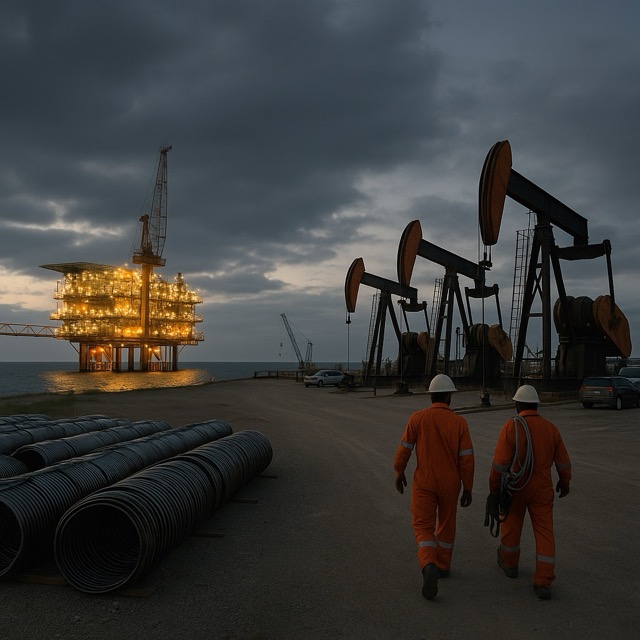
The mood across the world’s oil capitals has swung from swagger to self‑preservation. From Houston to The Hague and Paris, executives at the largest oil and gas companies are pushing through layoffs, freezing new hires and tearing up capital plans as crude prices drift lower and supply looks set to exceed demand into next year. After two years of record cash returns, Big Oil is back in austerity mode — and at a clip many insiders say they have not seen since the Covid‑19 slump in 2020.
The trigger is a market that has turned against producers. Brent crude has hovered around $66 a barrel in early September, down roughly 10 percent year to date and well below the levels companies used to green‑light marginal projects. The latest twist came from OPEC+, which this month began unwinding voluntary output cuts with an initial 137,000 barrels‑per‑day increase slated for October — a signal that the alliance is shifting from defending price to fighting for market share. At the same time, the International Energy Agency says supply growth is outpacing demand, with its August report trimming 2025 demand growth to about 680,000 barrels per day and flagging the risk of a larger surplus next year if production continues to rise.
Corporate responses have been swift and severe. ConocoPhillips told staff it will reduce its workforce by 20 to 25 percent — roughly 2,600 to 3,250 people — with U.S. layoffs beginning as early as November, according to filings and an internal video message from Chief Executive Ryan Lance. Chevron, still absorbing a major acquisition and battling overruns at megaprojects, has said it will trim 15 to 20 percent of jobs by the end of 2026 as part of a reorganization to simplify decision‑making. BP, under pressure from activist shareholders to lift returns and clarify its strategy, has already cut more than 5 percent of its workforce as it pursues at least $2 billion in cost savings by 2026.
The oilfield services sector — often the canary in the industry’s coal mine — is flashing warning lights as well. SLB has reorganized business lines and reduced staff after warning of softer global upstream budgets in 2025, led by weakness in North and Latin America. Halliburton has executed multi‑division layoffs in recent weeks amid a faster‑than‑expected slowdown in North American activity. Across the United States, rig counts and frac spreads — the guts of shale growth — have declined, and a Reuters tally indicates that publicly listed producers have already trimmed roughly $2 billion in planned spending this year as consolidation and lower prices bite.
It is not just prices weighing on plans. Inflation, new tariffs and higher borrowing costs have quietly lifted break‑evens across the value chain, from steel casing to offshore vessels. Even as supply chains heal, managers say tender prices are not falling in line with crude. “You have mid‑$60s oil meeting 2024‑level service costs,” one North American operator said. “That math forces hard choices — fewer rigs, fewer geologists and stricter hurdle rates.”
Those choices are reshaping portfolios. Frontier exploration — from ultra‑deepwater wildcats to new Arctic plays — is slipping down the priority list, giving way to short‑cycle tie‑backs, LNG expansions backed by long‑term contracts, and brownfield upgrades that squeeze more from existing hubs. Several deepwater projects have been deferred pending re‑bids and modular redesigns. In U.S. shale, operators are trimming drilling schedules and leaning on productivity gains from longer laterals, cube development and high‑grading of acreage even as service costs prove sticky.
European majors are using the reset to recalibrate the balance between hydrocarbons and low‑carbon spending. Shell says it has already achieved about $3.9 billion of structural cost savings versus 2022 and is targeting $5 to $7 billion by 2028, while lifting its shareholder‑distribution framework to 40 to 50 percent of cash from operations — a sign that buybacks will remain a priority even as capital expenditure tightens. TotalEnergies has maintained repurchases despite a drop in quarterly profit and is focusing growth on disciplined deepwater and LNG projects, even as it pursues selective exploration such as a new offshore block in the Republic of Congo.
Notably, Exxon Mobil is the outlier — for now. It has mapped out higher spending through the end of the decade as Guyana ramps up and Permian synergies from recent deals feed through. But even Exxon’s project sanctioning has become more modular and back‑loaded. Across the rest of the sector, capital is being re‑sequenced rather than abandoned outright: smaller phases, clearer stage gates and tighter cycle times are the watchwords for boards reviewing plans this autumn.
Macro forces could harden the belt‑tightening. The IEA’s medium‑term outlook shows global demand growth flattening through 2026 as efficiency and electrification bite, even if absolute consumption still edges to new highs. OPEC+ appears intent on restoring barrels methodically while testing the investment nerve of shale producers. If the alliance sticks to its plan and inventories build into winter, prices could drift lower still. The U.S. Energy Information Administration now projects that Brent could average in the low $50s next year, a level that would force further pruning across portfolios.
For workers, the change is painful and familiar. Back‑office support functions, exploration teams and some drilling and completions roles are being thinned out as companies centralize procurement, standardize designs and automate routine tasks with artificial intelligence. Contractors and suppliers are feeling the pinch as service pricing faces renewed pressure and job orders are pulled. The speed of cuts has also revived concerns about safety and execution risk: veterans warn that the industry’s last deep rounds of reductions, during 2015–16 and again in 2020, led to a loss of institutional knowledge that proved costly to rebuild.
Investors are laser‑focused on two questions. First, how durable are shareholder distributions if Brent slides toward $60? Shell has formalized a higher payout framework, while TotalEnergies and U.S. peers have kept buybacks humming. If cash generation shrinks in 2026, boards may have to choose between trimming repurchases and leaning harder on capital‑expenditure deferrals. Second, will today’s cuts sow the seeds of tomorrow’s price spike? One hard‑learned lesson of the past decade is that under‑investment can produce damaging volatility when demand surprises on the upside.
For now, resilience is winning over reach. Plans presented to boards emphasize modularity, optionality and speed to cash. LNG projects advance where long‑term contracts underpin financing. Offshore developments are carved into phases with standardized platforms and shared subsea infrastructure. In the Permian and other U.S. basins, operators are prioritizing consolidation synergies and pad‑drilling efficiency rather than raw volume. National oil companies are making similar moves, though bolstered by policy support and a lower cost of capital in parts of the Middle East and Asia.
None of this suggests the energy transition has been abandoned. If anything, the reset is pushing companies to be more selective — and more hard‑nosed — about low‑carbon bets, especially where policy frameworks are clearer and capital can recycle quickly. Expect more focus on decarbonizing industrial hubs through carbon capture, leveraging existing gas value chains for flexible power and hydrogen, and expanding specialty chemicals where demand visibility is stronger. The era of sprawling, multi‑continent portfolios built on cheap debt is giving way to smaller, faster, bankable steps.
The unanswered question is duration. If OPEC+’s cautious output increases coincide with softer demand into the Northern Hemisphere winter, prices could grind lower and layoffs deepen. If, instead, supply disappoints and inventories draw, this autumn’s belt‑tightening will look prescient rather than panicked. Either way, the strategic trajectory is clear: in a market rewarding thrift over thrust, Big Oil is preparing to run lean for longer.
—
Reporting context: Company announcements and industry data through September 9, 2025.




 The Tower Post