Western and Ukrainian officials warn of looming interceptor shortfalls after a June policy shift in Washington; Europe rushes to plug the gap while Moscow unleashes its biggest air assault of the war
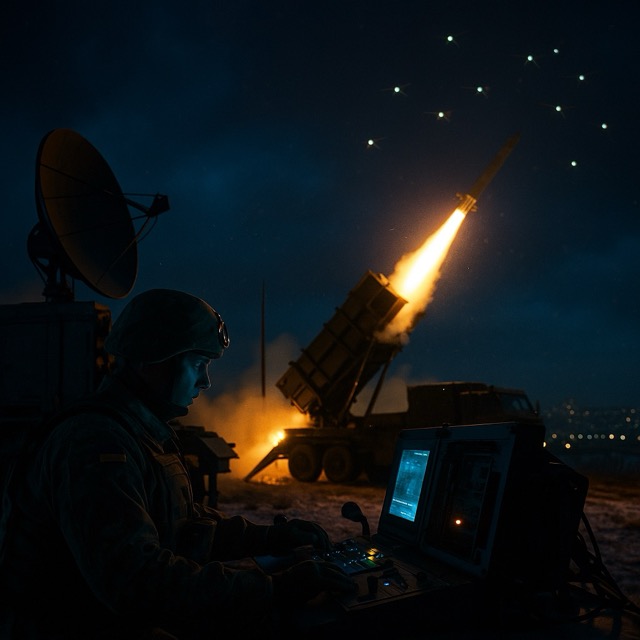
KYIV/WASHINGTON — Ukraine is at risk of running short of key air‑defence munitions after a U.S. Department of Defense review of military aid slowed deliveries over the summer, even as Russia steps up massed missile and drone attacks, according to multiple Western and Ukrainian officials. The slowdown followed a June policy reassessment in Washington intended to husband U.S. stockpiles and recalibrate global commitments, officials and public statements indicate. On Tuesday, the Financial Times reported that shipments of Patriot PAC‑3 and other interceptors have been reduced since June’s review by the Pentagon’s policy team.
The shift has translated into irregular and smaller‑than‑expected consignments of interceptors for high‑end systems such as Patriot and NASAMS, as well as shortages across lower‑tier defences used to counter Iran‑designed Shahed drones, the officials said. Those assessments align with U.S. media reporting in early July that the administration paused or slowed some weapons deliveries—including air‑defence missiles—as part of a wider audit of military aid. U.S. officials say support for Ukraine continues, but on a more deliberate schedule to safeguard American readiness.
The timing is stark. On Sunday, Russia launched the largest combined drone and missile barrage since its full‑scale invasion began, firing more than 800 projectiles in a single night and setting the Ukrainian cabinet building in central Kyiv ablaze for the first time in the war, according to Ukrainian authorities and reporting by the Washington Post and other outlets. On Tuesday, at least 23 people were killed in a separate strike on the village of Yarova in Donetsk region—many of them pensioners waiting to collect benefits—underscoring the civilian cost of Moscow’s intensifying air campaign.
While Kyiv does not disclose exact stockpiles, commanders have privately warned allies that sustained salvos of this scale force hard choices: ring‑fencing interceptors to protect power plants and major cities while accepting higher risk elsewhere. A senior European defence official described the situation as “manageable but tightening,” adding that usage rates during recent raids outpaced replenishment. “This is precisely the moment when supply discipline in Washington has strategic impact,” the official said.
The U.S. review, initiated in June, has been publicly acknowledged by the Pentagon and the White House. It reflects a broader reorientation of defence priorities under the Trump administration, with senior Pentagon policymakers emphasizing conservation of U.S. munitions and a pivot toward the Indo‑Pacific. In early July, U.S. officials confirmed a pause or slowdown affecting some air‑defence missiles and other precision munitions destined for Ukraine as part of the review. Since then, deliveries have resumed in places but at a reduced tempo, according to European and Ukrainian officials tracking transfers.
American officials insist they are not abandoning Kyiv. Rather, they argue that pacing deliveries is necessary to ensure the U.S. can meet its own war‑planning requirements while building up industrial capacity. The Pentagon has also encouraged European allies to shoulder more of the near‑term burden, including by purchasing U.S.-made equipment for onward transfer to Ukraine and accelerating their own air‑defence production lines.
European capitals have moved to plug gaps. In August, NATO countries placed large orders—valued by several officials at around $2 billion—for U.S.‑made air‑defence munitions under an indirect sales arrangement intended to speed deliveries to Ukraine, the Financial Times reported. Germany has expanded shipments of IRIS‑T surface‑to‑air systems and missiles, while other EU members are scouring stocks for additional Patriot launchers and interceptor reloads ahead of winter, when Russia traditionally targets the power grid. Even so, much of this matériel will arrive in tranches over months rather than weeks.
The pressure on Ukraine’s layered air shield is multidimensional. At the top end, PAC‑3 MSE interceptors are reserved for ballistic and high‑speed threats such as Iskander missiles, of the kind that struck Kyiv’s government quarter over the weekend. Mid‑tier systems like NASAMS and IRIS‑T handle cruise missiles and some drones, while mobile anti‑aircraft guns and man‑portable missiles are used against Shaheds. Sustained mixed‑salvo tactics—combining decoys, cheap drones and select high‑end missiles—force Ukraine to expend expensive interceptors, degrading cost‑exchange ratios over time.
Ukrainian officials have urged allies to prioritize replenishing stocks for winter, when Russia is expected to renew systematic strikes on energy infrastructure. President Volodymyr Zelenskyy has repeatedly called for additional Patriots and more ammunition for existing batteries, along with greater quantities of short‑range interceptors and radar coverage to defend urban and industrial hubs. Commanders also want more counter‑drone systems and EW kits to thin out Shahed swarms before they reach defended areas.
Energy security remains a central concern. After last winter’s rolling blackouts, utility operators say the country has added mobile substations and improved redundancy—but those gains are contingent on keeping missile and drone strikes at bay. “A few nights like Sunday could undo months of repairs,” said an executive at a Ukrainian grid company. Municipal authorities in several regions have already reinstated shelter protocols and are testing backup power for hospitals and water systems.
The Pentagon’s pacing argument has strategic logic, analysts say: the U.S. cannot allow its war reserves for homeland and treaty obligations to fall below planning thresholds. But allies warn that deterrence in Europe is also at stake. “If Ukraine’s air defence fails to keep up, we risk broader escalation pressures,” said a former NATO commander, noting that spillover from successful Russian strikes—whether refugee flows or cross‑border power disruptions—could draw allies deeper into crisis management.
For now, Ukraine is rationing. Air‑defence operators describe “priority ladders” that assign interceptors to targets based on the threat to dense population centres, critical grid nodes and military command sites. Gaps are covered by dispersal and deception—moving assets more frequently, erecting decoys and strengthening passive defences such as blast walls. These measures buy time but cannot substitute for fresh stocks of interceptors, commanders and officials say.
Industry constraints further complicate the picture. Even with stepped‑up funding, production of advanced interceptors remains bottlenecked by microelectronics, rocket motors and seeker assemblies. Western defence firms say they have expanded shifts and cleared some supplier bottlenecks since 2022, but lead times for new PAC‑3 lots still run many months. European lines for IRIS‑T and SAMP/T are moving faster, but component shortages persist across vendors.
Inside Ukraine, Sunday’s attack—and Tuesday’s deadly strike in Donetsk—have reinforced public pressure on the government to secure more air‑defence ammunition. According to Ukrainian military tallies cited by independent media, Russia launched close to 12,000 drones and more than 400 missiles in June and July alone, killing hundreds of civilians. The weekend wave, which officials said included hundreds of Shaheds and a dozen missiles, was aimed at stretching defences and probing for gaps. Video verified by international outlets showed Kyiv’s central government complex ablaze after an inbound missile, likely damaged by air‑defences, slammed into the building.
Washington’s message to allies is that support remains, but will be more “sustainable”—an approach that, in practice, shifts immediate burden onto Europe. Diplomats say that has spurred unusual coordination among capitals, from joint procurement to pooled training and maintenance for Ukrainian crews. Still, diplomats and logisticians caution that even the smoothest procurement can’t conjure interceptors overnight. Ukraine’s commanders must plan for lean weeks ahead.
The coming months will test whether stop‑gap European deliveries and conservation measures can keep pace with Russia’s intensified campaign. If Moscow sustains bombardments at Sunday’s scale, the calculus could shift from protecting everything to protecting what matters most—major cities, the grid, headquarters and ammunition depots—while accepting higher damage elsewhere. For Ukraine’s air‑defence crews, that is a grim equation. For its allies, it is a reminder that industrial capacity is strategy—and time on the factory floor is now a weapon all its own.
Reporting notes: This article draws on public statements and reporting from the Financial Times, the Washington Post, the Associated Press/CNN, and other independent outlets, as well as comments from Western and Ukrainian officials.




 The Tower Post