After hundreds of South Korean workers were arrested at a Hyundai–LG battery site, multinationals scramble for legal advice and pause some travel.
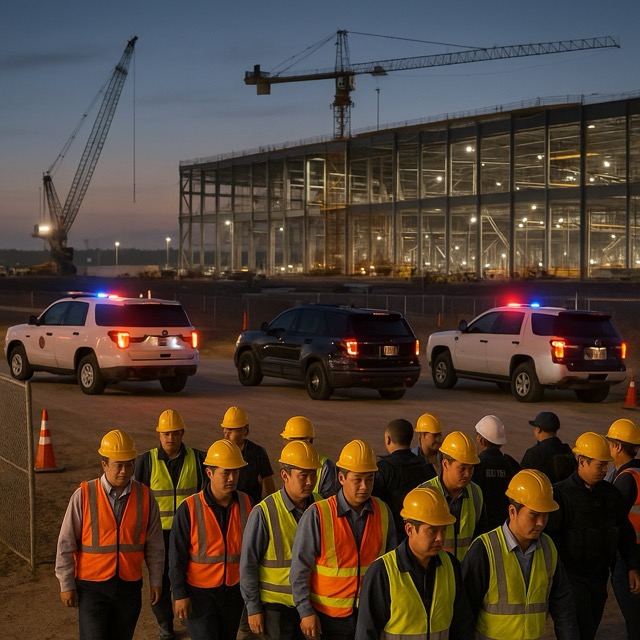
Foreign companies with big U.S. projects are hitting the brakes after federal agents detained hundreds of South Korean nationals during a sweeping immigration raid at Hyundai Motor Group’s joint battery venture with LG Energy Solution in Ellabell, Georgia, last week. From Seoul to Tokyo and Taipei, in‑house counsels say they’ve fielded urgent calls asking whether to suspend site visits, delay short‑term assignments, or pull non‑essential staff back home. In several cases, travel departments have temporarily frozen non‑critical trips by technicians who would normally visit for equipment installation or commissioning, pending legal reviews of what activities are permitted for each visa class.
Homeland Security Investigations (HSI) said roughly 475 workers were taken into custody during the Sept. 4 operation — the largest single‑site worksite enforcement action in the agency’s history — with about 300 of those detained believed to be South Korean nationals. Many were subcontractors who entered the United States on short‑term business visitor paperwork or under the visa‑waiver program, documents that do not authorize hands‑on construction work. The raid unfolded at a $4.3 billion battery‑cell facility that Hyundai and LG are building to supply a new electric‑vehicle hub near Savannah.
The response has ricocheted through corporate boardrooms and diplomatic channels alike. South Korea protested and negotiated for the release and repatriation of its citizens. President Donald Trump defended the operation and publicly warned foreign investors to “respect our Nation’s immigration laws,” while a senior homeland security official vowed more worksite sweeps. Immigration attorneys, meanwhile, criticized long‑standing gray areas in U.S. visa rules that leave global manufacturers few options when they need seasoned crews to assemble imported production lines on tight timelines.
Inside corporate America’s Asia‑facing corridors, the practical reaction has been stark. Project owners and EPC contractors are reviewing subcontractor rosters, auditing I‑9 files, and running travel‑history checks on anyone slated to rotate into the United States this month. Several companies have implemented site‑access rules that differentiate between observation and work: overseas engineers may advise from catwalks or conference rooms, but they are prohibited from handling tools or operating equipment unless they can show work authorization. Others are postponing factory acceptance tests or commissioning milestones until they can staff them with U.S. workers or obtain clearer guidance.
At the heart of the standoff is a mismatch between policy ambitions and legal pathways. Washington has spent the past three years dangling subsidies to lure battery, semiconductor and clean‑tech manufacturing onshore. But companies say the U.S. system offers too few timely visas for the exact people needed to stand up those plants: veteran tool installers, commissioning engineers and quality‑assurance specialists who shuttle from project to project worldwide. Work‑authorized categories like H‑1B are capped and slow; intracompany transfers can be hard to use for subcontractors; investor visas do not fit short‑term construction assignments. As a result, some firms have relied on business‑visitor entries that allow meetings and training but not productive labor — a line often blurred on fast‑moving sites.
LG Energy Solution said 47 of its employees were among those detained and advised other workers to stay home or leave the United States while it reviewed their status. Korean, Japanese and Taiwanese business groups circulated client alerts urging members to scrutinize mobility programs and subcontractor supply chains. U.S. law firms pushed out weekend checklists — from pre‑clearance protocols at airports to on‑site compliance scripts — and reported a surge in emergency calls from manufacturers, equipment makers and construction managers seeking to map out what tasks foreign specialists can perform without triggering enforcement.
Local officials who have touted Hyundai’s complex as a jobs engine now face an awkward reality. The battery venture and adjacent EV plant depend in the near term on overseas expertise to install production lines. Business leaders worry that prolonged disruptions could push back schedules and ripple through a fragile domestic EV supply chain, even as new training programs for local workers ramp up.
Beyond Georgia, the scale and imagery of the raid — workers in hardhats escorted in plastic cuffs to waiting buses — reverberated across Asia. In Seoul, the episode stoked questions about whether the political climate in Washington is turning less predictable for allies that have pledged tens of billions of dollars to U.S. factories. In private, executives say they do not want to pull back from strategic investments; instead, they want clearer rules of the road. Publicly, most are staying quiet while their lawyers review exposure and advise on next steps.
For now, companies are triaging. Immediate steps include halting site access for any foreign national whose visa category is unclear; shifting supervisory roles to U.S. employees who can document work authorization; and creating “clean‑room” observation zones where overseas engineers can watch, coach and train without touching tools. Employers are also retraining line managers on what to do if agents arrive with a warrant and checking that all vendors — not just prime contractors — have verified employment eligibility for anyone performing productive work on their sites.
Industry groups want a targeted, time‑limited visa for short‑term technical assignments tied to strategic manufacturing projects. They argue a clearer pathway would bridge a skills gap without displacing U.S. workers and reduce the temptation to squeeze project work into visa categories never designed for it.
The immediate chilling effect is already visible. Travel coordinators who once booked routine rotations for foreign technicians now consult counsel on whether a site visit is permissible, what documentation to carry, and which activities are off‑limits. Human‑resources teams are mapping which critical tools and production steps can be commissioned by U.S. staff or via remote guidance, and project managers are rewriting schedules to account for slower ramp‑ups. A few firms have quietly diverted senior engineers to other North American sites while they assess U.S. exposure.
Even with signs of a diplomatic thaw — the United States agreed to release and repatriate many of the detained South Korean workers — executives say the episode has reset risk calculations. Those pushing forward in the United States are now budgeting for immigration counsel the way they do for environmental permitting and export controls. The message from last week’s raid, they say, is that compliance is no longer a back‑office box to tick; it is a frontline variable that can stop a billion‑dollar project cold.
What happens next will determine how deep and lasting the freeze becomes. Homeland security officials have signaled that more worksite operations are coming, and immigrant‑rights groups are urging them to test cases against prime contractors they say designed staffing plans around visa gray zones. Foreign investors are waiting to see whether Washington clarifies where the lines are — and whether crossing them risks another headline‑grabbing sweep. Until then, expect more emergency conference calls, more scrutinized itineraries and, for some firms, more empty seats on flights that once carried the specialists tasked with building the factories America says it wants.




 The Tower Post