After years of political turmoil and doubts about its future, the territory has reclaimed the global IPO crown and delivered one of 2025’s strongest stock‑market rallies. Can the momentum last?
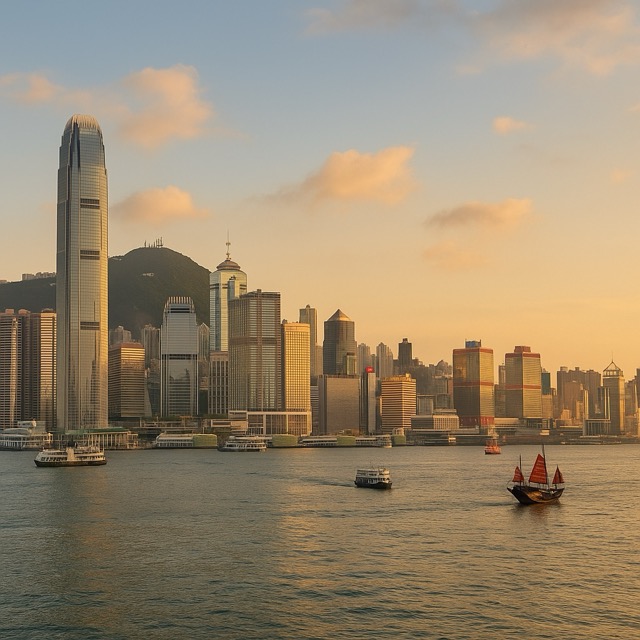
HONG KONG — Not long ago, the consensus called time on Hong Kong. The 2019–20 protests, Beijing’s sweeping National Security Law and the city’s new Article 23 legislation, along with strict pandemic controls, led professionals and capital to reassess the territory’s future. Bankers decamped, companies paused deals and commentators proclaimed that the era of “Asia’s world city” was over.
Yet in 2025 the obituary writers are eating their words. Hong Kong has muscled back into the front rank of global finance, finishing the first half of the year as the world’s top venue for initial public offerings by proceeds and drawing a rush of secondary and dual listings from mainland Chinese champions. The Hang Seng Index has posted one of the best performances among major equity benchmarks this year, with a rally that has reset risk appetite across the region.
The turnaround reflects a hard‑headed mix of policy engineering and market forces. Beijing has nudged high‑quality issuers toward the city and smoothed pathways for “A+H” listings — mainland companies that add or revive a Hong Kong float — while regulators on both sides expanded the Stock Connect trading links and broadened the menu of eligible exchange‑traded funds. That combination has channeled a deeper flow of mainland savings into Hong Kong‑listed shares and made it easier for global investors to access Chinese companies without navigating onshore markets.
Numbers tell the story. In the six months through June, companies raised roughly US$13.5–14.1 billion from Hong Kong IPOs, according to Dealogic and LSEG tallies — more than Nasdaq and the New York Stock Exchange over the same period. Mega‑deals from electric‑vehicle and technology supply‑chain leaders set the tone, while health care and advanced manufacturing rounded out a pipeline aligned with China’s industrial priorities. At the same time, equity‑capital‑markets activity beyond IPOs has picked up, with follow‑on offerings and block trades adding depth to daily turnover.
Investors have noticed. Year to date, the Hang Seng has surged by roughly 30 percent, outpacing most developed and emerging‑market peers. The advance has been underpinned by exposure to a stabilizing Chinese economy and by policy‑linked themes from artificial intelligence to green manufacturing. It also reflects a rotation back into undervalued China‑related assets after years of underperformance. Pauses along the way — including sharp pullbacks in technology shares — have resembled the normal digestion of outsized gains rather than the start of a new downtrend.
None of this erases the political context. The National Security Law imposed by Beijing in 2020, followed by Hong Kong’s home‑grown Article 23 legislation in 2024, redrew the city’s civic landscape and chilled dissent. Many residents left; independent media and civil‑society groups came under pressure. Those changes are deeply unpopular with Hongkongers who favored a more pluralistic future, and they remain a defining risk for the city’s international reputation. Markets, however, have largely separated the politics from the pricing — a calculation that could change if sanctions tighten or if cross‑border tensions flare.
Behind the rally is a quiet redesign of the region’s market plumbing. Stock Connect, once a niche channel, now spans thousands of equities and a fast‑growing roster of ETFs, with higher daily quotas and operational tweaks that reduce frictions for cross‑border money. Regulators have signaled support for overseas listings by strategically important, technology‑intensive firms — including those not yet profitable — a nod to the growth‑equity model that built the city’s last great boom. And Hong Kong has broadened its list of recognized exchanges to make secondary listings easier for companies from Southeast Asia and the Gulf.
Competitive dynamics have helped. Singapore remains a formidable wealth‑management hub, and the Gulf exchanges have captured attention with oil‑linked mega‑deals. But Hong Kong’s edge in China access is hard to replicate. For issuers anchored in the mainland’s vast supply chains — batteries, chips, industrial automation, pharmaceuticals — a Hong Kong listing brings international capital, research coverage and liquidity without the disclosure regime and litigation risk of U.S. markets. For global investors, it offers concentrated exposure to Chinese growth with rules and infrastructure they understand.
The rebound also reflects human capital rushing back in. Mainland professionals — quants, compliance officers, ECM bankers, technologists — are moving to the city in greater numbers, drawn by career opportunities and the promise of a more open financial architecture than they enjoy at home. Western banks have quietly rebuilt their deal teams, eager to intermediate the reopening of China’s equity story and to win mandates from firms looking to hedge geopolitical risk with multiple listings. A high‑profile pipeline — including a possible Shein flotation — keeps syndicate desks busy even as bankers caution that execution windows can be short.
There are still plenty of caveats. The Hang Seng’s leadership this year rests heavily on policy‑sensitive sectors; a misstep in stimulus, a renewed property‑market wobble or fresh geopolitical shocks could cool sentiment quickly. The IPO league tables, while flattering in the first half, can swing with a handful of U.S. tech deals or Middle Eastern privatisations. And the concentration of Hong Kong’s new issuance in Chinese names means the market is more correlated than ever to Beijing’s regulatory and macro cycles.
Even so, dismissing the 2025 revival as a dead‑cat bounce understates the structural shifts under way. Capital‑market co‑operation between Hong Kong and the mainland has momentum and institutional backing; the Stock Connect and ETF Connect frameworks are now embedded in investor workflows; and the listing pipeline is broader, spanning clean energy, AI hardware, biotech and advanced manufacturing. Meanwhile, price matters: after a grinding bear market, valuations left room for a powerful re‑rating once policy support firmed and earnings stabilized.
The bigger question is whether finance can boom while the broader economy and civil society remain under strain. Tourism and small‑business activity have not fully recovered; the property market is still adjusting; and the political chill has not lifted. Hong Kong’s unique proposition — cosmopolitan and rule‑of‑law‑based yet integrated with China — is being recalibrated toward serving as China’s international capital‑markets gateway. That may be less “East‑meets‑West” than before, but it is a coherent and investable identity.
For investors and issuers, the takeaway is pragmatic. Hong Kong’s financial industry, written off by many after the crackdowns and legal changes, is — on the metrics that markets care about — back. The city has reclaimed the IPO fundraising lead, its benchmark equities are among this year’s top performers and the deal pipeline remains thick. The trade‑offs of the new normal are plain. So, increasingly, are the opportunities.


 The Tower Post