A 70-year-old in Turin, a machinist in Monza, a metalworker near Catania and a forklift driver in Rome: September’s tragedies reignite a national debate over workplace safety, enforcement, and responsibility.
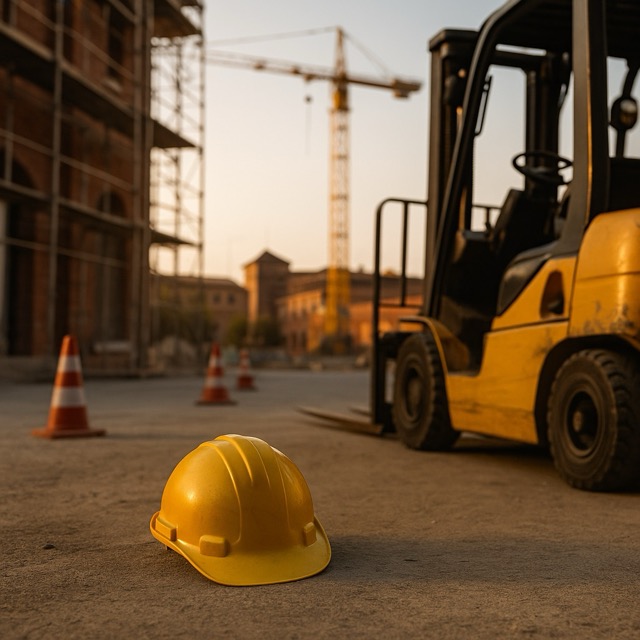
It was a single day that read like a ledger of preventable sorrow. In Turin, a 70-year-old Egyptian worker fell twelve meters from a crane basket. In Monza, a 48-year-old Italian worker of Guinean origin was struck by the lever of a lathe. In the Catania area, a 53-year-old metalworker plunged from the roof of a window-frame factory. And in Rome, a 47-year-old operating a forklift slipped and was dragged under his machine. Four separate workplaces, four different tasks—one country forced to confront an old, stubborn truth: in Italy, people still die to make a living.
The day’s toll, recorded at the turn of early September, did not happen in a vacuum. According to Italy’s national workplace insurance authority, INAIL, fatalities in the first seven months of 2025 rose compared to the same period last year. Union confederations have renewed calls for tougher penalties and more inspectors; employers’ associations insist the majority of firms follow the rules and shoulder rising compliance costs. The families of the dead fall between these familiar arguments, waiting for prosecutors and investigators to piece together what went wrong.
Police and safety investigators will determine whether guardrails were installed and anchored on the Turin worksite, whether lockout procedures were followed in Monza, whether the Catania roof had lifelines, and whether the Rome warehouse respected traffic and maintenance protocols for powered industrial trucks. Each case has its own facts. Yet the patterns recur: falls from height, crushing injuries, inadequate training, and the gray zone of subcontracting and piecework that still marks vast swaths of construction, logistics and light manufacturing.
The Italian legal framework for occupational safety—anchored in the Consolidated Safety Act (Legislative Decree 81/2008) and updated through successive decrees—is robust on paper. The system identifies employers’ duties, risk assessments, training obligations and the chain of responsibility across contractors and subcontractors. But the distance between written safeguards and daily practice remains perilously wide, especially where small subcontractors operate at thin margins, workers are older or precariously employed, and schedules are compressed by cost or delivery pressures.
One high-profile reform arrived in 2024: a credit-based safety license (the so-called ‘patente a crediti’) for firms and self-employed contractors who want to operate on building sites. The license, administered by the National Labor Inspectorate, assigns an initial score that can be reduced for serious violations and recovered through training or corrective actions. The measure—rolled out with an online portal and backed by stepped-up inspections—was billed as a cultural shock intended to keep chronic violators off job sites. By late 2024 and into 2025, the rule became operational and a reference point in many investigations. Yet its real-world deterrent effect is still being tested; critics say bad actors can resurface under new company names, and that the scheme’s bite depends on inspection capacity.
Inspection capacity is, in fact, the fulcrum. Government data show an uptick in checks during 2024 and 2025, and the Labor Ministry touts higher rates of detected irregularities—evidence, in their view, that the net is widening. But numbers alone do not create a safety culture. Inspectors describe a landscape where violations are too often structural—understaffed sites, safety plans written for the tender rather than the task, casualized labor, and training that is ‘delivered’ but not truly learned.
What the four deaths in a single day reveal is something more intimate than policy metrics: age, fatigue and fragmentation. Italy’s workforce is aging; the Turin victim was 70. Older workers can bring unmatched craft and experience, yet the risks for falls and musculoskeletal strain grow with age unless tasks and protections are redesigned. In logistics and warehousing—from forklift routes to loading bays—safety hinges on layout, maintenance and discipline. In small machine shops, a single missing guard or improper emergency stop can be the difference between a near-miss and a funeral.
Another fracture line runs through subcontracting chains. Public and private projects alike are built by consortia, prime contractors and a constellation of small firms. Responsibility is legally shared, but practically diffused. When work is parcelled out across tiers, the risk assessment that looked rigorous in a binder can evaporate on a windy roof or amid a tangle of cables on a factory floor. The imperative to ‘get it done’—to finish a façade, meet a delivery slot, or rush a repair—drives shortcuts that everyone disavows after the fact.
There is no single switch that will halt the deaths. But veterans in prevention cite a tight cluster of interventions that, together, change outcomes: fewer tiers of subcontracting on high-risk tasks; strict separation of pedestrian and vehicle traffic; mandatory harness and lifeline systems any time a worker’s feet leave the ground; machine guarding that cannot be bypassed without tools; and training that is practical, hands-on and repeated, not a click-through module buried between shifts.
Companies also stress that prevention pays. Falls, crush injuries and amputations are not only human disasters—they are operational failures. Rigid checklists may grate on production rhythms, but the alternative is worse: shutdowns, prosecutions, and lives upended. Many businesses, especially mid-sized ones, are investing in digitized risk assessments, wearable sensors that monitor position at height, and fleet management systems that slow forklifts automatically in shared aisles. Those tools matter, but they cannot substitute for leadership that refuses unsafe work when a schedule slips.
The state’s role is twofold: to police and to lead. Policing means stable funding for the inspectorates, faster recruitment, and coordination with prosecutors so that serious violations have consequences soon enough to deter the next shortcut. Leadership means using procurement—especially in public works—to reward contractors with proven, audited safety performance, not just the lowest bid. Italy has built a powerful legal scaffold. The question is whether it will be enforced with the relentlessness that lives deserve.
In the hours after the latest fatalities, the calls for yet another emergency summit rang out across Rome. Summits may soothe, but they do not secure the edge of a roof or the reach of a lathe lever. That happens the day before an accident—when someone insists that a platform be anchored, that a guard be locked, that a route be cleared, that a veteran be paired with a spotter. Four workers died in one day. Honoring them begins with the mundane courage of prevention, repeated every shift, on every site.
Sources
ANSA, “Strage sul lavoro, quattro operai morti in un giorno,” Sept. 9, 2025.
RaiNews, “Incidenti sul lavoro, bollettino drammatico: 4 morti nelle ultime 24 ore,” Sept. 2025.
INAIL/ANSA data updates on 2025 fatalities, June–September 2025.
Italian National Labor Inspectorate reports on increased inspections in 2024–2025.
Legislative Decree 81/2008 (Consolidated Safety Act), updated July 2025; safety ‘credit license’ for construction introduced in 2024.




 The Tower Post