A July trade pledge and a changing security calculus are pushing EU buyers toward long‑term U.S. gas deals — testing the bloc’s climate goals and market model.
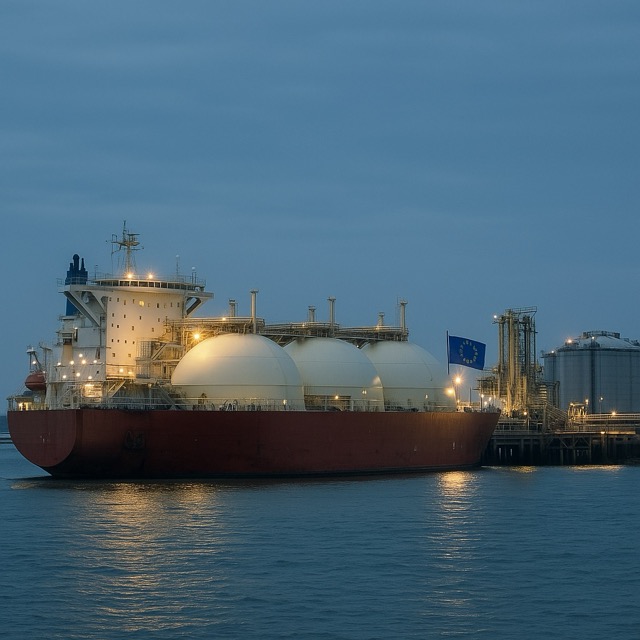
ExxonMobil expects the European Union to begin locking in multi‑decade contracts for U.S. liquefied natural gas, a shift the company says is being catalyzed by the bloc’s summertime commitment to buy vast amounts of American energy. The assessment, shared by senior executives on Wednesday, underscores how Europe’s emergency scramble away from Russian pipeline gas has hardened into a security‑first strategy built around long‑term supply from the United States.
The change in tone follows the transatlantic framework announced in late July, under which Brussels pledged to purchase $750bn of U.S. energy by 2028 and to deepen trade ties across strategic sectors. While many details will be left to national governments and private buyers, the headline commitment has already reshaped expectations in the LNG market, where developers require long‑dated offtake contracts to finance billions of dollars in new export capacity.
Early signals of that pivot are visible. Italy’s Eni has signed a 20‑year sales and purchase agreement with U.S. exporter Venture Global for volumes from its planned CP2 terminal in Louisiana. Germany’s state‑owned trader SEFE has also secured a 20‑year supply deal tied to the same project. And on Wednesday, Edison — an Italian utility controlled by EDF — announced a 15‑year agreement with Shell to take U.S. LNG starting in 2028. Together, those deals point to an EU buyers’ club that is quietly, and quickly, extending its gas horizon into the 2030s and beyond.
ExxonMobil, for its part, argues that Europe’s rapidly expanding regasification network makes long‑term contracting both practical and economical. The company says roughly four‑fifths of its LNG portfolio already sells under multi‑year agreements — a structure it expects more European utilities to embrace after a bruising experience with spot‑market volatility in 2022–23. Europe has also emerged as the single most important destination for U.S. LNG, with imports from the United States accounting for more than half of the EU’s LNG receipts over the past year, by company and industry estimates.
The contractual center of gravity is shifting as well. In the years immediately after Russia’s full‑scale invasion of Ukraine, many European buyers preferred short‑term or spot cargoes indexed to regional hub prices such as the Dutch Title Transfer Facility (TTF). Now, counterparties are gravitating toward hybrid structures that blend Henry Hub‑linked supply with optionality to divert or re‑route cargoes — a design meant to deliver both cost predictability and flexibility in the event of market shocks.
On the supply side of the Atlantic, U.S. projects have regained momentum after Washington reversed a 2024 pause on LNG export approvals. The Department of Energy has resumed permitting and has granted new authorizations for expansions including Sempra’s Port Arthur Phase 2, while ExxonMobil and QatarEnergy’s Golden Pass plant in Texas has moved steadily toward commissioning. Developers such as NextDecade continue to sign 15‑ to 20‑year commitments that backstop additional trains coming to market later this decade.
The strategic logic for Europe is straightforward: long‑term contracts can help reduce price risk for households and industry, support storage planning and give financiers the confidence to maintain and modernize the region’s gas grids. They also give buyers leverage to negotiate stronger sustainability clauses, from methane measurement and abatement to lifecycle emissions reporting, that are increasingly written into sales contracts.
Yet the politics are complicated. The European Commission in July proposed writing a 90% net greenhouse‑gas reduction target for 2040 into EU law, an ambition that implies a steep structural decline in fossil‑fuel use. Locking in 15‑ to 20‑year gas supply contracts sits uneasily with that pathway, especially if demand falls faster than expected and ‘take‑or‑pay’ obligations leave utilities with surplus volumes. Some member states are already debating caps on contract duration or strict clauses to sunset volumes after 2035 unless capacity is paired with carbon capture or used for hydrogen blending.
For U.S. producers, the EU’s $750bn pledge acts as a demand anchor. It signals to bankers that sizable, creditworthy counterparties stand behind future purchasing — aiding project finance just as construction costs and interest rates remain elevated. The quid pro quo for Europe is security of supply: tying up baseload volumes at predictable formulas rather than relying on opportunistic spot buying when winters tighten or outages hit.
There is, however, a lively debate over the realism of the headline number. Analysts note that hitting $750bn by 2028 would require annual purchases of roughly a quarter‑trillion dollars of oil, gas and nuclear equipment — a stretch if prices soften or if efficiency gains curb demand. Even so, the political signal is loud enough to move markets: share prices of U.S. LNG developers rallied when the pledge was unveiled, and counterparties on both sides of the Atlantic have accelerated negotiations.
What would the new contracting wave look like in practice? Expect a patchwork. State‑backed traders such as SEFE will likely anchor Germany’s baseload, with Italian and French utilities layering on supply from the U.S. Gulf Coast. Centralized joint purchasing, used during the 2023 gas crunch, could serve as a coordination tool for smaller buyers, but most volumes will still be booked bilaterally. Destination flexibility and resale rights — lessons from the 2022 crisis — are likely to be standard features.
Pricing dynamics matter as much as volume. Henry Hub‑indexed deals have historically undercut TTF‑linked volumes, but freight, liquefaction and regas fees can erode the advantage, particularly when U.S. benchmark prices rise. Conversely, more U.S. capacity coming online this decade should help tame global price spikes. If Europe avoids the worst‑case weather scenarios and manages storage deftly, the new contracting model could stabilize bills even as coal exits the power mix.
Environmental scrutiny will intensify. Brussels has adopted rules to monitor and cut methane emissions along the gas supply chain, and buyers are pressing exporters for granular measurement, reporting and verification. U.S. producers argue that modern fleets and better leak detection can make American LNG among the lowest‑emitting options available — an assertion Europe’s regulators and investors will test.
Geopolitically, the implications are stark. Multi‑decade U.S. contracts would further sideline Russia in Europe’s gas mix and tie EU energy security more closely to the United States. That tighter alignment also increases exposure to swings in U.S. politics and permitting. For now, Washington’s policy posture is explicitly pro‑export, but future administrations could revisit the balance between domestic prices, climate targets and foreign sales — creating another variable for European risk managers to track.
The bottom line: if ExxonMobil’s call proves right, Europe is on the cusp of an LNG era defined less by crisis and more by contracts. The coming months will turn pledges into paperwork, with utilities racing to secure volumes before the next build‑out wave lifts prices. How Brussels squares those deals with its 2040 climate math — and how deftly buyers write flexibility into the fine print — will determine whether this bet looks prescient or costly by the mid‑2030s.




 The Tower Post