As Washington leans on “reciprocal” tariffs and alliance squeeze tactics, old friends bristle — and critical goals from factory revival to border stability hang in the balance.

Lede
In his second term, President Donald Trump has paired a muscular national-security message with a sweeping reset of U.S. economic policy toward friends and rivals alike. Since April, the White House has layered a 10% “reciprocal” baseline tariff across most imports while ratcheting up Section 232 duties on steel, aluminum and other strategic goods, and then surged targeted rates as high as 50% on partners deemed uncooperative. Meanwhile, Washington has pressed allies to shoulder heavier defense and industrial burdens—from NATO’s new spending target to hard bargaining over technology access and energy purchases. The result is a paradox: America says it needs allies to reindustrialize and secure its own neighborhood, yet its bargaining style is nudging old friends toward conditional cooperation at best—and quiet hedging at worst.
Tariffs on everyone, deals for some
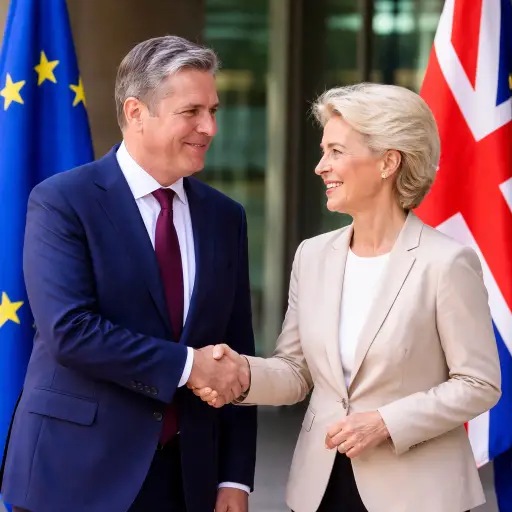
The administration’s organizing idea is simple: use tariffs as leverage to reset trade on U.S. terms, then carve out relief where partners sign up to reciprocal deals. In practice, that has been messy. An April executive order ushered in a global 10% tariff that the White House says is now embedded in a broader schedule of country‑specific “reciprocal” rates. A fresh September fact sheet tweaked product lists and laid out a mechanism to dial tariffs down for partners that conclude new agreements. The European Union and the United Kingdom have since negotiated frameworks that cap or reduce U.S. duties in select sectors—aircraft parts, some pharmaceuticals and semiconductors for the EU; autos and aerospace carve‑outs for the UK—but, critically, a floor of 10–15% still applies across swaths of transatlantic trade. Elsewhere the screws have tightened: steel and aluminum now face 50% Section 232 duties; Mexico has been threatened with surcharges tied to fentanyl flows; and Brazil was hit with a 40‑point hike this summer, taking many goods to a 50% rate. Even where exemptions exist, the signal to allies is unmistakable: access is conditional, and can be revoked.
A NATO ‘win’—and new jitters
On security, the administration points to a major victory at June’s NATO summit in The Hague, where allies endorsed a new benchmark to spend 5% of GDP on defense and security by 2035—including 3.5% for core military outlays and up to 1.5% for resilience, infrastructure and industrial base. Officials in Brussels and Washington say the pledge will accelerate production of air defenses and artillery for Ukraine and replenish stocks across Europe. Yet the choreography also revived doubts. Trump’s own comments about the scope of NATO’s Article 5 collective defense commitment—later softened—prompted quiet worries in several capitals about the alliance’s red lines and U.S. predictability. NATO’s launch of “Eastern Sentry” after a series of Russian drone incursions into Polish and Romanian airspace underscored the stakes; so did a spate of European calls for tighter air policing short of a Ukraine no‑fly zone. More spending may be coming—but so, perhaps, is more second‑guessing.
AUKUS and the Indo‑Pacific: allies on edge
In the Indo‑Pacific, Washington’s review of the AUKUS submarine partnership has kept Canberra and London publicly supportive but privately anxious. Australian officials say the pact will endure—pointing to new UK‑Australia treaty language and shipyard investments—but the Pentagon’s review has already stretched timelines and stirred debate over technology sharing. Across the region, allies from Tokyo to Manila have bristled at sharper U.S. burden‑sharing demands and linkage of market access to security alignment, even as they seek more U.S. forces and munitions in theater. The message from several democratic partners: they will spend more and coordinate more, but they want steadier rules and fewer surprises.
The hemisphere test: Mexico, Canada—then Brazil and Haiti
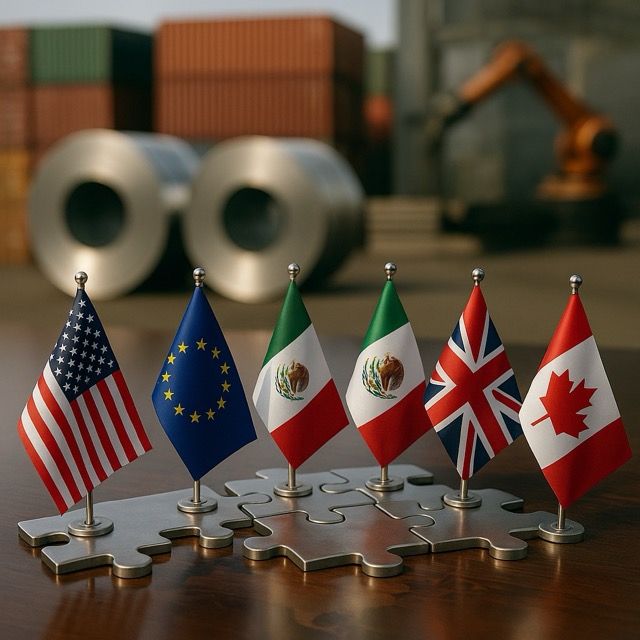
Close to home, Washington’s hard‑edge bargaining collides most directly with the realities of shared security. Mexico’s new government has cooperated with high‑profile U.S. priorities this year—deploying thousands of National Guard troops, extraditing dozens of cartel leaders, and agreeing to expanded U.S. surveillance flights over its territory. At the same time, the White House has threatened tariff surcharges of up to 30% if it deems those efforts insufficient, even as a politically charged 2026 USMCA review looms. That carrot‑and‑stick approach may be producing short‑term border metrics—Panama’s Darién Gap crossings have fallen sharply from last year’s historic highs—but diplomats on both sides warn the cooperation is fragile. Canada, the United States’ closest defense and supply‑chain partner, has absorbed higher metals and auto tariffs while weighing how deeply to diversify. And in Brazil—the hemisphere’s other heavyweight—Washington’s sudden move to 50% tariffs intensified a rolling political dispute with President Luiz Inácio Lula da Silva’s government and invited talk of retaliatory steps and new commodity tie‑ups with China. In Haiti, by contrast, the administration is testing a multilateral tack, backing a United Nations Support Office to stabilize funding and logistics for the Kenya‑led security mission. That shift acknowledges an uncomfortable truth: durable fixes to hemispheric instability require coalitions, not unilateralism.
Will tariffs really reindustrialize America?
The economic case for the “friends‑to‑frenemies” strategy rests on re‑industrialization: that tough tariffs will pull investment home and build a wider North American arsenal of democracy. There are green shoots. Factory announcements—from white goods in Kentucky to battery materials and power‑grid components—have continued. U.S. data‑center construction is roaring on the back of the AI boom, and the administration cites tariff revenues and foreign investment pledges as proof its approach is working. But the macro picture is nuanced. Manufacturing construction outlays have cooled from last year’s record peaks even as selective onshoring continues. Analysts warn that across‑the‑board tariffs act like a broad tax on the very firms expected to build new plants, with mid‑sized import‑reliant employers shouldering rising costs. And the supply chains that underpin advanced industry—from critical minerals to lithography and chip packaging—remain deeply intertwined with allied economies, especially Canada, Mexico, the EU, Japan and South Korea. Squeezing those partners risks delaying, not accelerating, the build‑out of a resilient industrial base.
What would reduce the ‘frenemy’ risk?
Allies are not rejecting Washington’s goals. Most accept that deterrence against Russia and China requires more defense production, and that trade rules must reflect security realities. Their objection is to blunt instruments and moving goalposts. Diplomats and executives sketch out a narrower pathway: lock in transatlantic and Indo‑Pacific tariff ceilings where partners meet clearly defined security and procurement commitments; expand joint procurement and co‑production so allied factories, not only U.S. ones, ramp output; protect carve‑outs for medicines, semiconductors, critical minerals and grid gear to keep re‑industrialization on schedule; and separate cooperative hemispheric security tracks—on fentanyl, migration, and Haiti—from tariff brinkmanship that can unravel trust. Even in a rough‑and‑tumble era, predictability still buys leverage.
Bottom line
The administration says it is rebuilding American strength by forcing long‑overdue reckonings with allies. It has indeed extracted concessions and headline‑grabbing spending pledges. But the same pressure campaign is edging partners toward transactionalism—doing just enough to avoid the next penalty. If the goal is to reindustrialize at speed and stabilize the Western Hemisphere, Washington will need more friend‑shoring than frenemy‑making: tighter coalitions, clearer rules, and fewer tariff whiplashes.
Sources
• White House, “Fact Sheet: President Donald J. Trump Modifies the Scope of Reciprocal Tariffs…” (Sept. 5, 2025), https://www.whitehouse.gov/fact-sheets/2025/09/fact-sheet-president-donald-j-trump-modifies-the-scope-of-reciprocal-tariffs-and-establishes-procedures-for-implementing-trade-deals/
• Council on Foreign Relations, “A Guide to Trump’s Section 232 Tariffs, in Maps” (updated Sept. 2, 2025), https://www.cfr.org/article/guide-trumps-section-232-tariffs-nine-maps
• White House, “Joint Statement on a United States–European Union Framework…” (Aug. 21, 2025), https://www.whitehouse.gov/briefings-statements/2025/08/joint-statement-on-a-united-states-european-union-framework-on-an-agreement-on-reciprocal-fair-and-balanced-trade/
• U.K.–U.S. Economic Prosperity Deal (General Terms) — White House & Federal Register (June 2025), e.g., https://www.federalregister.gov/documents/2025/06/23/2025-11473/implementing-the-general-terms-of-the-united-states-of-america-united-kingdom-economic-prosperity
• NATO, The Hague Summit Declaration & briefings on 5% spending target (June 24–25, 2025), e.g., https://www.nato.int/cps/en/natohq/official_texts_236705.htm and https://www.reuters.com/business/aerospace-defense/what-is-natos-new-5-defence-spending-target-2025-06-23/
• RFE/RL, “NATO Summit Takeaways: Praise For Trump, Article 5 Tensions…” (June 25, 2025), https://www.rferl.org/a/nato-summit-takeaways-hague-2025/33454668.html
• Reuters/AP coverage of ‘Eastern Sentry’ air defense deployments (Sept. 12–13, 2025), e.g., https://www.reuters.com/world/europe/nato-launches-eastern-sentry-bolster-eastern-flank-says-natos-rutte-2025-09-12/
• The Diplomat, “As the U.S. Rethinks AUKUS, Australia and the UK Forge Ahead” (Aug. 4, 2025), https://thediplomat.com/2025/08/as-the-us-rethinks-aukus-australia-and-the-uk-forge-ahead/
• Washington Post/Guardian, reporting on the Pentagon’s AUKUS review (June–July 2025).
• CRS, “Evolution of U.S.–Mexico Security Cooperation” (updated Aug. 14, 2025), https://crsreports.congress.gov/product/pdf/IF/IF10578
• WOLA Border Oversight, “Monthly Migration Through Panama’s Darién Gap” (updated Aug. 21, 2025), https://borderoversight.org/2025/08/21/migration-through-panamas-darien-gap/; DHS press release (July 31, 2025).
• El País (English), “Mexico prepares for tough USMCA treaty negotiations with the U.S.” (Sept. 9, 2025), https://english.elpais.com/economy-and-business/2025-09-09/mexico-prepares-for-tough-usmca-treaty-negotiations-with-the-united-states.html
• Reuters/AP, coverage of new U.S.–UK deals during Trump’s September state visit (Sept. 14–15, 2025).
• Chatham House, “US Indo-Pacific allies are unhappy about Trump’s defence demands” (July 14, 2025), https://www.chathamhouse.org/2025/07/us-indo-pacific-allies-are-unhappy-about-trumps-defence-demands-they-have-comply
• CSIS, “The Trump Administration Wants to Establish a UN Support Office in Haiti—Now What?” (Aug. 25, 2025), https://www.csis.org/analysis/trump-administration-wants-establish-un-support-office-haiti-now-what
• Tax Foundation, “Trump Tariffs: The Economic Impact of the Trump Trade War” (2025 updates), https://taxfoundation.org/research/all/federal/trump-tariffs-trade-war/
• AP News, “Analysis shows Trump’s tariffs would cost U.S. employers $82.3 billion” (July 2025).
• Reuters, “US data center build hits record as AI demand surges” (Sept. 10, 2025).
• AP News, “GE Appliances moves washing machine production from China to Kentucky” (July 2025).
• Reuters/AP, Brazil tariff escalation and Lula’s response (late July–Sept. 2025).