A Symbol of Reconciliation and Global Football Diplomacy
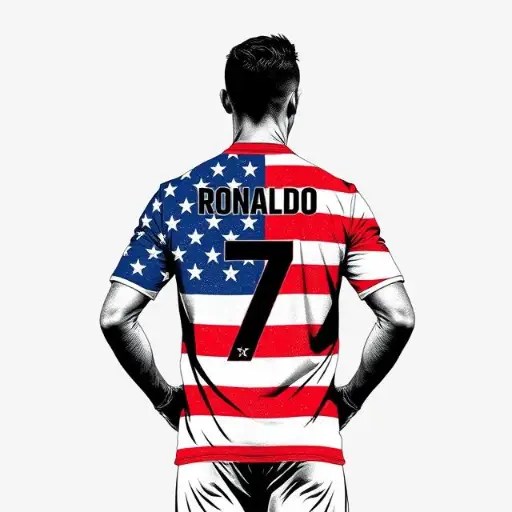
Cristiano Ronaldo’s potential return to the United States after over a decade away has sparked significant interest, not only among football fans but also within the broader context of the upcoming World Cup. The timing of this development is particularly noteworthy, as it coincides with ongoing discussions about the safety and suitability of the U.S. as a host nation, especially in light of recent incidents of gun violence and political tensions.
Ronaldo, who last played in the U.S. during a summer tour with Real Madrid in 2014, is now reportedly in talks to participate in a friendly match against the U.S. in March 2026. This potential return has been viewed as a strategic move, possibly aligned with a shift in the political landscape and the influence of figures like Donald Trump, who has shown a keen interest in high-profile athletes. According to reports, Ronaldo has been making overtures to Trump, including a gesture during the G7 summit in Canada, where Portuguese President António Costa presented Trump with a CR7 shirt inscribed with the message: “To president Donald J. Trump, Playing for Peace.”
The significance of Ronaldo’s potential return extends beyond football, symbolizing a potential thaw in the complex relationship between the U.S. and international sports figures. His presence could serve as a powerful endorsement, offering a sense of security and legitimacy to the World Cup in a country grappling with both internal and external challenges.
Ronaldo’s absence from the U.S. since 2014 has been marked by a series of controversies, including allegations from 2009 that were later re-opened and eventually dropped. During that time, he avoided all U.S.-based events, including pre-season tours and brand collaborations. His return, if confirmed, could signal a resolution to these issues and a new chapter in his career.
Ronaldo’s influence extends far beyond the pitch. As one of the most followed individuals on social media and a global brand ambassador for Nike and other high-profile companies, his return to the U.S. could have a significant economic and cultural impact. His presence would not only draw massive audiences but also generate substantial revenue for the U.S. through tourism and media rights.
Moreover, his return could be seen as a symbolic gesture in the context of the World Cup, which is being hosted at a time of heightened global scrutiny. With concerns about the U.S.’s handling of immigration, social justice, and public safety, Ronaldo’s presence could serve as a unifying force, drawing attention away from the controversies and toward the spirit of sport.
As the World Cup approaches, the world will be watching to see if Ronaldo’s return marks a new chapter in the intersection of sports, politics, and global diplomacy. With his global influence and brand power, Ronaldo’s presence in the U.S. could not only energize the tournament but also serve as a symbolic gesture of unity and reconciliation in a polarized world.
 The Tower Post