A hung parliament, fresh credit downgrade, and street protests leave Macron’s new prime minister searching for a path to pass a 2026 budget

PARIS — France has a new prime minister again. Five days after centrist François Bayrou was toppled in a confidence vote, President Emmanuel Macron tapped Sébastien Lecornu, his 39‑year‑old defense minister and close ally, to try to steer a country mired in political gridlock and fiscal anxiety. The appointment came just as Fitch cut the nation’s sovereign rating to A+, citing rising debt and persistent instability — a one‑two punch that underscores the immediate task: produce a 2026 budget that trims the deficit without detonating a split parliament or a jittery public.
The political arithmetic is unforgiving. Since the snap legislative elections of June–July 2024, the lower house has been split three ways: the left‑wing New Popular Front (NFP) holds the largest bloc, Macron’s centrist Ensemble alliance is second, and the far‑right National Rally (RN) ranks third but remains pivotal on key votes. No camp commands a majority. It is the kind of chamber where a budget can be passed only if adversaries agree to hold their noses — or if a government is ready to risk another bruising confrontation using constitutional shortcuts that would likely trigger motions of no confidence.
Lecornu succeeds Bayrou, whose nine‑month experiment in austerity collapsed last week after he asked lawmakers to endorse a fiscal squeeze that critics said went too far, too fast. Among the most polarizing ideas was scrapping two public holidays — a symbolic lightning rod for unions and opposition parties that saw the move as both petty and provocative. Lecornu quickly jettisoned the plan, a gesture designed to signal a break in style even as he inherits the same bottom line: France’s deficit must fall.
Markets are already flashing warning signs. After the Fitch downgrade, investors demanded a higher premium to hold French debt, narrowing the spread with Italian bonds and stoking jitters about longer‑term borrowing costs. Meanwhile, Brussels has placed France under the European Union’s excessive deficit procedure, giving Paris until 2029 to bring the shortfall back below 3% of GDP. Those deadlines collide with a political calendar that offers little respite before the 2027 presidential race.
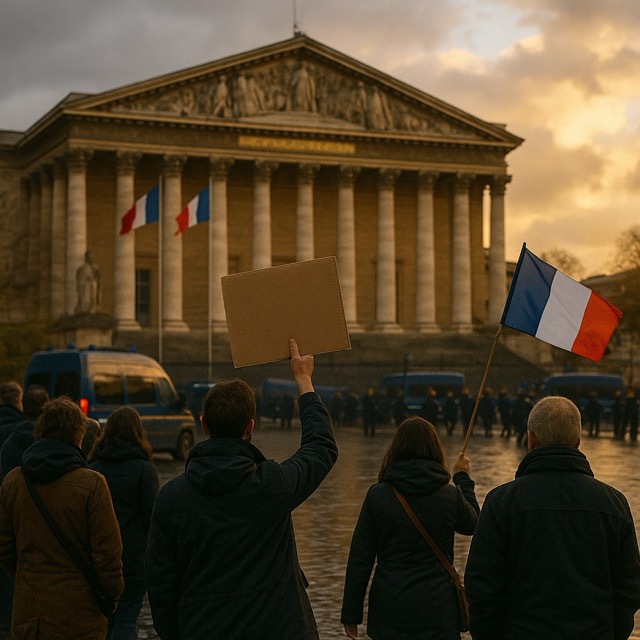
On the streets, patience is thin. The “Block Everything” protests that erupted on September 10 — a loosely organized, social‑media‑driven attempt to disrupt traffic and signal broad discontent — did not paralyze the country but they did capture the mood: anger at a political class that many voters feel has talked past them since the pension overhaul and the snap election. Police made more than a hundred arrests in Paris after clashes near key junctions; unions are preparing a separate nationwide strike on September 18, promising fresh disruption to rail, roads and airports.
For now, the new prime minister is pursuing a twin track — outreach and realism. He has invited party leaders from the left, right and center to discuss a “landing zone” for the 2026 budget, and has hinted that nothing is off the table except the most inflammatory ideas. He has also suggested he will avoid the constitutional bludgeon of Article 49.3 — which allows a budget to pass without a vote — unless there is truly no alternative. The choreography matters: with each of Macron’s recent premiers lasting fewer months than the last, Lecornu needs to demonstrate not just authority but the ability to make adversaries own the compromises they demand.
The bargaining chips are already visible. Socialists and greens are demanding a new levy on extreme wealth — a 2% “minimum tax” on fortunes above €100 million that passed the National Assembly earlier this year before stalling in the Senate. Employers’ groups, led by the MEDEF federation, warn they will mobilize against any move they see as punitive to investment. The conservative Republicans call for spending restraint and oppose broad‑based tax hikes. And the RN, sensing leverage, has set its red lines on immigration and on tax increases for “working France,” even as its leader Jordan Bardella signals tactical openness to vote a budget that trims waste and tightens controls.
The opposition is in no easier position. The NFP’s internal geometry — stretching from social democrats to the radical France Unbowed — makes common lines fragile, particularly on Europe and fiscal policy. The RN, despite its momentum at the polls, is wary of owning austerity as it eyes 2027’s presidential race. Republicans are split between institutional conservatives and a populist fringe more inclined to provoke stalemate. In this chessboard, everyone talks about responsibility while gaming for advantage.
France’s medium‑term problem is not just arithmetic but credibility. Investors and EU partners will forgive high debt if there is a believable route to reduction and a stable political coalition to execute it. The downgrade is less a verdict on capacity than on cohesion. Lecornu’s first weeks will therefore be judged less by the slogan on the front page of the finance bill than by the coalition engineering behind it: can he lock in enough Socialists to neutralize a no‑confidence vote without hemorrhaging centrists to the right? Can he offer targeted concessions on social spending without spooking bond markets already nervous about France’s debt load?
Foreign policy lurks in the background. As Europe retools its defense industry and calibrates support for Ukraine, the next French budget will lock in a years‑long increase in military outlays — one of the few areas where cross‑party deals may be simplest. That also makes across‑the‑board cuts harder: other ministries will feel the squeeze unless new revenues materialize or growth surprises.
The stakes are larger than one budget. Macron’s hyper‑presidential style, combined with the tripolar parliament produced by the snap election, has exposed the seams of the Fifth Republic. Tools a president can deploy to govern without a majority carry political costs that compound over time. Lecornu’s success or failure will therefore double as a test of whether France can relearn compromise in a system designed for dominance.
For voters, the test is simpler: whether prices, services and security feel better in 2026 than they did in 2024. First budget signals matter — not just in the bond market, but at kitchen tables. Dropping the holiday cuts avoids a culture‑war distraction. A credible, phased path on the deficit that protects core social services would buy time, as would a visible crackdown on waste and a willingness to revisit tax breaks that no longer deliver.
France, then, stands at an impasse but not yet a breaking point. The country has been here before and often finds a way through, sometimes gracelessly. If Lecornu can convert back‑room talks into a budget that neither the left nor the right can afford to bring down, he will have earned the breathing room the Élysée craves. If he fails, the drumbeat for fresh elections will grow louder — and the Fifth Republic’s reputation for stability will fray a little more. Either way, the next few weeks will tell us whether this latest reset is a turning point or just another turn of the wheel.