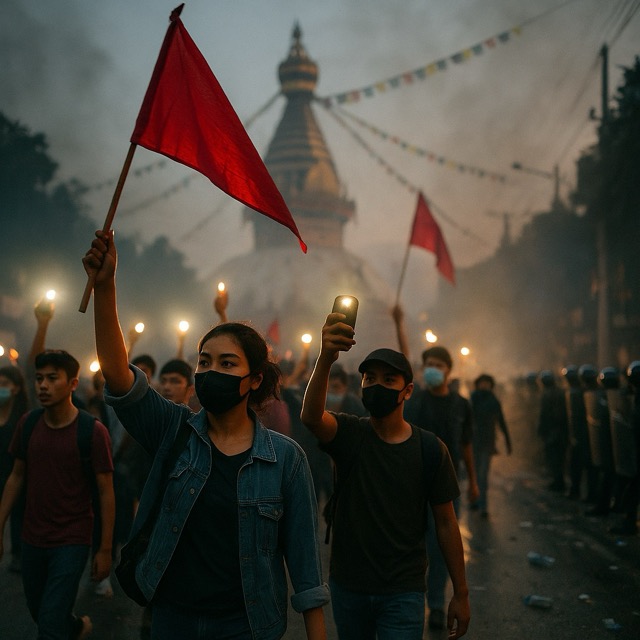
After a short-lived social-media ban, young Nepalis ignited the region’s latest youth-led uprising, toppling a veteran prime minister and forcing an election timetable.

Kathmandu — The week began with a switch flipped: a sudden ban on two dozen social-media platforms. By nightfall, teenagers in hoodies and twenty-somethings with backpacks were streaming toward Kathmandu’s Parliament and the presidential compound, anger sharpened by years of watching the children of politicians flaunt wealth online while entry-level jobs grew scarce. Within forty-eight hours, the country was convulsed by the deadliest political violence in decades. At least 72 people were killed and more than 2,000 injured, according to Nepal’s Health Ministry and hospital officials, after clashes between protesters and security forces spiraled beyond tear gas and rubber bullets into live fire and arson. By Tuesday, four-time prime minister K.P. Sharma Oli had resigned. On Friday, former chief justice Sushila Karki—long known for a tough anti-graft streak—was sworn in as interim prime minister, and an election date was set for March 5, 2026.
The dizzying sequence, so fast it left even veteran political operatives gasping, has been labeled Nepal’s “Gen Z” revolution. It was not sparked by a single party or union, nor by familiar grandees. Instead, it coalesced around a loose network of digital-native activists and volunteers, many of them still in college. They organized on Discord and Instagram—often via VPNs that sidestepped the blackout—broadcast first-aid numbers, debunked viral rumors, and fielded legal advice for those detained. Hami Nepal, a civic nonprofit that rose to prominence during earthquake relief, became an unlikely nerve center. Its 36‑year‑old founder, Sudan Gurung, insists he does not seek office, but his team helped broker the interim transition and pressed for Karki’s appointment. Their pitch to power brokers was simple: put an anti-corruption custodian in charge and make way for voters.
What unfolded on Kathmandu’s streets reflected a broader, longer frustration. Nepal’s median age is 25. Over a third of young people are neither in formal employment nor education or training, according to independent estimates. Remittances from millions working abroad keep families afloat, but the domestic economy has struggled to create dignified jobs. Meanwhile, social media curated a jarring split-screen: the ostentation of political families and business dynasties—“nepo kids,” as the protesters derisively called them—contrasted with the precarious hustle of delivery riders and graduates juggling gig work. When authorities yanked TikTok, Instagram and other apps offline on Monday, it was read not as a narrow public-order measure but as an attempt to silence precisely the generation living most of its life online.
The violence that followed was raw. Protesters torched sections of Parliament and attacked the prime minister’s and president’s residences; police opened fire; the army rolled out under curfew to restore order. By midweek, the death toll had climbed as rescue workers recovered bodies from charred buildings. In neighborhoods that had seen looting, volunteer groups returned the next morning with brooms and water bottles. Images from the capital showed an emblem of pop culture—One Piece’s Straw Hat pirate flag—fluttering above crowds, a tongue‑in‑cheek symbol of rebellion repurposed by a generation raised on anime.
Karki’s appointment—Nepal’s first woman prime minister—has bought a measure of calm. Over the weekend and into Monday she assembled an interim cabinet of technocrats with reformist reputations, and pledged to deliver a credible vote within six months. Victims’ families are to receive compensation; an independent inquiry is promised into the use of lethal force. Yet the tasks ahead are formidable: rebuilding torched institutions; insulating the police and courts from political interference; and, above all, convincing a furious youth cohort that this time will be different.
If the images felt new, the pattern did not. Across South Asia, the young are colliding with aging, sclerotic political orders. In Bangladesh last year, a student-led uprising against a controversial job quota morphed into a nationwide revolt that forced Prime Minister Sheikh Hasina to quit and flee; a caretaker administration under economist Muhammad Yunus stepped in. In Sri Lanka, the 2022 Aragalaya protests—led by students, unions and white‑collar workers—drove the Rajapaksas from office amid a crushing economic crisis and catalyzed a realignment that culminated in a left‑wing electoral breakthrough in 2024. Across the region, social media has become both megaphone and meeting hall, even as governments try—often clumsily—to contain it.
What binds these uprisings is less ideology than demography. South Asia’s much‑touted “demographic dividend” is colliding with a labor market that cannot absorb its entrants and politics that too often still runs on patronage. Gen Z activists are allergic to backroom deals and gerontocratic pecking orders; they prefer open forums, crowdsourced candidate vetting and public scorecards. Nepal’s Discord vote that helped propel Karki was a case in point—an experiment in radical transparency that thrilled participants and unnerved traditionalists.
For Nepal’s entrenched parties, the shock is existential. The mainstream Communists and the Nepali Congress have each taken turns running government since the monarchy fell in 2008, only to preside over repeated coalition collapses. In the past three years alone, governments have come and gone while living costs rose and corruption scandals metastasized—from irregular contracts to nepotistic appointments and opaque party finances. By the time the blackout came, trust had already run on fumes.
The protest leaders say they do not want a revolution that ends at the gates of power. Some are pushing for campaign‑finance caps, transparent procurement, and stricter asset disclosures for public officials. Others want police reform and university governance overhauls. A cross‑party group of lawyers is drafting proposals to strengthen whistle‑blower protections and the autonomy of anti‑graft bodies. Business chambers, spooked by arson and supply disruptions, have signaled conditional support for cleaner rules—so long as the state restores order and refrains from knee‑jerk bans that choke commerce.
Skeptics warn of the risks. Digital plebiscites can be gamed; online leaders can mistake virality for legitimacy; and anger can curdle into nihilism when results lag. The interim government will need to channel the energy of the streets into institutions without criminalizing dissent. Above all, it must keep the promise it made in the heat of crisis: a genuinely open election on March 5 that delivers a mandate broad enough to tackle deep‑rooted rot.
For now, the young hold the microphone. What they choose to do with it—organize and stand candidates, or remain an outsider conscience—will decide whether “Gen Z” becomes a footnote in Nepal’s turbulent political history or the first chapter of something larger. Either way, the week when teens with VPNs knocked down a government will be remembered as the moment South Asia’s new generation announced itself—not with a whisper, but with a roar.
Reporting based on coverage and official statements published Sept 12–15, 2025, including:
• Reuters: appointment of interim PM Sushila Karki; Discord mobilization; death toll/injuries; March 5, 2026 election schedule.
• AP News: interim cabinet appointments and six‑month transition pledge.
• Al Jazeera: Karki’s first address; Discord poll by Hami Nepal; death toll update.
• Financial Times: regional ‘Gen Z’ trend across South Asia (Bangladesh, Sri Lanka, Nepal).
• Human Rights Watch & other reporting on Bangladesh 2024 student‑led uprising; Carnegie analysis on Sri Lanka’s Aragalaya.