A Bold Rebrand and a Challenge to the Fashion Industry
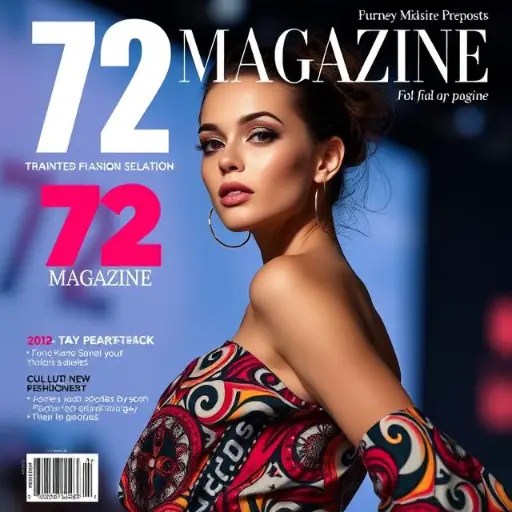
Edward Enninful, the former editor-in-chief of British Vogue, has made a striking return to the media scene with the launch of 72, his new quarterly print magazine. The debut issue, released on Friday, features Julia Roberts on the cover and is part of Enninful’s new venture, EE72, a media and entertainment company he founded with his sister, Akua Enninful. The magazine, described as “tactile, timeless, and collectible,” marks a significant pivot for Enninful, who has transitioned from editor to entrepreneur, taking on the role of chief creative officer.
In an interview with the Guardian, Enninful emphasized his belief that print media has not only survived but thrived in the digital age. “Print has become more powerful than ever,” he said, highlighting his vision to create a publication that honors traditional media with a fresh approach to storytelling. The first issue of 72 features a list of 20 celebrity names, including Pharrell Williams, Oprah Winfrey, and Luca Guadagnino, rather than typical coverlines, signaling a departure from conventional magazine formats.
The launch of 72 coincides with a period of transition in the fashion industry, particularly at American Vogue, where Chloe Malle has recently been appointed head of editorial content, succeeding Anna Wintour, who stepped back as editor-in-chief earlier this year. Malle has indicated a shift toward producing more collectible editions and reducing the frequency of print issues. This comes amid growing criticism that American Vogue has become too mainstream, with recent issues featuring high-profile models like Gigi Hadid and Kendall Jenner.
Enninful’s new venture has drawn attention not only for its editorial direction but also for its strategic decisions, such as the absence of traditional advertising. A spokesperson for 72 described this as a “strategic decision” aimed at challenging the advertising-dependent model that has long constrained editorial creativity. The magazine’s 111 pages span a range of topics, from fashion and wellness to arts and culture, with features including Marc Jacobs’ bedtime routine, a beauty shoot featuring unbranded products like a $24 toothpaste and a GLP-1 medication pen, and a three-page spread dedicated to a Moncler collection designed by Enninful himself.
The absence of brand-sponsored content has sparked debate in the industry. Jeremy Leslie, an art director and founder of MagCulture, an online platform and shop that specializes in independent magazines, noted that 72 “lacks a vital spark” and is not the “anticipated mould-breaking launch.” He argued that successful print magazines today focus on biannual issues with more pages, special print effects, and a mix of glossy and matte paper to enhance the reader experience.
Despite the skepticism, Enninful’s team is confident in the magazine’s potential. Sarah Harris, EE72’s editorial director and a veteran of Condé Nast, described the opportunity to work with Enninful again as “a no-brainer.” She highlighted the freedom of a startup environment, where decisions are made quickly and without the constraints of traditional hierarchies or corporate processes. “We’re not bound by precedent or traditional hierarchies that restrict innovative thinking,” she said. “This gives us the freedom to be organically responsive to culture as it’s happening.”
As Enninful continues to build his team and shape the narrative of his new venture, the fashion world watches closely to see if this phoenix-like comeback will indeed mark the beginning of a new era. With the September fashion calendar typically dominated by luxury advertising, 72’s decision to forgo such content is a bold challenge to the status quo, and one that could redefine the future of print journalism.
 The Tower Post