Foreign buyers pile into U.S. stocks and bonds—minus the dollar risk—as Trump‑era policy turbulence and a sliding greenback reshape global flows
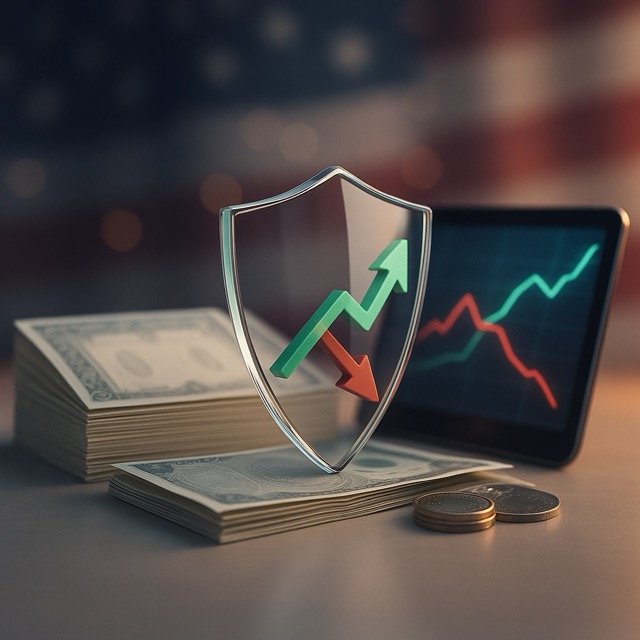
For the first time since 2021, foreign investors are buying U.S. stocks and bonds with currency hedges more than without them. That is the headline finding from new Deutsche Bank analysis moving through global markets this week—and it helps explain why the dollar has been so weak in 2025 even as Wall Street has roared.
Deutsche Bank estimates that roughly 80% of about $7 billion that flowed into foreign‑domiciled U.S. equity exchange‑traded funds over the past three months was hedged against currency swings, up from roughly 20% at the start of the year. The shift is spilling into fixed income too: analysts say about half of recent foreign inflows into U.S. bonds are now hedged. In other words, overseas buyers still want exposure to U.S. assets—just not the currency risk that comes with them.
“Foreigners may have returned to buying U.S. assets, but they don’t want the dollar exposure that goes with it,” said George Saravelos, Deutsche Bank’s global head of FX research, who argues that investors are “removing dollar exposure at an unprecedented pace.” That has a macro punch: heavier use of hedges requires selling dollars in the forward market, and the resulting flows have helped push the greenback down more than 10% against major peers this year.
The timing of the pivot is not accidental. Expectations of Federal Reserve rate cuts have narrowed interest‑rate differentials that previously made hedging U.S. assets expensive for non‑U.S. owners. With hedging costs lower, the calculus has flipped: investors can keep the equity and bond exposure they crave—Wall Street’s tech‑led rally and the unrivaled depth of the Treasury market—while stripping out the currency risk that has chewed up non‑U.S. returns in 2025.
Politics is part of the story, too. President Donald Trump’s public clashes with the Fed and broader policy volatility—from tariff salvos to fiscal brinkmanship—have amplified uncertainty around the world’s dominant currency. Even funds that are structurally overweight the U.S. are now more likely to neutralize the FX factor. From Zurich to Tokyo this summer the watchwords were simple: stay long America, but cut the dollar.
The industry plumbing matters here. The typical hedge is a rolling three‑month forward contract that converts future dollar proceeds back into the investor’s home currency. When U.S. rates towered over those abroad, the “carry” embedded in these forwards made hedging costly. As U.S. yields fall relative to Europe and parts of Asia, that carry has compressed. On top of that, the spring tariff shock and subsequent growth jitters shifted expectations toward a softer policy path, further lowering hedging costs.
In equities, the use of currency‑hedged ETF share classes tells the tale. Issuers report a jump in demand for hedged wrappers tracking the S&P 500 and the Nasdaq, particularly in Europe and Canada. Some multi‑asset managers say they are running fully hedged U.S. equity sleeves for the first time in years, citing board‑level discomfort with FX volatility. In bonds, large institutions such as insurers and pension funds—already accustomed to hedging to protect low‑volatility return targets—have increased their hedge ratios further.
The feedback loop is powerful. As more investors buy U.S. assets but sell dollars forward to hedge, the currency weakens; as the dollar weakens, the pressure to hedge intensifies to avoid further FX drag on performance. That dynamic helps reconcile two seemingly contradictory facts of 2025: record‑high U.S. stock indices and brisk foreign demand for Treasuries on the one hand, and a sliding dollar on the other.
Why it matters
Performance dispersion: in several non‑U.S. markets, hedged owners of the same U.S. assets have outperformed unhedged peers by double‑digit percentages this year.
Policy signal: rising hedge ratios reflect skepticism about the dollar’s near‑term path amid rate‑cut bets, fiscal strains and policy unpredictability.
Market plumbing: persistent hedging demand deepens liquidity in FX forwards but can also exaggerate currency moves when positions flip.
There are, of course, risks to the consensus. If the Fed eases more slowly than markets expect—or if U.S. growth re‑accelerates—hedging costs could rise, tempting some investors to dial down protection. A geopolitical shock that revives classic safe‑haven demand for dollars could also break the pattern. And the trade can become crowded: if everyone is running high hedge ratios, a sudden dollar rebound would squeeze performance for hedged investors and force rapid position shifts in FX forwards.
For now, though, the macro incentives still point in the same direction. U.S. fiscal uncertainty has widened over the summer. Europe’s recovery has firmed just enough to keep the euro supported. And the latest allocations suggest many global investors remain structurally overweight U.S. equities—especially mega‑cap technology—even as they look for ways to insulate returns from currency noise.
What does this mean for portfolios? First, this is an unusual cycle in which currency hedging has become a driver of benchmark‑relative returns rather than a footnote. Unhedged investors in Europe and parts of Asia have underperformed their hedged peers this year on the same underlying U.S. assets. Second, the choice is no longer binary: managers are using dynamic hedge ratios that rise when the dollar falls and ease when it stabilizes, aiming to capture equity beta while keeping FX risk contained.
The strategic picture is shifting, too. A more multipolar macro environment—defined by trade frictions, industrial policy and divergent inflation paths—argues for more, not less, FX risk management. That does not imply a wholesale “de‑dollarization” of portfolios; rather, it points to a world where foreign ownership of U.S. assets remains high but is paired with a higher steady‑state hedge ratio than in the 2010s.
Three signposts will determine whether this hedging wave has further to run. The first is the Fed path: if rate cuts proceed and the U.S.–rest‑of‑world gap narrows, hedging will stay attractive. The second is fiscal politics: an easing of budget tensions could steady the dollar, while renewed brinkmanship would do the opposite. The third is market leadership: if earnings breadth widens beyond the mega‑caps, foreign buyers may feel even more comfortable maintaining U.S. equity exposure—while continuing to neutralize FX risk.
For corporates and policy makers, the consequences are nuanced. A weaker dollar is a tailwind for U.S. multinationals’ overseas earnings, but it tightens financial conditions abroad as local currencies strengthen and capital inflows accelerate. Emerging markets that borrow in dollars benefit from cheaper debt service, yet face more volatile portfolio flows as global funds ramp hedges up and down. In FX markets themselves, higher baseline hedging demand can deepen forward‑market liquidity—but also magnify swings if positioning gets one‑sided.
The bottom line: 2025 has turned the old playbook on its head. Foreign investors are crowding back into America’s markets, but they are leaving the dollar at the door. If the policy and rate backdrop remains as it is today, that is likely to keep the world’s biggest capital market buoyant—and its most important currency on the back foot.
Sources
Financial Times, “Foreign investors in U.S. assets rush for protection against swings in dollar,” September 17, 2025.
Reuters, “Hedging surge reflects crowded trade – long Wall Street, short US dollar,” September 17, 2025.
Reuters, “Trading Day: Fed clock tick‑tock,” September 17, 2025.
Bloomberg, “Investors Cut Dollar Exposure at Record Pace, Deutsche Bank Says,” September 15, 2025.
Fortune, “Trump’s attacks on the Fed are hurting the dollar,” September 17, 2025.
Vanguard (UK), “What does the US dollar’s recent weakness mean for multi‑asset investors,” August 11, 2025.
Apollo Academy, “Outlook for the dollar after Section 899,” July 9, 2025.
Morgan Stanley Research, “Devaluation of the U.S. Dollar 2025,” August 6, 2025.




 The Tower Post