As ad‑valorem rates jump to as high as 50%, jobs and growth are on the line—and so is two decades of painstaking diplomacy

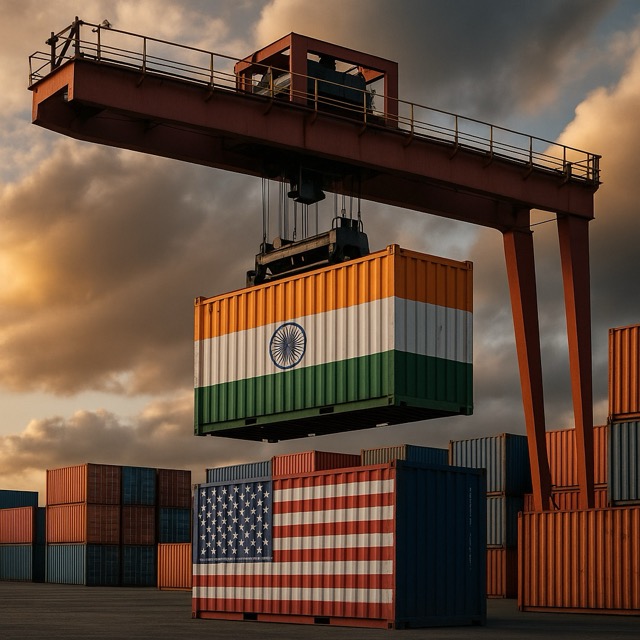
NEW DELHI / WASHINGTON – A sudden escalation in U.S. tariffs has thrust the world’s two largest democracies into their tensest trade moment in years. Effective August 27, the White House began collecting an extra 25% emergency duty on Indian‑origin imports—on top of an earlier 25% ‘reciprocal’ tariff—lifting the total levy to as much as 50% on a wide swath of goods. The administration says the penalty is linked to New Delhi’s continued purchases of discounted Russian crude. For Indian exporters and U.S. buyers, the price shock is immediate; for the bilateral relationship painstakingly built since the early 2000s, the strategic shock may be larger.
The mechanism is unusual but clear. A July 31 executive order amended April’s ‘reciprocal tariff’ framework, and a separate August 6 order—citing emergency powers—layered a 25‑point surcharge specifically on India. U.S. Customs and Border Protection guidance set the August 27 effective date and carved out limited exemptions: shipments already at sea before the deadline (with a grace period to September 17), certain products covered by other national‑security tariff programs such as steel, aluminium and passenger vehicles, and humanitarian or informational materials. For most other lines, the new rate applies in addition to existing duties.
The trade math is non‑trivial. U.S.–India goods trade totaled about $129 billion in 2024, USTR data show. Fresh Indian commerce‑ministry figures indicate exports to the United States slipped to roughly $6.86 billion in August from $8.01 billion in July, with the full impact likely to register in September as the higher duties bite through order books. Exporters warn that, absent relief, job‑rich clusters face thinning order pipelines heading into India’s festive season.
The pain is concentrated in labor‑intensive sectors that anchor India’s export employment: apparel and home textiles, leather goods and footwear, gems and jewellery, furniture and chemicals. Margins are tight and buyers are price‑sensitive; few suppliers can absorb a 50% border tax. Bankers say working‑capital lines have already tightened for smaller manufacturers as clients in the United States pause or renegotiate orders. By contrast, some heavy industries are relatively insulated: Indian steelmakers, for example, send little to America and are more exposed to Europe’s new carbon border levy than to U.S. tariffs.
For Washington, this is no cost‑free gambit. India has become a major buyer of U.S. energy and commodities and a growing customer for capital goods. A chill in India’s growth would reverberate through those sales, while U.S. retailers confront higher prices or costly supplier switches for Indian inputs—from cotton homeware to cut diamonds and generic drug ingredients. Consumers may not see sticker shock immediately, but procurement chiefs are already redrawing sourcing maps.
The diplomacy is delicate. Since 2023, the two governments resolved six long‑running WTO disputes, launched the Initiative on Critical and Emerging Technology (iCET) to co‑develop semiconductors, space and advanced telecoms, and deepened defense‑industrial cooperation under the Quad umbrella. All of that requires private investment—and investor faith that commercial ties won’t be collateral damage in unrelated disputes. Sudden, unilateral tariff swings diminish that faith.
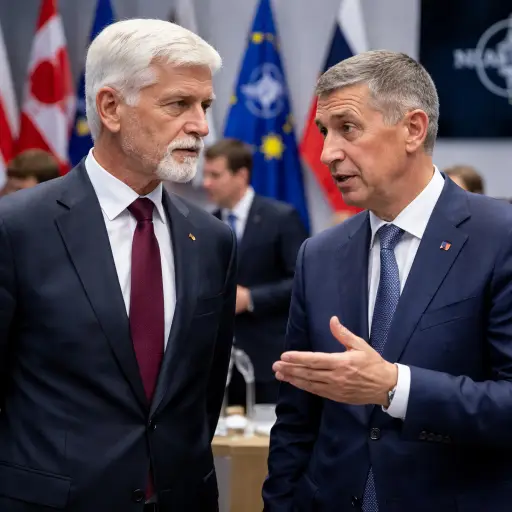
Talks have resumed. New Delhi this week described discussions with a visiting U.S. delegation as ‘positive’ and ‘forward‑looking,’ even as both sides remain far apart on the core trade‑offs: a phased rollback or freeze of the added 25‑point penalty and a U.S. process for product‑level exclusions on one side; greater Indian market access in agriculture‑adjacent categories and dairy, alongside clearer guardrails on Russian oil purchases, on the other. Washington’s nominee for ambassador to India told senators the countries are ‘not that far apart,’ but negotiators concede any deal must be politically saleable in both capitals.
On factory floors, contingency plans are already in motion. Apparel buyers are splitting orders and testing production in Vietnam and Bangladesh; Surat’s diamond processors report queries about alternative cutting hubs; and seafood exporters are repricing contracts and lobbying for targeted relief. Electronics assemblers that had scaled up to serve U.S. demand are seeking clarity on whether specific components might qualify for exclusions or tariff‑rate quotas.
Two realities temper alarm. First, India’s growth engine is still powered mainly by domestic investment and consumption rather than net exports, cushioning the macro shock even as export‑oriented towns feel acute pain. Second, not every artery is constricted: services trade continues to expand, and some goods categories—depending on how exemptions are adjudicated—may face less friction. But jobs are created on factory floors, and that’s where the tariff hit lands first.
What would a pragmatic landing zone look like? Trade lawyers sketch a path that pairs a transparent, time‑bound U.S. exclusion process and narrowly tailored tariff‑rate quotas for labor‑intensive products with Indian steps on science‑based agricultural access and a clearer glide path on Russian crude purchases. Restoring predictability—even short of a grand bargain—would steady order books and safeguard the strategic cooperation both governments say they value.
The stakes are bigger than monthly trade prints. Over two decades, Washington and New Delhi have built a habituated partnership spanning maritime security, technology co‑development and supply‑chain diversification away from China. That edifice rests on trust as much as treaties. The question now is whether tariff brinkmanship becomes a durable feature—or a shock that catalyzes a more resilient, rules‑based framework. The coming weeks will tell whether diplomats can translate urgency into an off‑ramp that protects jobs and preserves the arc of alignment.
Sources
• White House, Executive Order (July 31, 2025): “Further Modifying the Reciprocal Tariff Rates.”
• White House, Executive Order (April 2, 2025): “Regulating Imports with a Reciprocal Tariff…”
• U.S. Customs and Border Protection (Aug. 25, 2025): CSMS #66027027 guidance on added India duties and exemptions; effective Aug. 27, 2025.
• Reuters (Aug. 26–27, 2025): coverage of tariffs doubling to as high as 50% and sectoral exposure; effective date and market reaction.
• Reuters / Indian Commerce Ministry (Sept. 15–16, 2025): exports to U.S. fell to $6.86bn in Aug. from $8.01bn in July; talks described as ‘positive’.
• USTR (2024 data): U.S.–India goods trade totaled about $128.9bn in 2024.
• Reuters (Sept. 17, 2025): Indian steel exports more exposed to EU CBAM than to U.S. tariffs.