USTR launches a 45‑day comment window and a November hearing as tariffs rattle North American supply chains

WASHINGTON – The Trump administration on Wednesday opened the first formal step toward possible changes to the United States‑Mexico‑Canada Agreement, inviting businesses, unions and the public to weigh in on the trade pact before a mandatory joint review next summer. A Federal Register notice from the Office of the U.S. Trade Representative set a 45‑day public comment period and scheduled a November 17 hearing at the U.S. International Trade Commission in Washington, D.C., a procedural kickoff that will guide the U.S. position in 2026 talks with Ottawa and Mexico City.
The move injects fresh uncertainty into the North American marketplace just as companies are recalculating costs, inventories and contracts in response to a broadened set of U.S. tariffs on steel, aluminum and auto‑related goods. Canada and Mexico have responded in kind or moved to shield their markets, and both governments say they prefer a clean renewal of the pact to anchor investment. But U.S. officials say the consultation will help determine whether Washington seeks targeted fixes or pushes for a wider renegotiation.
What’s happening now
USTR’s notice asks stakeholders to submit experiences with the agreement’s operation and ideas for “balanced trade, new market access, and alignment on economic security,” including recommendations the U.S. might table at the 2026 joint review. The filing also invites views on the North American Competitiveness Committee—an under‑the‑radar forum created by the pact and tasked with keeping supply chains moving during emergencies—signaling that the administration wants to broaden the discussion beyond classic tariff lines.
Under USMCA’s structure, the three countries must meet on July 1, 2026—six years after the pact entered into force—to review how it is working and to decide whether to extend it for another 16 years. If any country withholds its consent, the deal enters rolling review periods that can ultimately lead to expiration after 2036. That calendar gives this fall’s comment process unusual weight: it will inform the U.S. negotiating stance on everything from automotive rules to digital trade norms.
Why it matters
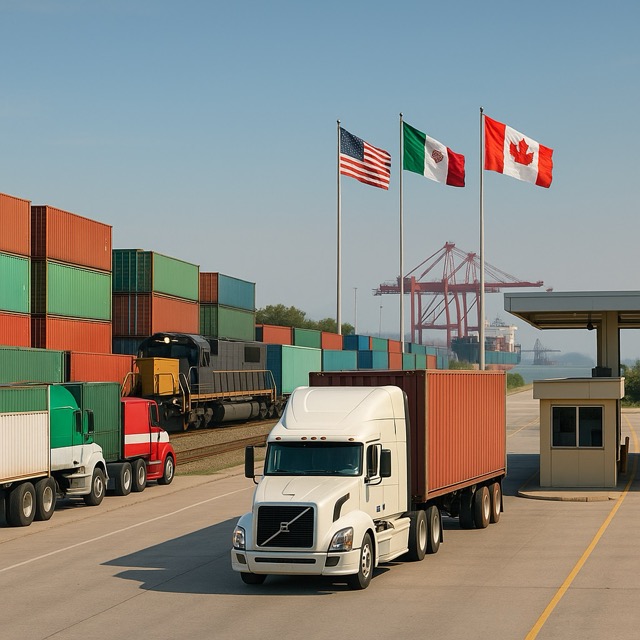
North America’s $1.5 trillion‑plus goods trade runs on schedules tight enough that small changes in rules can ripple quickly through production. Automakers, for instance, reorganized bills of material to meet the agreement’s 75% regional content threshold; parts suppliers and logistics firms shifted routes to capture duty‑free treatment; and meat, dairy and grain shippers re‑calibrated quota allocations and inspection protocols. Layer on top a fresh wave of tariff actions, and companies say predictability—not only market access—has become their most precious input.
The flashpoints to watch
Automotive rules of origin: A USMCA dispute panel in late 2022 sided with Canada and Mexico on how to count “core” components toward a vehicle’s regional value content, a ruling the United States criticized at the time. The decision lowered compliance friction for some manufacturers but left the door open for Washington to seek clarifications or tighter verification.
Dairy market access: The United States and Canada have repeatedly sparred over how Ottawa allocates tariff‑rate quotas for dairy products. U.S. farm groups argue promised openings remain constrained; Canadian officials say they are administering quotas consistent with the pact and with domestic supply management.
Mexico energy and agriculture: Long‑running frictions over Mexico’s state‑led energy policies and restrictions on genetically modified corn have eased at times and flared at others. Any U.S. push for stronger disciplines could re‑ignite those debates, with potential spillovers into investment approvals in power, fuels and food supply chains.
The China factor: Washington has pressed to prevent Chinese components and vehicles from entering the U.S. market via North American production routes. Mexico in recent days proposed steep tariff hikes—up to 50% on cars from China and some other Asian countries without trade agreements—to blunt transshipment and protect local jobs. Expect the review to feature calls for tighter origin enforcement and transparency in battery and electronics supply chains.
What U.S. businesses are weighing
Manufacturers and retailers say the 45‑day window is both an opportunity and a scramble. Operations teams are modeling scenarios that range from a limited ‘tune‑up’ of the pact to a NAFTA‑style, line‑by‑line re‑write. Executives in autos, electronics and machinery warn that new tariffs or stricter rules without lead time could trigger price increases and delivery delays. Others—particularly in steel, aluminum and certain critical technologies—argue for more aggressive use of the agreement to harden North American supply chains against non‑market practices abroad.
Labor unions and rights advocates, meanwhile, are expected to defend USMCA’s rapid‑response labor mechanism, which allows fast‑track investigations of facilities accused of denying freedom of association and collective bargaining. Business groups say the tool, used dozens of times to date, has raised standards in some sectors but needs clearer guidance to reduce uncertainty for compliant firms.
The tariff overhang
Even as USMCA preferences continue to cover the bulk of continental trade, U.S. tariff actions this year have raised costs for a wide set of inputs, from metal castings to electrical components. Canadian and Mexican officials have complained the measures undercut the pact’s spirit, and companies on all three sides are recalibrating sourcing to maximize duty‑free treatment. The practical effect: compliance teams are racing to validate certificates of origin, suppliers are re‑designing bills of material, and ports and railroads are bracing for more paperwork with the holiday season approaching.
What comes next
Written comments are due in early November, followed by the mid‑month hearing in Washington and a short window for rebuttal filings. USTR must then distill the submissions into an assessment for Congress ahead of the 2026 review, a process that will overlap with trilateral diplomacy and industry lobbying in every capital. Canada, Mexico and the United States will also need to decide whether to extend USMCA for another 16 years, a formal step that—if taken—would calm investors even if technical talks continue.
Bottom line
The administration’s call for comments formalizes what North American business has quietly prepared for all year: a consequential test of the region’s economic playbook. For companies that rely on predictable cross‑border flows, the safest strategy between now and next summer may be the hardest: engage early, document compliance, and plan for multiple outcomes. The stakes—jobs, prices and the continent’s competitive edge—will be on the docket long before negotiators gather next July.