County attorney Jeff Gray calls the campus shooting an “American tragedy” and says he will seek the death penalty as firings ripple across U.S. workplaces over social media posts about the assassination.
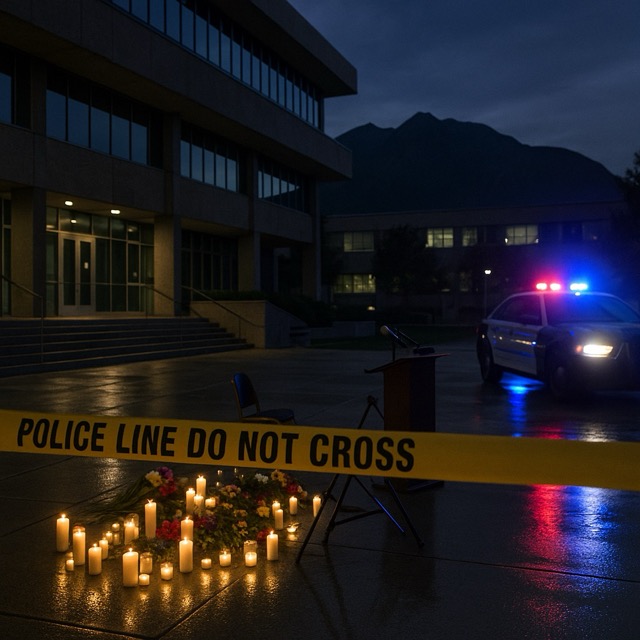
PROVO, Utah — Utah prosecutors on Tuesday charged 22-year-old Tyler Robinson with aggravated murder in the shooting death of conservative activist Charlie Kirk, and said they will seek the death penalty. The filing caps a tumultuous week since Kirk was gunned down on Sept. 10 while appearing at a public debate on the campus of Utah Valley University in Orem.
At a news conference, Utah County Attorney Jeff Gray described the killing as an “American tragedy,” saying the decision to pursue capital punishment was based on the brutality of the crime and aggravating factors outlined in charging documents. Those factors include allegations that Robinson fired from a distance onto a campus plaza crowded with students and families, and that he took steps to cover his tracks afterward. Robinson appeared by video from jail for an initial court appearance on Tuesday, wearing a protective vest.
Prosecutors said Robinson faces seven counts in all, including aggravated murder, felony discharge of a firearm, obstruction of justice and witness tampering. Investigators say emerging digital and physical evidence links him to the shooting: a bolt‑action rifle recovered near the scene; DNA traces on the weapon; and electronic messages in which Robinson allegedly acknowledged the attack and urged a confidant to delete communications. Authorities also cited a handwritten note discovered during a search that, they say, suggests forethought.
Law enforcement officials have not announced a definitive motive. In court filings and public statements, prosecutors say Robinson expressed hostility toward Kirk’s politics and had tracked the event schedule in advance. The shooting unfolded moments after Kirk took questions from the crowd during an outdoor appearance that had drawn supporters, critics and bystanders into the same space, reflecting the tense, combustible atmosphere of election‑year politics.
The death has reverberated far beyond Utah. Kirk, 31, rose to national prominence as the co‑founder of Turning Point USA, a conservative youth organization, and a prolific broadcaster. His rallies regularly drew vocal counter‑protesters alongside loyal fans. In the days since the killing, political leaders across the spectrum have condemned the attack, with many framing it as an assault on free expression and civic life. Utah Governor Spencer Cox called for calm, and university officials held vigils on campus as investigators canvassed the area for witnesses and additional video.
Gray, the county attorney, emphasized that his office had made the death‑penalty decision independently. He said he had briefed state and federal officials, but denied facing pressure from outside the criminal‑justice process. Under Utah law, aggravated murder is a capital offense; prosecutors seeking death must file a formal notice with the court, a step Gray said his team completed Tuesday.
STAFF DISMISSALS
While the criminal case moves forward, a parallel wave of workplace discipline has spread across the country, as employers respond to social‑media posts and public statements about Kirk’s assassination. Dozens of workers — including public‑school teachers, university staff and several private‑sector employees — have been fired, while others have been suspended or placed on leave pending review. The cases vary by state and employer, but together they reflect a swift, and at times legally contested, clampdown on speech perceived as celebratory or callous toward political violence.
In Texas, school districts reported a flurry of complaints about educators’ online comments. Some teachers were removed from classrooms or terminated for posts administrators deemed incompatible with their duties. Universities in South Carolina and other states have also announced firings or suspensions tied to faculty social‑media activity. Media companies and nonprofits have parted ways with staff over on‑air remarks and posts made in the immediate aftermath of the shooting.
Federal agencies have not been immune to the scrutiny. A U.S. Secret Service employee was placed on immediate leave after a social‑media post about Kirk drew condemnation, according to officials — underscoring how policies governing public conduct are being enforced strictly across institutions. Civil‑liberties groups contend many of the firings raise First Amendment and due‑process concerns, especially in public workplaces, and predict legal challenges ahead.
The speed and breadth of the discipline campaign have reignited a national argument over the boundaries of free speech, professional codes of conduct and the line between political expression and endorsement of violence. Business leaders say they have a responsibility to protect brands and communities from posts that appear to condone extremism. Unions and advocates counter that swift punishment risks chilling legitimate debate — particularly when policies are applied unevenly.
On campus in Utah, that debate is not theoretical. Students at Utah Valley University, where the shooting occurred, have described a more visible police presence, tighter event protocols and ongoing counseling services. The university said it is reviewing security procedures for student clubs and visiting speakers, and weighing how to preserve robust debate while minimizing risk. Several student organizations, including ideological rivals, issued a joint statement urging nonviolence and civic engagement.
Investigators, meanwhile, continue to piece together a minute‑by‑minute timeline from videos, ballistics and digital records. Court documents indicate the shot was fired from an elevated position roughly a few hundred yards from the stage, striking Kirk as he turned toward a questioner. Witnesses reported chaos as bystanders sought cover, with some rendering first aid until medics arrived. Robinson was arrested days later after relatives contacted authorities, officials said.
Robinson has not yet entered a plea. A judge ordered him held without bail. His next court date is set for later this month. If the case proceeds to trial, prosecutors would need to persuade a jury of his guilt beyond a reasonable doubt before any penalty phase could begin. Defense counsel, once appointed or retained, is expected to challenge key pieces of evidence and to seek changes of venue or other safeguards, arguing that pervasive media coverage has made it harder to seat an impartial jury.
For many Americans, the killing poses a more intimate question: whether the country can argue about politics without tipping into menace. The sight of a campus debate turning deadly has jolted students and parents already accustomed to active‑shooter drills and polarized rhetoric. The most immediate answers will come in a Utah courtroom. But the larger test — balancing security, free speech and pluralism — will stretch far beyond it.
What happens next
• Prosecutors say they will pursue the death penalty and have filed the required notice with the court.
• Investigators continue to analyze digital communications, forensic evidence and surveillance video.
• Universities and employers are revisiting speech and conduct policies after a wave of firings and suspensions.
• Civil‑liberties groups signal forthcoming challenges over the bounds of employee speech, particularly in public institutions.
• A preliminary hearing is expected to focus on probable cause and evidentiary foundations in the weeks ahead.
Sources
• Associated Press (Sept. 16–17, 2025) reporting on charges and death‑penalty notice
• The Guardian (Sept. 16–17, 2025) coverage of Jeff Gray’s announcement and charging details
• CBS News (Sept. 16–17, 2025) live updates on charges and the court appearance
• ABC News (Sept. 16–17, 2025) reports on evidence and campus response
• Wall Street Journal (Sept. 16–17, 2025) reporting on the charging documents and evidence
• KSL/Deseret News (Sept. 16, 2025) local coverage of the prosecutor’s press conference
• CBS MoneyWatch, Texas Tribune, Fox News, Business Insider and local outlets (Sept. 12–17, 2025) on firings, suspensions and administrative leave tied to social‑media posts



 The Tower Post