Subtle Pressure on U.S. as TikTok Deal Framework Reached
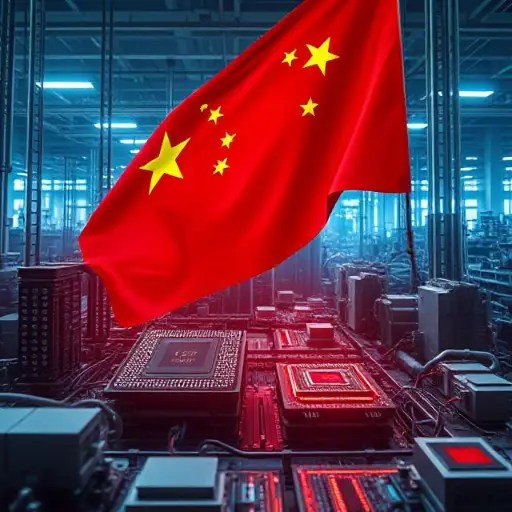
China’s antitrust regulator has accused Nvidia of violating its antimonopoly law, citing a preliminary investigation into the chipmaker’s 2020 acquisition of an Israeli company, Mellanox Technologies. This regulatory move comes as U.S. and Chinese officials are finalizing a framework deal on TikTok’s future in the United States, with a deadline looming on Wednesday. The regulator has not yet detailed the alleged violations or indicated potential penalties, but the investigation adds another layer of complexity to the already strained U.S.-China trade relationship.
Nvidia, a key player in the global AI chip market, faces mounting challenges as it navigates U.S. export controls that have restricted its ability to sell advanced chips to China since 2022. The company had agreed in 2020 to ensure continued supply to Chinese customers, a promise now under scrutiny by Chinese authorities. The situation highlights the delicate balance Nvidia must maintain between complying with U.S. regulations and avoiding backlash from Beijing.
The regulatory action also underscores China’s broader strategy to reduce its reliance on U.S. technology, with domestic companies like Huawei, Alibaba, and Baidu increasingly turning to self-developed chips. Analysts suggest that China’s move to investigate Nvidia is a signal that it is not willing to make concessions to secure access to American technology, even as it seeks to enhance its own capabilities in the AI sector.
In December 2023, China’s State Administration for Market Regulation opened a probe into Nvidia’s $7 billion acquisition of Mellanox, which had been completed in 2020. The probe followed a series of U.S. actions tightening restrictions on China’s access to high-end chips. Antitrust lawyers noted that Nvidia was in a difficult position: complying with U.S. export controls meant halting supply of its most advanced chips to China, which opened it to criticism from Beijing.
In July 2025, former President Donald Trump permitted Nvidia to resume sales of its H20 chip, which is useful for AI inference. However, shortly after, Beijing raised concerns about potential cybersecurity risks and temporarily halted purchases of the chip until Nvidia could clear a regulatory review. Nvidia has consistently denied any backdoors or remote tracking capabilities in its products.
China has been investing heavily in its domestic chip industry since Trump’s first term, aiming for long-term self-sufficiency. While it has not yet achieved the ability to produce chips as advanced as Nvidia’s, it is making progress in substituting its own products for U.S. chips. This shift is evident in the growing use of homegrown technology by major Chinese tech firms.
Experts like Feng Chucheng of Hutong Research suggest that China’s decision to investigate Nvidia is a strategic signal that it is not dependent on U.S. technology and is on a path toward self-sufficiency in AI. This move could influence the ongoing trade negotiations, where the U.S. is seeking to ensure continued access to Chinese markets for American companies, while China seeks to assert its technological independence.
Moreover, the situation highlights the broader geopolitical stakes surrounding AI and semiconductor technology. As both nations vie for dominance in the AI race, regulatory actions like China’s antitrust probe against Nvidia serve as both a warning and a bargaining tool. The outcome of these negotiations could have far-reaching implications for global tech supply chains, AI development, and international trade relations.




 The Tower Post