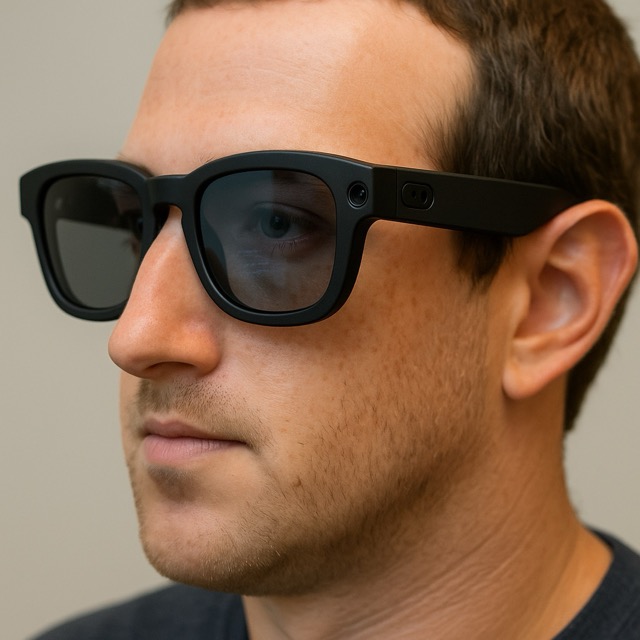
As Meta races to ship ‘Hypernova’ and new Ray‑Ban models, a Chinese contract giant quietly consolidates control over the critical optics and assembly pipeline.

When Meta takes the stage at Connect this month, the spotlight will fall on new AI‑powered spectacles—a follow‑up to the Ray‑Ban Meta line and an eagerly watched device, internally nicknamed “Hypernova.” Yet another story is unfolding offstage, in procurement spreadsheets and non‑disclosure annexes: Shandong‑based Goertek, one of China’s most sophisticated electronics manufacturers, is tightening its grip on the supply chain behind Meta’s next wave of wearable computing.
Multiple recent reports indicate that Goertek is not only building Meta’s forthcoming glasses but has also extended its reach upstream, taking control of Shanghai OmniLight, a specialist in micro‑nano optical components, and providing financing connected to the acquisition of the UK microLED pioneer Plessey—long a key development partner to Meta’s AR ambitions. The moves deepen a dependency that Meta has spent years promising to unwind, even as geopolitics make that goal harder and more urgent.
The timing is awkward. Chief executive Mark Zuckerberg has increasingly talked up a vision of U.S. leadership in artificial intelligence and has publicly aligned himself with a tougher line on China’s tech influence—particularly around content and data platforms. But the hardware reality of AI wearables collides with that rhetoric. For all of Meta’s efforts to diversify final assembly and component sourcing beyond mainland China, Goertek remains the path of least resistance to shipping millions of sleek, camera‑ and sensor‑laden glasses at consumer prices.
In practical terms, Goertek offers a bundle that is difficult to replicate quickly outside China: mature optics integration, camera module and speaker know‑how from years of smartphone and XR work, access to specialized sub‑suppliers, and—critically—process engineering that can tame fussy yields on tiny optical parts. The company has been a mainstay manufacturer for Meta’s Quest headsets and Ray‑Ban smart glasses; by bringing more optics capacity under its umbrella and forging financial links to a marquee microLED outfit, it is knitting together a de facto one‑stop shop for AI glasses.
If Hypernova arrives with a small on‑lens display, voice and camera input, and tighter integration with Meta’s multimodal assistant—as widely expected—Meta will be shipping a product class whose bill of materials is dominated by components Goertek is adept at building or sourcing. Displays and waveguides, cameras, MEMS microphones, battery and hinge systems, radios, and speakers all require painstaking co‑design to fit into sunglass‑scale frames without cooking users’ temples or wrecking battery life. Moving that orchestra outside an incumbent partner imposes real schedule risk.
That risk helps explain the divergence between strategy and supply. Internally, Meta has experimented with relocating parts of manufacturing to Vietnam and weighing alternative EMS partners in Japan and the U.S. Executives have also explored splitting programs among multiple assemblers to gain leverage on cost and confidentiality. But the gravitational pull of a seasoned integrator has persisted. For a hardware program that already threads the needle between style, thermals and weight, swapping out a tier‑one manufacturer mid‑cycle can trigger cascading re‑validation—new jigs, fresh reliability runs, compliance re‑tests, and the dreaded slip from holiday quarter to next spring.
Goertek’s own incentives are clear. The company has sought to buffer a maturing smartphone business by betting early on XR and wearables. Tighter integration with optics and microLED R&D boosts its margins and bargaining power with customers, while the prospect of volume from a headline‑grabbing AI glasses launch is the kind of anchor account that steadies an entire factory network. Adding optics expertise also positions Goertek to pitch future AR devices that demand brighter, more efficient microLED engines—technology that remains notoriously hard to scale but is inching closer to commercial viability.
For Meta, the near‑term upside of sticking with Goertek is obvious: ship on time, at scale, and with tolerable yields. The downside is strategic. Washington continues to scrutinize Chinese involvement in frontier tech, and London has only recently waved through the Plessey deal that—while structured as financing rather than outright ownership—keeps a Chinese heavyweight entwined with a supplier to one of America’s largest AI companies. Even if the arrangement falls short of control, the optics are not simple: a U.S. champion of “personal superintelligence” leaning on Beijing‑adjacent manufacturing to make it real.
Investors appear willing to live with that contradiction for now. Meta’s glasses unit has momentum: Ray‑Ban models have reportedly sold into the millions since their 2023 refresh, and the company’s pitch—that lightweight eyewear will bridge today’s phone‑centric AI to tomorrow’s ambient computing—has won sympathetic ears on Wall Street. An $800 price tag for display‑equipped models may constrain early mainstream uptake, but a cheaper, camera‑first line keeps the funnel warm while Meta refines on‑device models and handoff to its data centers.
The competitive landscape complicates the calculus. Google is lining up luxury and mass‑market eyewear partners; Apple is learning hard lessons from its first‑generation spatial computer; and a queue of Android OEMs—from Xiaomi to TCL‑RayNeo—are preparing AI glasses calibrated directly against Ray‑Ban Meta’s mix of style and utility. Several of those rivals, notably in China, also tap Goertek for design support and assembly. That creates a paradox for Meta: the more Goertek becomes the industry’s default integrator, the less proprietary Meta’s manufacturing advantage becomes.
What might loosen the knot? One path is geographic hedging—accelerating non‑China assembly for final builds, even if core modules are still China‑sourced. Another is technology hedging: investing in alternative optics stacks and display vendors to ensure that waveguides or microLED engines don’t become single‑threaded through Goertek‑aligned firms. A third is organizational: putting more of the system engineering—thermal, RF, antenna, and power—under Meta’s own roofs or within suppliers in allied jurisdictions, so that swapping an integrator is less like heart surgery and more like a long day in the OR.
None of these options is painless, and some may collide with Meta’s near‑term goals of reducing losses in its Reality Labs division. De‑risking the supply chain tends to raise unit cost and lower velocity in the short run. The bet is that a first‑mover edge in AI wearables will justify that cost by seeding a platform where Meta owns the software layer, the assistant, and most importantly the distribution through Instagram, WhatsApp, and Facebook. Whether that bet can be squared with a durable decoupling from Chinese manufacturing is the strategic question that returns with every new glasses SKU.
For now, the company’s posture amounts to pragmatic entanglement. The words emphasize U.S. preeminence in AI and caution about China’s techno‑authoritarian model; the deeds, at least in hardware, still run through master builders in Shandong and their widening portfolio of optics assets. If Hypernova arrives on schedule and delights early adopters, few consumers will care which factory soldered the camera flex to the temple PCB. But in the capital markets and the corridors of government, the identity of that factory—and who finances the suppliers behind it—will matter a great deal in the months ahead.
Sources: Reporting by the Financial Times on Goertek’s consolidation around Meta’s smart‑glasses supply chain; TrendForce and MicroLED‑Info on Goertek’s $100 million financing tied to the Plessey deal; AP, Barron’s and Investopedia previews of Meta’s smart‑glasses announcements and market momentum; UploadVR/Mixed on the debate over outsourcing design to Goertek; and industry analyses on Ray‑Ban Meta sales and competitive dynamics as of September 2025.