Beijing’s 10‑month lag in 2024 spotlights a cash‑strapped United Nations even as China bids to lead a world beyond U.S. primacy
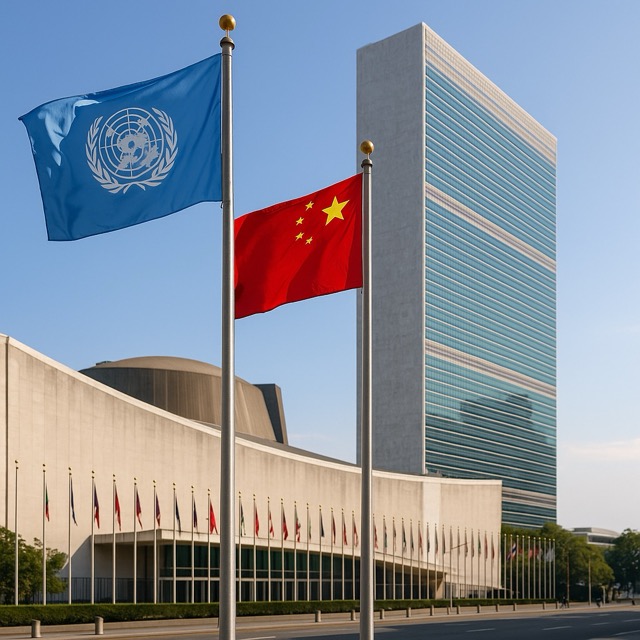
China has been settling its mandatory dues to the United Nations later and later each year, even as it seeks greater sway across the UN system and pitches itself as champion of a “more multipolar” order. A Financial Times analysis of public UN data shows Beijing’s payment of its assessed contribution to the regular budget slipped from roughly two months late in 2021 to ten months late in 2024, when its final tranche arrived in the last days of December. The pattern has added strain to an organisation already in a liquidity crunch.
The timing matters. For the UN’s regular budget, contributions are due 30 days after assessments are issued—normally in early to mid‑February. When the largest funders pay months late, managers cannot commit to planned spending, recruitment and contracts. UN officials have warned repeatedly that late and partial remittances push the Secretariat to slow disbursements, raid reserves and carry unpaid bills into the next year. In 2025, those pressures translated into hiring freezes, delayed procurement and curtailed travel across departments.
Beijing’s tardiness sits alongside China’s rising weight in UN finances. Under the current assessment scale, China is charged just over 20% of the 2025 regular budget—second only to the United States’ 22%. In dollar terms, that puts China on the hook for roughly $680 million this year against a net regular budget of about $3.5 billion. This is a dramatic climb from the mid‑2010s, when China hovered in the mid‑single digits and Japan ranked ahead of it. The rise reflects China’s expanded economic capacity and the UN’s formula for “capacity to pay.”
Yet the political optics are awkward. China has used its visibility as the No. 2 contributor to argue for greater representation in senior UN posts and to advance preferred concepts—sovereignty, “win‑win” cooperation and development‑first approaches—across bodies from the International Telecommunication Union to human‑rights mechanisms. It has also courted the Global South through blocs such as the G77 and via Belt and Road‑adjacent schemes. But paying very late, year after year, undermines Beijing’s claim to be a steady steward of multilateralism.
UN finance officials say the cumulative effect of late‑year lump‑sum payments is particularly damaging. Because unspent balances at year‑end are credited against the following year’s assessments, cash that arrives in December cannot be executed at pace without risking overshoot. In 2024, for instance, China’s last instalment landed just before New Year’s, too late to avert a scramble. The Secretariat began 2025 by asking departments to plan for double‑digit savings and was forced to cut the year’s spend rate to fit cash on hand.
The United States’ behaviour complicates the picture. Washington remains the UN’s largest funder but also its largest debtor, due to a mix of domestic political fights, legal caps on peacekeeping payments and the U.S. fiscal calendar. In most years, the U.S. defers significant outlays until its fiscal fourth quarter, starting in October, which pushes arrears into the spring. That means the UN’s two biggest contributors simultaneously delay cash, even if for different reasons: the U.S. because of appropriations cycles and statutory limits; China because, increasingly, it chooses to pay late.
The consequences are visible across the system. Secretariat memoranda and public briefings in the spring and summer of 2025 flagged a gap of roughly $600 million—about 17% of the regular budget—that had to be shaved through vacancy controls, postponing conferences, stretching vendor payments and narrowing mandated activities. By June, duty stations had been told to model staff reductions of up to 20% funded from the regular budget for incorporation into the 2026 estimates. Independent analysts warned the cuts risk hobbling special political missions and back‑office services that keep UN operations running.
For China, the calculus appears to be political as well as procedural. Diplomats say Beijing prefers to pay in the final quarter to maximise leverage in Fifth Committee budget negotiations and to frame its payments as evidence of responsible leadership, often announcing them with fanfare. Chinese officials also note—correctly—that Beijing pays in full and that other members, especially the U.S., contribute to the crunch. But the chronology shows China’s own lag has lengthened each year since 2021, turning what supporters once called “timing differences” into a structural habit.
There is a softer‑power dimension, too. Unlike the U.S. and some European countries, China gives comparatively modest sums in voluntary funding—the flexible money that keeps agencies such as UNICEF, UNDP and the human‑rights office functioning between earmarked grants. That differential, combined with late assessed payments, limits Beijing’s influence over the parts of the UN that rely on trust funds and appeals. It also reinforces perceptions that China’s multilateralism is instrumental: keen on headline roles and voting blocs, less keen on underwriting the system’s day‑to‑day costs.
Inside the UN, the debate has turned to rules. Senior officials argue that the General Assembly should allow greater use of working‑capital facilities and adjust financial regulations so late payments do not automatically generate large year‑end credits for the following year, which can perversely reward delay. Member states are also weighing whether to tweak scales of assessment again for 2026‑2028 and to shield core services from cash swings. None of those choices are easy: they require political bargains among the very actors now using the cash squeeze as leverage.
Meanwhile, UN partnerships are recalibrating. European donors, unnerved by both U.S. retrenchment and China’s tactics, have explored tighter coordination on Geneva‑based standard‑setting and more conditional core support to headquarters. Middle‑income countries that rely on UN technical assistance worry that another autumn cash crunch will slow projects in 2025‑2026. And across the Secretariat, managers are writing two budgets for next year: an official one, and a cash‑constrained version in case big cheques arrive too late again.
Beijing’s larger bid—presenting itself as the leader of an alternative to a U.S.‑led order—will continue at the UN regardless of payment timing. But timeliness is credibility. If China wants to be seen as the anchor of a different model of global governance, showing up earlier with the money it already owes may be the simplest place to start.

 The Tower Post