After a conservative backlash, authorities shutter dozens of low-cost venues in Riyadh and Jeddah, exposing the tensions in the kingdom’s rapid social overhaul.

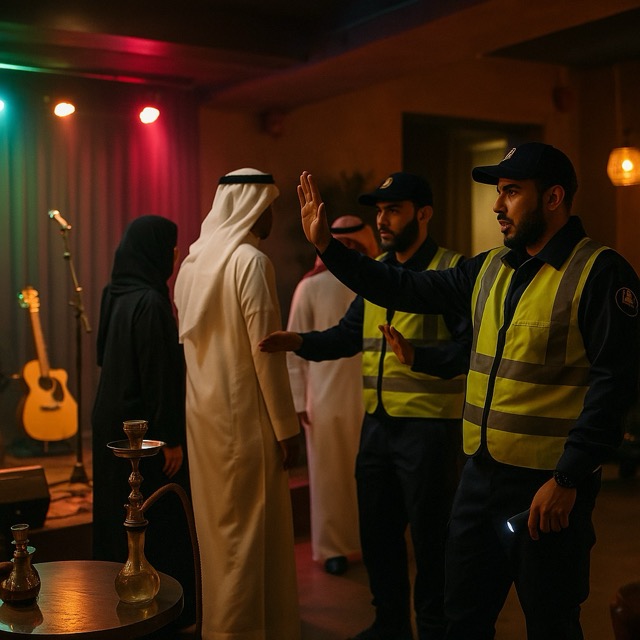
In recent weeks, the neon glow of Riyadh’s and Jeddah’s late‑night “lounges” has dimmed. These are the smoke‑hazed rooms where a live singer or small band takes the stage, families slip into circular booths, and servers weave between shisha pipes and mocktails as a midnight playlist of Saudi and Egyptian hits carries the crowd along. Today, many of those rooms are dark. Municipal teams and police units have moved in, sealing doors and taping closure notices to glass fronts as part of a rapidly widening sweep against an industry that only just came of age.
Authorities describe the campaign as a straightforward enforcement drive: inspections have cited hygiene lapses, licensing problems and other breaches. But the timing and scale — with at least two dozen venues in the two biggest cities shut in recent weeks — reflect a sharper undertow: a conservative backlash against the fastest‑moving cultural opening the kingdom has seen in decades. The closures have become a Rorschach test for Saudi Arabia’s transformation: proof, for some, that the state is re‑balancing after an era of rapid change; evidence, for others, that a modest, affordable strain of live entertainment is being pushed to the margins.
A fast‑rising scene meets a hard stop
“Lounges,” in the Saudi sense, are not nightclubs. Alcohol remains illegal. Instead, these rooms offer live music and a seat‑and‑smoke ambience, often with a modest cover that includes shisha and a soft drink. As mega‑events, raves and arena concerts grabbed headlines, lounges quietly proliferated, buoyed by the same forces — new licensing pathways, a more permissive social atmosphere, and a young population primed for leisure. For lower‑income Saudis and expatriate workers, they became a cheaper alternative to big‑ticket nights out; for some families, they offered a mixed‑gender setting where music could be heard without the crush of a festival crowd.
That quiet boom collided this summer with a drumbeat of objections from religious and social conservatives. In viral posts, critics complained about “seedy” venues on residential streets and accused operators of flirting with behaviors they associate with moral decay. The language echoed older debates that defined public life a decade ago, when the religious police enforced strict limitations on gender mixing and entertainment. Many of those restrictions were rolled back after 2016, part of a deliberate push to broaden everyday life — and to build a domestic entertainment economy.
Enforcement by the book — and between the lines
Officials frame the crackdown in the neutral vocabulary of municipal law: cleanliness violations, storage and handling problems, irregular permits. In Jeddah and the capital, similar inspection waves have recently shuttered cafés and eateries for safety breaches, suggesting a wider compliance push. Yet the focus on live‑music lounges, and the swiftness with which closures spread across prominent districts, have fed the perception that regulators are also responding to a rising chorus of conservative discontent.
Context matters. Earlier this year, the Interior Ministry stood up a unit to tackle what it calls “immoral acts,” with arrests announced for prostitution, human trafficking and related offenses. Officials and supportive commentators say the measure targets criminality and exploitation, not culture. But the revival of morality‑oriented policing, even under a narrower mandate, was read by many Saudis as a signal that the pendulum can swing — and that entertainment spaces sitting at the frontier of social change will be scrutinized more closely.
The middle of the market gets squeezed
The lounges’ appeal lies in their price point and informality. A typical cover might run around the cost of a fast‑casual meal, with men paying and women or mixed couples often admitted free. Operators try to keep the offer simple: a table, a water pipe, a crooner who knows the regional repertoire. That mass‑market formula made the category an outsize employer for sound techs, waitstaff and local musicians who are not headlining the country’s marquee festivals.
For those workers and owners, the problem now is uncertainty. Some venues have been closed outright; others were warned and temporarily shuttered, then allowed to reopen after fixes. Managers describe a paperwork gray zone: is a lounge a restaurant, a café, a live‑performance venue, or a hybrid requiring separate permissions? Answers still depend on municipality, district and even on which inspector shows up. Until the category is defined in black‑and‑white, operators worry that a single complaint — about noise, crowds, or propriety — will be enough to end their season.
Politics by other means
The tension is not only cultural; it is political economy. The state has poured resources into a top‑tier entertainment calendar tied to tourism and global branding — from concert halls and festivals to destination districts such as Riyadh Boulevard. Those products serve a strategic goal: draw visitors, diversify revenue, and keep consumer spending at home. Lounges, by contrast, are hyper‑local and low‑margin. They satisfy demand, but they do not sell the country to the world. When officials stress public‑health rules, skeptics hear a quiet preference for bigger, more easily regulated formats.
That may help explain why the backlash found fertile ground. Critics can object on moral terms while the bureaucracy enforces on technical ones. The result is an outcome that looks apolitical: a clean‑up campaign that also gratifies those uneasy with how quickly social norms have shifted. For a leadership that has embraced change while promising order, the message is consistent: modernization will proceed — but on the state’s terms.
Winners, losers and what comes next
Even among skeptics of the closures, few deny that the sector needs clearer rules: baseline ventilation standards for shisha rooms; capacity caps; acoustic controls; explicit licensing for live performance; and transparent penalties for breaches, escalating from fines to suspensions to closure. Industry figures argue that codifying the category would reduce enforcement ambiguity and separate bad actors from compliant venues. It would also protect patrons — including families — who want options beyond stadium shows and mall food courts.
Others warn that a regulatory squeeze could hollow out the very ecosystem that has nurtured new talent. Over the past five years, a generation of Saudi singers, guitarists and percussionists has found its footing on small stages. Women, in particular, have stepped forward as performers and bandleaders, signs of a broader shift in visibility and taste. If those stages disappear, musicians will have fewer rungs on the ladder between social‑media clips and a festival slot.
The likely path is a more formal, licensed version of the same idea: fewer venues, tighter compliance, and programming that leans toward family‑friendly acts and heritage repertoire. That tracks with a broader cultural pivot in the kingdom, where international DJs and raves have given way to a stronger emphasis on Saudi and Gulf traditions. In policy terms, it offers a middle way: keep music in public life, but limit the spaces and images that sparked conservative ire.
A barometer for a bigger story
The fate of lounges is a small but telling measure of Saudi Arabia’s social recalibration in 2025. A decade ago, the country had no cinemas and little live music in public. Since then, the state has bet heavily that a vibrant leisure economy will improve quality of life, retain talent and draw capital. The wager has paid visible dividends — and generated visible frictions. For every new district built to showcase concerts and street festivals, there are neighborhoods where residents feel their streets were not designed for amplified nights out.
In that sense, this month’s closures are less an ending than a negotiation in a fast‑moving story. The social base for live music is broader than it was; the regulatory appetite for improvisation is narrower. For now, operators will tidy kitchens, upgrade filters and adjust set lists. Musicians will look for the next room with a working mic. And inspectors — backed by a new moral‑order mandate and by old public‑health codes — will decide where exactly the music can play.
Editor’s note on sources
This article draws on local reporting and official statements available as of September 17, 2025, including accounts of recent venue closures in Riyadh and Jeddah; the authorities’ stated grounds for enforcement; and the Interior Ministry’s creation of a unit to police so‑called “immoral acts.” It also situates the crackdown within the broader policy arc of social liberalization begun in 2016 and the development of an entertainment economy under Vision 2030.