Qatar’s emir urges action after Israeli strikes in Doha, but caution over antagonising President Trump tempers the summit’s response

DOHA – Editor’s note: This article is based on events widely reported by international outlets in September 2025, including statements by Qatar’s leadership and coverage of an emergency Arab‑Islamic summit in Doha.
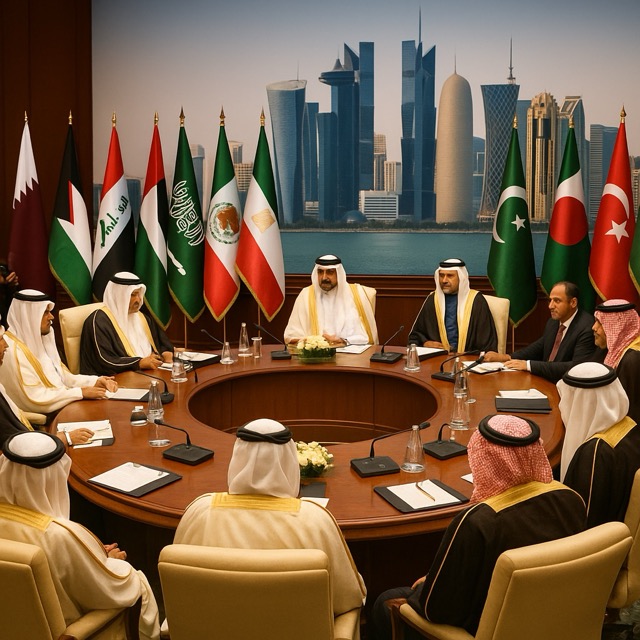
Qatar’s emir, Sheikh Tamim bin Hamad Al Thani, urged an emergency gathering of Arab and Muslim leaders in Doha to take “concrete steps” against Israel following last week’s missile strikes in the Qatari capital that targeted Hamas’s political leadership. The rare attack on a Gulf state—carried out as Hamas officials met in a government residential compound, according to Qatari and regional officials— brought dozens of delegations to Doha and injected fresh volatility into a region still reeling from the Gaza war.
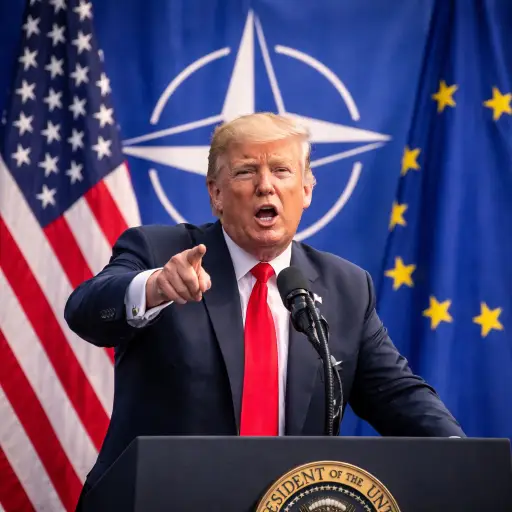
Yet as the summit concluded, it produced more symbolism than strategy. Statements of solidarity and legal condemnations were punctuated by calls for accountability, but leaders failed to coalesce around punitive, collective measures. The outcome underscored sharp differences among Arab and Islamic governments over how far to escalate, and a growing wariness of triggering a confrontation with Washington at a moment when President Donald Trump has signaled unflinching support for Israel and a willingness to wield U.S. leverage across security, energy, and finance.
In a keynote address, the emir said the strike on Doha was an affront to sovereignty and international law, arguing that it endangered mediation efforts for a Gaza ceasefire and hostage release. Qatar, which has hosted indirect talks between Israel and Hamas for much of the past year, cast the attack as a deliberate attempt to torpedo diplomacy. Officials said five Hamas members and a Qatari officer were killed, while senior Hamas political figures survived. Israeli officials declined to comment publicly on operational details.
Inside the conference halls, the range of proposed responses was wide. Some governments pushed for coordinated economic pressure—suspending nascent trade, restricting air traffic, and exploring boycotts of specific Israeli goods or financial institutions. Others urged legal action: a bloc advocated for a referral to international courts and new cases in European jurisdictions under universal‑jurisdiction statutes. Security‑minded states floated an acceleration of intelligence sharing and joint air‑defense planning under the Gulf Cooperation Council’s collective defense framework, wary of further cross‑border strikes.
But as negotiators began to transpose politics into policy, fractures surfaced. Energy exporters weighed market risk and the blowback from any steps that could rattle oil and LNG flows. Countries dependent on U.S. military aid or debt markets warned that sweeping sanctions or flight bans could invite American retaliation—formal or informal—under a White House that has not hesitated to pick economic fights and that frames regional pushback as hostility to U.S. interests. Several foreign ministers noted that the administration’s recent moves—invoking emergency authorities at home and taking a more expansive view of self‑defense abroad—make it difficult to predict the scope of Washington’s response.
The caution was reinforced by domestic calculations. Governments managing fragile economies and contentious reform agendas said they could not absorb the cost of bold measures without the assurance that larger states would provide cover. Others, particularly those with warming ties to Israel in recent years, argued that keeping limited channels open was essential both for de‑escalation and for protecting citizens and businesses with exposure to Israeli markets.
Even so, the summit was not devoid of movement. Gulf states pledged to accelerate the activation of a joint defense mechanism, according to delegates familiar with the discussions, and interior ministers were tasked with mapping vulnerabilities revealed by the Doha strike—ranging from airspace surveillance to protection of sensitive sites. Legal teams sketched a menu of accountability steps short of formal sanctions, including blacklists of individuals linked to the operation and requests for asset freezes in cooperative jurisdictions. Diplomats agreed to coordinate messaging at the United Nations and to seek an emergency Security Council session—likely to fall to a veto but seen as a needed procedural marker.
Qatar positioned itself at the front of that push. Officials signaled that while Doha would continue mediation, it would also review its security partnerships and press for guarantees that its territory would not be used as a battleground for third‑party operations. In parallel, the emir’s office announced consultations with Jordan, Kuwait, and Oman to deepen contingency planning. The Qatari leader’s stop in Amman—his first since the strike—was aimed at exploring air‑defense cooperation and intelligence fusion, people briefed on the visit said.
The room’s hesitancy also owed to unanswered questions about the mechanics of the strike. Regional analysts said the operation appeared designed to circumvent Arab airspace and defenses, a tactic that, if confirmed, will fuel debate over whether existing regional early‑warning systems can reliably detect threats that arrive from unconventional trajectories. Several delegations pressed for an independent technical investigation, noting that the method of attack has implications for every capital in the Gulf.
Meanwhile, Washington loomed over every conversation. The Trump administration’s near‑daily messaging has left little ambiguity about its alignment with Israel and its appetite for coercive diplomacy. With elections and domestic security narratives dominating U.S. politics, Arab and Muslim officials worried that sweeping steps against Israel would be cast in the United States as aiding adversaries. Financial officials cautioned that any attempt to employ hydrocarbon leverage could trigger secondary sanctions or other penalties, complicating sovereign borrowing and private investment at a delicate moment for emerging markets.
For all the public unity, the regional map remains complicated. Iran and Syria urged more forceful moves and celebrated the summit’s rhetorical rebuke of Israel, while states that normalized ties with Israel in recent years sought to calibrate their response, balancing domestic anger with pragmatic security needs. Turkey, which maintains both trade with Israel and security cooperation with Qatar, advocated for legal recourse and accelerated ceasefire talks rather than economic warfare.
In Gaza, the strike’s political effects are still unfolding. Hamas’s leadership survived, but the attack tightened the group’s security posture and disrupted channels that mediators rely upon. Israeli officials, for their part, framed the operation—without confirming it—as part of a broader campaign to degrade Hamas decision‑making and signal that sanctuary for militants is illusory. The immediate result, diplomats said, is a mediation landscape that is simultaneously more urgent and more brittle.
What comes next will hinge on whether the summit’s modest steps crystalize into something enforceable. Analysts say the most likely pathway involves a layered approach: incremental legal efforts; heightened air‑defense cooperation among Gulf states; and calibrated diplomatic pressure at multilateral forums. Sweeping, oil‑linked sanctions remain unlikely absent a dramatic escalation. A minority of states continue to argue for targeted economic measures—such as restricting flights or dark‑listing specific Israeli financial entities—but even proponents concede that such moves would require tacit U.S. acquiescence or risk heavy economic blowback.
For Doha, the calculus is tighter still. Qatar’s role as mediator depends on maintaining lines to every side—including Washington. Officials insist that deterrence and dialogue are not mutually exclusive, but concede that the politics of the moment make bolder steps difficult. The emir’s phrase—“concrete steps”—has become a rallying cry at home and a litmus test abroad. Whether it translates into policies with bite will be the measure by which the summit is judged.
Until then, the region returns to its uneasy normal: public statements that project unity, private calculations that elevate risk management, and a Gaza war that continues to spill across borders. The Doha strike may yet prove to be an inflection point—if only because it made tangible, in a city that has traded on neutrality and negotiation, the costs of a conflict that ignores borders. But as leaders boarded their jets, the balance of probabilities favored caution over confrontation.