From parliaments to protest plazas, alliances now cut across old left–right lines as voters, parties, and states split over sovereignty, security, and civilian suffering.

LONDON/BRUSSELS — For two decades, Western debates about war and peace tended to map neatly onto familiar left–right lines. Russia’s full‑scale invasion of Ukraine in 2022 and the Gaza war that exploded after Hamas’s October 7 attack scrambled that compass. By the fall of 2025, the same capitals that championed a rules‑based order are arguing furiously over which rules matter most — territorial sovereignty in Ukraine, or the laws of war in Gaza — and how to weigh them when resources, attention and public patience are finite.
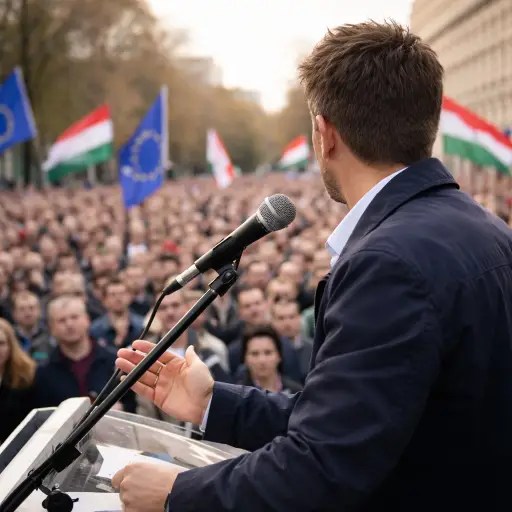
Across Europe and in Washington, the split does not run cleanly between conservatives and progressives. It runs through them. Atlanticist center‑right governments from Rome to Warsaw have backed Kyiv robustly while some populist conservatives elsewhere call for “peace now.” On the left, social democrats who once marched against Iraq now argue that repelling Russia’s aggression is a moral imperative — yet many of those same voices demand arms embargoes on Israel over Gaza. In party caucuses, newsrooms and streets, the coalitions are scrambled.
On Ukraine, Europe’s center has tried to step into a U.S.‑shaped gap. With Washington’s posture in flux, European institutions and member states have overtaken the United States in total committed support, pledging well over €100 billion through mid‑2025 and accelerating rearmament once unthinkable before the invasion. A summer analysis asked bluntly whether Europe was on the path — at last — to becoming a genuine military power. Meanwhile, Ukraine’s newly fielded Western fighter jets are flying sorties “every day,” part of a wider shift toward dispersed, mobile air operations and deeper European supply chains for ammunition and air defense. The message from most EU capitals: whatever Washington decides next, Kyiv cannot be allowed to lose.
And yet, the right is not united behind Ukraine — far from it. France’s National Rally, once mired in admiration for Vladimir Putin, has recoded its rhetoric but not all of its instincts. In several EU states, ascendant hard‑right parties press for a U.S.‑brokered settlement on terms more palatable to Moscow, casting Ukraine as a drain on domestic priorities. Even among conservatives in government, the cleavage is visible: Italy’s Giorgia Meloni has anchored herself firmly in the pro‑Kyiv camp, while other nationalist leaders flirt with the language of “fatigue” and “realism.” Inside the U.S. Republican Party the divide is equally stark — hawks backing more air defense for Ukraine versus “America First” lawmakers who oppose further aid unless Europeans foot the bill.
The Gaza war has produced mirror‑image fractures. Democratic opinion in the United States has swung sharply against Israel’s campaign as the civilian toll mounted, with approval for Israel’s military actions sinking to new lows over the summer. Center‑left politicians who back arming Ukraine have demanded conditionality on U.S. weapons to Israel, citing alleged violations of international humanitarian law and calling for an immediate ceasefire and unhindered aid. On the European side, the institutional line hardened again this week: the European Commission tabled a proposal to suspend trade preferences on Israeli goods and floated sanctions on two far‑right Israeli ministers, even as key member states — notably Germany — hesitated. In the same breath, Brussels continues to condemn Hamas and insist the group cannot retain any political or military control in Gaza. The argument is not about whether Hamas is a terrorist organization; it is about what leverage Europeans should use to change Israeli conduct, and at what cost to relations with Washington and the region.
Religious and civil‑society voices have amplified the pressure. From Rome, the Pope has deplored the “unacceptable” humanitarian situation and urged a truce and the release of hostages, words that have landed in a Europe where student encampments and city‑center marches have become a near‑weekly ritual. In parliaments, MPs who champion Ukraine sanctions on Russia now cite the same international courts to press for accountability in Gaza, deepening discomfort in capitals that want to keep those files separate. The European Parliament has urged member states to enforce International Criminal Court warrants and to back the International Court of Justice’s orders — a legal frame that further polarizes national coalitions.
The effect is a new political geometry. In one camp are “sovereigntists” who see Ukraine as the front line of a broader struggle with revisionist powers — and who, depending on country and party, either bracket Gaza as a separate counter‑terrorism campaign or defend Israel’s latitude as a besieged state. In the other are “humanitarian conditionalists,” a bloc that supports arming Ukraine but demands hard limits and penalties on Israel until civilian protections are credibly enforced. Cutting across both is a third tendency — “deal‑first realists” — skeptical of open‑ended commitments in either theater and eager for U.S.‑led bargaining to stop both wars on whatever terms are achievable. None of these align neatly with classic left–right families; each has adherents and opponents in all of them.
Elections have reinforced the blur. Europe’s rising right includes both staunch Atlanticists and Russia‑friendly skeptics. The center‑left hosts both humane‑security internationalists and anti‑militarist purists. The result: cabinets that talk with two voices and coalitions that can pass Ukraine aid one week but split on Gaza sanctions the next. In Washington, the White House has moved forward with a new mechanism to supply Ukraine from U.S. stockpiles using allied financing — a technocratic workaround to polarized politics — while simultaneously searching for a Gaza ceasefire formula that could unlock hostage releases and reconstruction. Whether either track yields strategic clarity remains uncertain.
Public opinion, too, is cross‑cut. Majorities across the EU still back Ukraine in principle, but they diverge on the war’s end‑state: Ukrainians talk about victory; many Europeans frame support as a lever for a negotiated peace. On Gaza, the U.S. electorate has moved in the opposite direction, with Republicans largely supportive of Israel’s military aims and Democrats increasingly opposed. In both cases, the salience of civilian suffering is the pivot: images of missile‑struck Odesa and of bomb‑shattered Gaza schools collide daily on the same home screens, and voters ask why international law feels so contingent on identity and alliance.
What does this realignment mean for policy? First, it forces leaders to build issue‑specific coalitions, not party‑family majorities. A parliamentary caucus that can pass long‑range air defense for Ukraine may not be the one that can pass an UNRWA funding boost or a trade penalty on Israeli settlers — and vice versa. Second, it shifts the forum: more action now happens in executives and councils (where unanimity or qualified majorities apply) and in bureaucratic workarounds (joint procurement, off‑budget funds, co‑financing lists) than in grand votes. Third, it widens the opening for third countries — from Gulf states to China — to frame ceasefire or reconstruction deals when Western consensus falters.
There are counter‑currents. Ukraine’s gradual integration into Western defense production, plus the arrival of more F‑16s and mobile support gear, has decreased Kyiv’s vulnerability to any single capital’s mood swing. Europe’s munitions ramp‑up has an inertia that politics alone will not quickly reverse. And on Gaza, even as Western publics polarize, a latent consensus has emerged: hostages must be released, Hamas cannot rule Gaza again, and humanitarian starvation cannot be a tactic. The fight is over sequencing and leverage, not first principles.
Still, the headline is unavoidable: the West is divided, but not in the old way. The new fracture is less left versus right than sovereignty versus civilian protection, deterrence versus de‑escalation, speed versus safeguards. It is why a conservative government in one capital can be Ukraine’s most reliable patron and Israel’s sharpest critic, while a progressive coalition next door urges both more arms for Kyiv and maximum restraint on Gaza — and finds itself attacked from both sides for inconsistency. In truth, it is a consistency of values in collision: the belief that borders must not be changed by force, and the belief that war must spare non‑combatants. In 2025, Western politics is where those beliefs meet — and argue.


 The Tower Post