Justice adviser says the administration will ‘use every resource’ to dismantle alleged networks; civil‑liberties groups warn of a chilling effect on dissent.
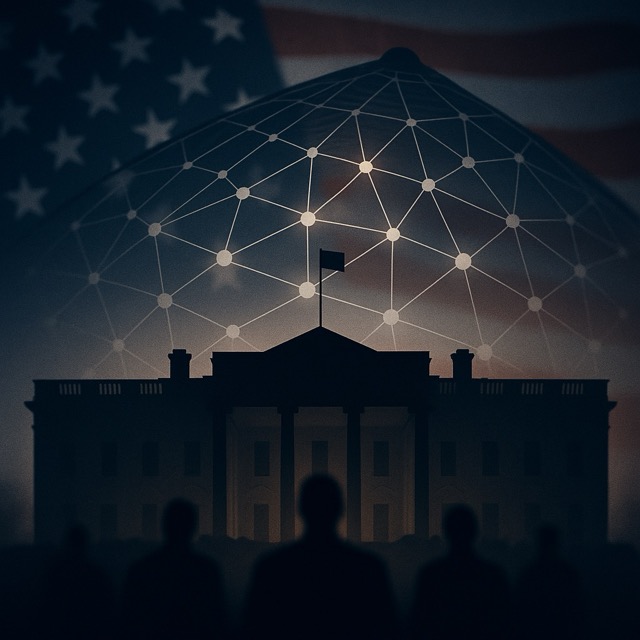
WASHINGTON — The White House signaled a sharper internal security posture this week, with senior legal advisers pledging to intensify investigations into what they called ‘left‑wing networks’ that allegedly coordinate unrest. In public remarks, a Justice adviser said the administration would ‘use every resource’ to identify and dismantle groups believed to be engaged in criminal activity, and referenced billionaire philanthropist George Soros among entities whose funding and affiliations could face heightened scrutiny. The statements triggered immediate pushback from civil‑rights organizations and some lawmakers, who argue the messaging risks conflating protected political activity with criminal conduct.
The comments, delivered in an interview and amplified by subsequent briefings, did not announce specific indictments. Instead, officials outlined a framework that would lean on existing statutes—conspiracy, money‑laundering, and, in limited cases, racketeering—to build cases where investigators can demonstrate coordination of violent acts. The adviser insisted the effort targets behavior, not ideology. Yet the emphasis on ideological labels and a prominent donor galvanized critics who warned of a precedent where the federal government appears to designate political opponents as a security threat.
Advocacy groups described the rhetoric as unusually sweeping. ‘When authorities pledge to “destroy networks” and name philanthropies in the same breath as criminal enterprises, it chills speech and association,’ said a director at a national civil‑liberties group. Nonprofits with progressive missions—voting rights, immigration defense, climate activism—reported a surge of donor questions about compliance exposure and potential investigations. Several organizations said they have engaged outside counsel to review grant agreements and protest‑related trainings to ensure they do not inadvertently increase legal risk for volunteers.
Inside government, officials portrayed the pivot as a response to public‑safety concerns and a patchwork threat environment. They cited incidents in which otherwise peaceful demonstrations were followed by vandalism or clashes, arguing that the line between spontaneous unrest and coordinated acts can be blurred by encrypted communications and rapid mobilization tactics. ‘We will follow the facts,’ a senior official said, adding that the administration expects the Justice Department to issue guidance clarifying how prosecutors should evaluate alleged coordination across jurisdictions.
Legal scholars said the effectiveness—and constitutionality—of an aggressive strategy will hinge on the evidence. To meet the threshold for conspiracy or racketeering, prosecutors must show an agreement to commit unlawful acts and a pattern of behavior, not merely shared slogans or overlapping donors. ‘Funding an organization that engages in advocacy is not a crime; directing or knowingly supporting criminal acts is,’ said a former federal prosecutor, noting that courts typically require concrete proof of planning, direction, or material support tied to specific crimes.
The mention of Soros, whose foundations finance pro‑democracy and human‑rights projects worldwide, carried distinct political resonance. For years, his name has served as shorthand in partisan narratives that cast liberal philanthropy as a shadow network. Allies of the White House argue that major donors should expect heightened transparency if their funds reach groups linked to unlawful acts. Soros‑aligned organizations counter that they maintain strict compliance protocols and say that conflating philanthropic grants with street‑level violence is a category error.
Beyond the legal questions, the practical effects could be significant. Nonprofits may face new requests for records, enhanced due‑diligence questionnaires from banks, or subpoenas that tie up staff time and donor resources. Smaller groups could be especially vulnerable, lacking in‑house counsel to navigate inquiries. ‘Even if cases never reach a grand jury, the process becomes the punishment,’ said an attorney who represents several civil‑society organizations.
Republican allies framed the initiative as a common‑sense extension of existing authorities. ‘If organizations cross the line from advocacy to orchestrating violence, the government has an obligation to act,’ said one lawmaker, pointing to past examples in which social‑media planning was used as evidence of coordination. They also noted that federal scrutiny has in other eras focused on extremist networks on the right, arguing that law enforcement should follow evidence irrespective of political leanings.
Democratic lawmakers expressed concern that the new posture blurs constitutional lines. Several said they would seek briefings from the Justice Department and request documents detailing the scope of any task forces, including whether financial‑crimes units, the IRS, or the Department of Homeland Security will participate. Oversight committees are preparing letters asking for the legal basis of any guidance that references ideological classifications.
Policy analysts say the administration’s next steps will determine whether the rhetoric yields substantive enforcement or remains a political message. Key indicators include whether prosecutors pursue enterprise‑wide theories under the Racketeer Influenced and Corrupt Organizations Act (RICO) or stick to narrower cases tied to specific incidents; how agencies define ‘coordination’; and whether grant‑making institutions are treated as subjects, witnesses, or victims of fraud by downstream recipients.
The broader debate touches on the durability of American civic space. The United States has historically tolerated—often begrudgingly—highly contentious protest movements, from labor strikes and anti‑war sit‑ins to civil‑rights marches. Periodic crackdowns, including surveillance programs later deemed abuses, have typically prompted reforms and apologies. Critics fear a return to tactics that sweep up lawful dissent along with criminal actors; supporters insist the country cannot ignore repeat episodes of violence that follow certain mobilizations.
At the grassroots level, organizers said they are updating protest protocols: more legal observers, clearer non‑violence commitments, and rapid‑response hotlines to document police‑protester interactions. Digital‑security trainers are advising groups to avoid tools that can be misconstrued as operational secrecy, while accountants are revisiting ledger descriptions and sub‑grant monitoring procedures.
Banks and payment processors are likewise assessing risk. Compliance officers say they may file more suspicious‑activity reports when transactions involve volatile protest contexts, even if the underlying activity is lawful. Civil‑liberties attorneys warn that aggressive de‑risking could amount to informal financial blacklisting that is difficult to challenge in court.
For now, the situation remains fluid. Without public charging documents, the legal contours are largely speculative, and officials emphasize that any investigation must clear established evidentiary thresholds. Still, the new language has already reshaped the conversation in Washington: a test of whether the government can pursue those who facilitate violence without casting a pall over the First Amendment’s guarantees of speech, association, and the right to petition the government.
What happens next will hinge on institutional guardrails. Prosecutors and judges will weigh the line between coordination and conspiracy; agencies will decide how much financial scrutiny to apply to foundations and nonprofits; and Congress will determine how aggressively to oversee executive‑branch choices. The outcome could define the bounds of acceptable protest—and the perceived neutrality of federal power—for years to come.
Analysis: Key Questions Ahead
How prosecutors will define coordination versus protected collective action.
Whether financial‑crimes tools will be used to examine philanthropic grants.
What safeguards agencies will place to protect First Amendment activity.
How courts will balance public‑safety claims against chilling‑effect evidence.

 The Tower Post