Despite President Trump’s criticism, the NFL’s revised kickoff format has led to fewer injuries and more returns, according to recent data.
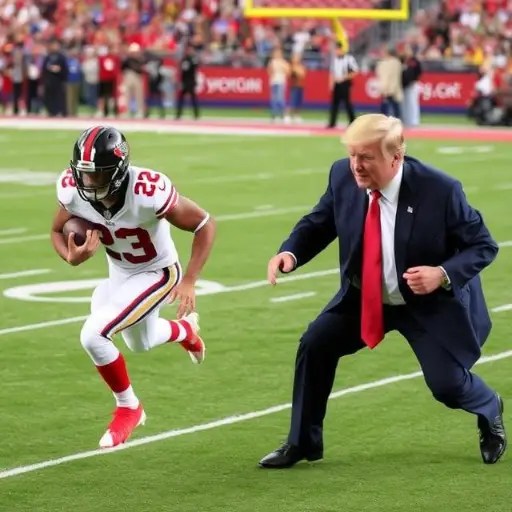
President Donald Trump has criticized the NFL’s new kickoff rules, calling them “sissy football” and labeling the format as “ridiculous” and “dangerous.” The league introduced the changes over the past two years to reduce injuries and increase the likelihood of returns. The new rules require players to line up closer together, which has decreased high-speed collisions and led to a significant drop in concussions.
The NFL’s decision to overhaul the kickoff was driven by safety concerns. Historical data showed that kickoffs accounted for a disproportionate number of injuries, particularly concussions. One analysis of the 2015 and 2016 seasons found that kickoffs, which made up only 6% of plays, accounted for 12% of concussions. Players were four times as likely to suffer a concussion on a kickoff compared to a run or pass play. After banning wedge blocks in 2018, the league saw a 38% decrease in concussion rates on the play. By 2023, concussions on kickoffs had dropped even further, with only eight occurring during the entire season.
Ahead of last season, the NFL adopted the “Dynamic Kickoff,” inspired by a similar system used in the XFL. This year, a small tweak further improved the return rate. Teams are now averaging 100.7 return yards per game, the highest in NFL history, while the rate of touchbacks has decreased significantly. The changes have also led to a 43% reduction in the concussion rate compared to the 2021-23 average, and there were the fewest lower extremity injuries on the play since at least 2018.
While the new rules have been effective in reducing injuries and increasing returns, they have also drawn criticism from some fans and figures like Trump, who find the format unappealing. However, the NFL appears satisfied with the results, achieving its goal of a safer and more dynamic kickoff. The league has also seen a decrease in the average speed of players on kickoff plays, which further supports the safety improvements.
Despite the success of the new rules, some casual fans and traditionalists still prefer the old-style kickoff, which is still used in college and high school football. The NFL continues to push for a safer, more engaging kickoff, even if it means some aesthetic compromises.
In addition to the safety benefits, the changes have also had a positive impact on the game’s flow and entertainment value. With more returns, fans are seeing more action and excitement during the opening plays of each game. The NFL has also seen a rise in the number of players specializing in kickoff returns, as the play has become more strategic and less predictable.
The evolution of the kickoff rules reflects a broader trend in professional sports toward prioritizing player safety while maintaining the integrity and excitement of the game. As the NFL continues to refine its approach, it remains a model for how rule changes can lead to both safety improvements and enhanced spectator experience.




 The Tower Post