Under mounting pressure from far‑right partners, Israel’s prime minister faces a historic — and explosive — decision.
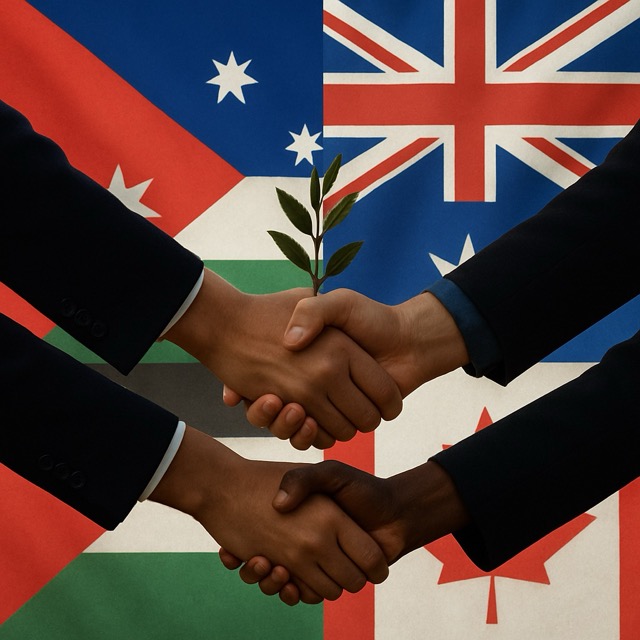
Jerusalem — For the first time since his 2020 flirtation with “applying sovereignty,” Prime Minister Benjamin Netanyahu again finds annexation of parts of the occupied West Bank at the center of Israeli politics. The trigger this time is external as much as domestic: a wave of recognitions of Palestinian statehood by Britain, Canada, Australia and Portugal, with France signaling it could follow. Inside his coalition, far‑right partners are urging a dramatic answer — formal annexation of swathes of the territory captured in 1967. Netanyahu hasn’t said yes. He hasn’t said no. And that ambiguity is now a policy in itself, with high stakes for Israel’s security, its alliances and the future of any two‑state horizon.
Pressure from within: Finance Minister Bezalel Smotrich this month unveiled a plan to annex as much as 82 percent of the West Bank, aiming for “maximum territory and minimum Palestinian population,” and National Security Minister Itamar Ben‑Gvir declared he would bring a proposal to the cabinet to “immediately apply sovereignty” in what Israeli officials call Judea and Samaria. Senior Likud figures have floated narrower steps, such as annexing settlement blocs and strategic corridors including the E1 area east of Jerusalem — a move that would split the northern and southern West Bank and ignite international blowback.
A diplomatic shockwave: The cascade of recognitions by Western allies has rattled Jerusalem. British Prime Minister Keir Starmer framed London’s move as a bid to revive a moribund peace process and set guardrails around Israeli actions in both Gaza and the West Bank. Netanyahu replied that such steps “reward terror,” and his coalition hawks cast recognitions as proof that Israel should solidify facts on the ground. European diplomats, in turn, have warned that any formal annexation would trigger penalties that go beyond the existing, narrower measures targeting violent settlers and settlement goods.
Washington’s pivotal role: As in 2020, the U.S. position remains decisive. With the Trump administration back in Washington and Secretary of State Marco Rubio signaling that the United States is reviewing options, Israeli officials have been probing how far — and how fast — they can go. Netanyahu is said to be weighing whether any annexation would jeopardize security coordination in the West Bank, strain Israel’s military bandwidth during the grinding Gaza war, and risk a rupture with moderate Arab states that have kept channels open despite public anger.
From de facto to de jure: Even without a formal declaration, Israel has expanded de facto control: authorizing thousands of new housing units, thickening outposts, and creating administrative structures that move civil authority from the military to political hands. Smotrich, who holds significant sway over the Civil Administration that governs the territory, has used that perch to accelerate planning and retroactive legalization. Annexation would convert that slow‑burn process into a legal earthquake — asserting Israeli sovereignty over land the international community still treats as occupied.
The coalition calculus: Netanyahu’s governing majority runs through Smotrich’s Religious Zionism and Ben‑Gvir’s Jewish Power parties. Both have threatened to bolt if the prime minister resists a historic move while Western capitals, in their view, box Israel in. But they differ on pace and scope: maximalists want most of Area C, while pragmatists inside Likud quietly argue for a narrower first step that could be sold as consolidating consensus blocs. Either way, any annexation bill would test the coalition’s cohesion and parliamentary math during a war that already stretches the army, the budget and the public’s patience.
Security risks — and flashpoints: Israeli security officials warn that annexation, especially around E1 or in the Jordan Valley, could set off a chain reaction: a collapse of Palestinian Authority cooperation, wider unrest in the West Bank’s dense cities, and a new front for Hamas and allied groups to exploit. It could also undermine Israel’s quiet understandings with Jordan, where the kingdom views any move east of Jerusalem as a direct strategic threat. Settler leaders insist the opposite — that clear sovereignty would stabilize the map and deter violence — but recent months have seen repeated friction between settlers and Palestinian villagers, and a steady rise in roadside attacks, shootings and army raids.
International penalties on the table: European officials are openly discussing options if Israel proceeds: restricting scientific and trade cooperation that extends into settlements; banning products originating beyond the 1967 lines; visa measures targeting violent actors; and support for U.N. legal processes that brand the occupation unlawful. Some capitals also raise the specter of recognizing a Palestinian state along the 1967 borders with explicit coordinates — a step intended to lock in a map before facts on the ground race ahead.
Business and legal reverberations: Major banks, tech firms and defense contractors are modeling exposure risks. An annexation could complicate export licenses, compliance regimes and investor mandates in Europe and parts of Asia. Inside Israel’s legal system, it would force thorny questions about land registration, residency status for Palestinians inside any annexed areas, and the jurisdiction of Israeli courts — issues the 2020 proposals largely sidestepped. Human rights groups argue annexation would formalize unequal systems that already operate side by side in the territory.
What Netanyahu wants — and fears: Those who have worked with the prime minister describe a leader calibrated to avoid irreversible decisions absent clear strategic cover from Washington. He prizes maneuvering room, and annexation reduces it. Yet he also knows his right‑wing base expects him to deliver after years of rhetorical commitment, and that holding the coalition together may require throwing them a bone — for example, annexing a narrow corridor or a handful of blocs while promising to revisit wider steps later. The danger for Netanyahu is that any step will be read as a precedent and a provocation.
Possible scenarios: In the coming weeks, three paths loom: First, a symbolic move — cabinet votes, a declarative Knesset resolution, and stepped‑up legal changes that deepen de facto control without a formal sovereignty act. Second, a partial annexation of selected areas such as E1, Ma’ale Adumim and Gush Etzion, designed to test international red lines while keeping U.S. support at least ambiguous. Third, a sweeping annexation of most of Area C, as Smotrich proposes — a step that would redefine Israel’s borders unilaterally and likely trigger the broadest backlash.
The Palestinian political vacuum: The Palestinian Authority remains weak, battered by a crisis of legitimacy and capacity after nearly two years of war in Gaza and relentless pressure in the West Bank. For many Palestinians, annexation would simply formalize a one‑state reality without equal rights — a conclusion that could recalibrate activism away from statehood diplomacy toward rights‑based strategies in international forums.
Regional stakes: The Abraham Accords with the United Arab Emirates, Bahrain and Morocco survived the Gaza war in skeletal form, but public opinion in those countries hardened. Arab diplomats warn that annexation would be a red line, complicating security cooperation and investment. Saudi officials, in particular, have signaled that any move would freeze even informal conversations about normalization for the foreseeable future.
What to watch: Keep an eye on four indicators: whether Washington signals tacit acceptance of a limited step; whether the Israeli security establishment publicly countermands the political momentum; whether Europe coordinates penalties that bite; and whether violence in the West Bank spikes or — improbably — subsides. Netanyahu has built a career on avoiding checkmate. The question now is whether his own partners will force him into a move from which there is no easy retreat.
Bottom line: Annexation may still be more threat than plan. But after the latest diplomatic shock and with his coalition pulling hard to the right, the cost of inaction is rising for Netanyahu — and so are the costs of acting. Either choice would reverberate far beyond the hills of the West Bank, reshaping Israel’s place in the world and the contours of a conflict that has resisted resolution for generations.



 The Tower Post