Long‑overdue recognitions by Israel’s key Western allies bolster the view that lasting peace requires a settlement addressing both peoples’ legitimate concerns
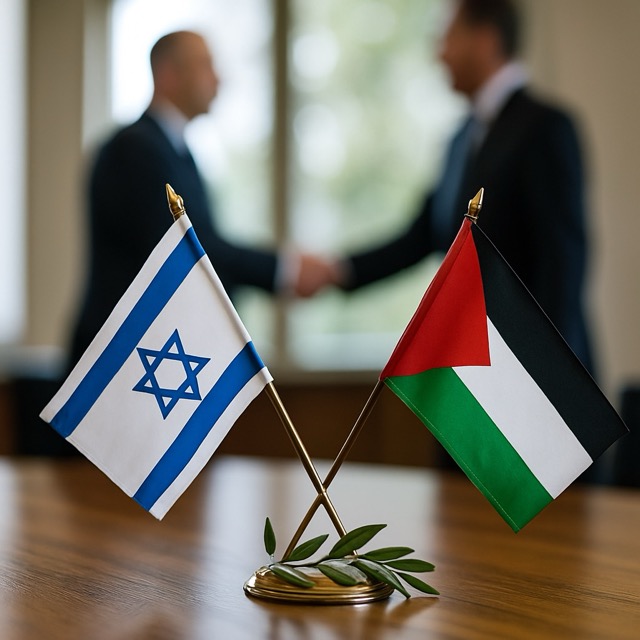
LONDON / NEW YORK — In the space of 48 hours, a wave of recognitions from some of Israel’s closest Western allies reshaped the diplomatic landscape of the Israeli–Palestinian conflict. The United Kingdom, Australia and Canada announced recognition of a Palestinian state on September 21–22, just as leaders gathered for the United Nations General Assembly. France followed on September 22, joined by several smaller European states. The moves, coming after coordinated recognitions by Ireland, Spain and Norway in May 2024, are intended to ‘keep alive’ the possibility of a negotiated two‑state outcome even as the war in Gaza grinds on and Israeli domestic politics harden. For advocates, recognition is not a prize for good behavior but a precondition for meaningful talks— a way to place both parties on a political footing where each has something real to lose.
Britain’s decision is the most symbolically consequential. London has long argued that recognition should come at the end of negotiations, not the start. Prime Minister Keir Starmer reversed that sequence, saying recognition aims to preserve the only viable framework for peace rather than to reward any actor on the ground. His government emphasized that recognition is based on the 1967 lines with mutually agreed land swaps; it raises Palestine’s diplomatic status in the UK and, in principle, clears the way for full bilateral relations. Israel’s government condemned the move as ‘one‑sided,’ while Palestinian officials called it overdue. Whether or not the UK can convert symbolism into leverage, the political signal to allies—and to Israelis and Palestinians themselves—is unmistakable: the two‑state formula is not dead yet.
Canberra and Ottawa moved in tandem, reflecting a convergence across the Anglosphere that would have been unthinkable a decade ago. Australian Prime Minister Anthony Albanese framed recognition as a humanitarian and strategic necessity after months of catastrophic civilian losses in Gaza, while Canada cast its step as part of a renewed push for a credible diplomatic horizon. Both governments underscored that recognition does not entail engagement with Hamas and is conditioned on governance reforms within the Palestinian Authority (PA): disarmament of militias, financial transparency and, ultimately, elections. Those caveats gesture toward the hard work ahead: building legitimate, unified Palestinian institutions capable of negotiating—and implementing— statehood.
France’s intervention adds European heft. President Emmanuel Macron’s announcement at the UN places Paris alongside Madrid, Dublin and Oslo, whose 2024 decision broke the ice inside the European Union. Paris’ recognition matters not only because of France’s weight in EU and Middle East diplomacy, but because it can lower the political cost for other hesitant European capitals. Belgium, Luxembourg and Malta have signaled similar intent; Germany and Italy are more cautious, wary of fracturing EU unity and skeptical of recognition’s immediate practical impact. Even where governments remain reluctant, the momentum itself creates new political facts: diplomats now have to explain why recognition should wait, rather than why it should happen.
Israel’s reaction has been sharp. Prime Minister Benjamin Netanyahu’s coalition argues that unilateral recognitions reward terrorism and will only entrench Hamas. Ministers have raised the specter of annexation in parts of the occupied West Bank, while warning partners against what they call external diktats. That posture resonates with a significant segment of Israeli public opinion, scarred by the October 7 attacks and skeptical that any Palestinian leadership can—or will—guarantee Israeli security. But it leaves Israel more isolated diplomatically, and it risks conflating recognition of a Palestinian state with legitimization of Hamas—two issues many Western capitals are explicitly trying to separate.
For Palestinians, recognition delivers a measure of political dignity at a time of immense suffering. It also introduces obligations. The PA, weakened by years of division, corruption allegations and a loss of public confidence, faces a dual task: consolidating authority in the West Bank and setting conditions for eventual re‑unification with Gaza under a non‑Hamas, technocratic administration capable of negotiating security arrangements with Israel and rebuilding the strip. Several of the new recognitions pair symbolism with sticks and carrots—conditioning aid and diplomatic support on administrative reforms and a credible roadmap to elections. That approach is controversial among Palestinians, but it reflects a broader international consensus that Palestinian governance must be part of the peace architecture, not an afterthought.
Do recognitions change realities on the ground? Not immediately. Israeli military operations in Gaza continue, hostages remain in captivity, and rockets still fly. In the West Bank, settlement expansion and settler violence inflame tensions; in Israel, families of hostages demand a deal even as far‑right ministers resist compromise. Recognition alone cannot disarm militias, halt rockets or stop bulldozers. Yet it can alter the incentive structure that shapes diplomacy. If enough of Israel’s core partners treat a Palestinian state as a present political fact—not merely a future aspiration—then the cost of openly opposing a negotiated partition rises, both for Jerusalem and for Ramallah.
There is precedent for symbolism shaping outcomes. In the 1990s, international recognition of Croatia and Bosnia preceded, and arguably hastened, complex negotiations that fixed borders and security arrangements. The analogy is far from perfect; the Israeli–Palestinian conflict has deeper existential layers and messier regional entanglements. Still, recognitions can catalyze concrete steps if they are paired with a sequenced diplomatic strategy: ceasefire‑for‑hostages, phased withdrawal, security guarantees, and a monitored reconstruction plan for Gaza that insulates funds from diversion to armed groups. Each rung on that ladder requires outside guarantors— and a credible political horizon that makes compromise defensible to both publics.
What might a workable sequence look like under the new diplomatic geometry? First, a U.S.‑backed ceasefire that exchanges hostages for prisoners and pauses major combat operations, coupled with strict monitoring to prevent re‑armament in Gaza. Second, a transitional administration for Gaza under a reformed PA, supported by Arab states and overseen by a multilateral committee that includes key Western donors. Third, a moratorium on Israeli settlement growth, matched by a crackdown on armed groups and incitement by Palestinian authorities. Fourth, a time‑bound track to final‑status talks—borders, security, Jerusalem and refugees—with outside guarantees. Recognition by close allies provides a scaffolding for this sequence by defining the end‑state and anchoring interim steps to it.
The United States remains the indispensable—if reluctant—arbiter. Washington has not recognized Palestinian statehood and remains divided domestically on timing and terms. Still, the chorus from London, Paris, Ottawa and Canberra (and from Madrid, Dublin and Oslo before them) gives the White House diplomatic cover to press both sides harder. It also reassures Arab partners that a two‑state horizon is not merely rhetorical. The risk is that recognition without follow‑through breeds cynicism; the opportunity is that coordinated recognition becomes the hinge for a new diplomacy in which incentives and pressure are more evenly distributed.
Critics warn that recognition decoupled from security realities is naïve. They are not wrong to insist on ironclad guarantees against future attacks on Israeli civilians. Proponents counter that withholding recognition until every security concern is eliminated creates a veto that no Palestinian leader can overcome. The emerging compromise—recognition now, conditioned implementation later—tries to square that circle. It tells Israelis their concerns will be operationalized in phased, verifiable steps; it tells Palestinians that their national rights are real and not perpetually deferred.
The politics of both societies will determine whether that bargain holds. In Israel, any path to two states runs through a bruising debate about settlements and security control in the Jordan Valley. Among Palestinians, legitimacy must be rebuilt from the bottom up, not manufactured by foreign communiqués. Neither side can be coerced into peace; both must be able to defend compromise to their own constituents. Recognition is a tool to make that defense imaginable.
In a conflict where every gesture is freighted with history, this moment’s significance lies less in what it changes today than in what it makes possible tomorrow. By recognizing Palestine now, several of Israel’s closest friends are saying that a sustainable peace requires addressing both peoples’ legitimate concerns at once— sovereignty and security, dignity and safety, self‑determination and mutual recognition. That is not a shortcut to peace. But it is a map. Whether leaders on both sides choose to follow it will determine whether this week’s headlines mark a fleeting flourish of symbolism—or the first hinge of a new political era.
“Recognition is not a reward; it’s the scaffolding for negotiations that both sides can live with.”



 The Tower Post