Innovations in Solar Technology and Efficiency Are Making Solar-Powered Cars and Trucks a Real Possibility
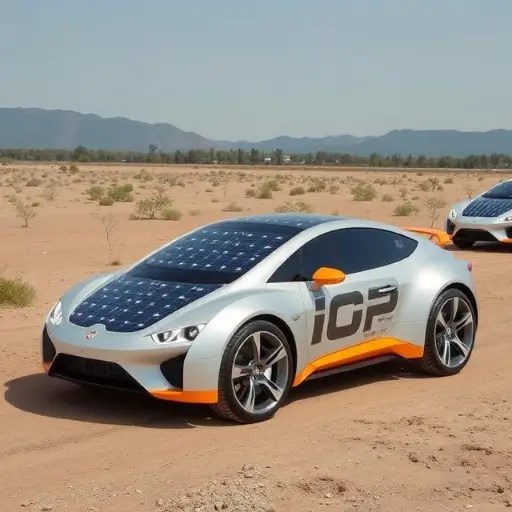
Solar-powered cars and trucks are on the cusp of becoming a reality, with several startups developing technologies that can power a significant portion of a driver’s daily mileage using only sunlight. Companies like Aptera Motors have created automotive-grade solar panels that conform to the unique curves of their vehicles, enabling them to generate between 15 and 40 miles of range per day from solar energy alone. These vehicles are designed to be efficient, with the key innovations lying in the improvements in EV efficiency and the new power electronics that transfer solar energy into batteries.
Aptera’s solar panels are engineered to withstand high-impact scenarios, such as highway speeds during hailstorms, using a durable, chemically treated glass that is both strong and flexible. The company has developed a robust glass skin for its solar panels, which wrap around the hood, roof, and long, tapering body of the tadpole-shaped, three-wheeled car. This design allows the panels to absorb impacts from above and the side. Aptera’s head of solar engineering, Reed Thurber, explains that the company takes hail-impact testing to higher velocities than recommended by industry standards, ensuring the panels can survive harsh conditions.
Aptera is also supplying its solar panels to Telo Trucks, a San Carlos, Calif.-based company that is set to launch a 500-horsepower electric mini truck next year. The truck, which is shorter than a Mini Cooper, has a bed size comparable to that of a Toyota Tacoma. Telo Trucks has received nearly 12,000 preorders for its vehicles, which are priced at just over $41,000 each. In about one in four orders, customers opt for solar panels, which can be built into the vehicle’s roof and bed cover at a surcharge of $1,500 and $2,700, respectively. These panels can provide an additional 15 to 30 miles of range per day to the truck’s 350-mile range.
Meanwhile, Polydrops, based in Glendale, Calif., is using Aptera’s panels on an all-electric camping trailer that is already being shipped to select customers. This demonstrates the versatility of solar technology beyond just cars and trucks.
In sunny environments like downtown Las Vegas, where sunlight is reflected off glass buildings onto every surface of the vehicle, these solar panels can provide up to 40 miles of range per day. In northern climates during winter, the range drops to around 15 miles per day. Despite the efficiency of these vehicles, they come with trade-offs, such as limited seating and a design that classifies them as motorcycles rather than traditional cars.
DartSolar is also entering the market with aftermarket solar panels designed to add power to existing electric vehicles. The company’s CEO, Omid Sadeghpour, was inspired to develop these panels after noticing that his first EV sat in the sun much of the day. DartSolar’s panels, which are expected to be available by the end of the year, range in price from $1,000 for a small, 500-watt unit to $4,000 for a 2,000-watt one that folds out horizontally and expands lengthwise when a vehicle is parked. On a sunny day, the company’s midlevel, 1,000-watt system could add 10 to 20 miles of range to a parked Tesla Model 3.
Aftermarket panels have the advantage of low cost and repairability, Sadeghpour says—but customers will also have to buy a bulky electric converter, which costs around $1,000, and stow it in the trunk.
While these companies are still ramping up production, the technology required for efficient solar-powered vehicles is now widespread and affordable. Ronak Parikh, engineering director of the University of Michigan’s solar car team, notes that the batteries, motors, and solar panels necessary for efficient sun-powered cars are now accessible to a wide range of users, even allowing high school teams to participate in solar car races.
However, major automakers remain skeptical about the feasibility of integrating solar panels into their vehicles due to the challenges and costs involved. Jason Marks of Telo Trucks says that for companies aiming to maximize their margins, the software and hardware challenges of solar-panel integration can eat into profits. It would only happen if there were sufficient demand, he adds.
Despite these challenges, the potential for solar-powered mobility is growing. As early adopters begin to experience the benefits of solar-powered vehicles, the demand for roof-mounted solar panels could surge in the near future. The math that underpins solar integration doesn’t lie—today’s EVs are now efficient enough for integrated or roof-mounted panels to offset a meaningful portion of a typical driver’s daily mileage, especially in sunnier climes.
In a compact EV, you could drive 10 or 15 miles a day without ever plugging in. These vehicles have come a long way from the experimental solar-powered vehicles of the 1990s, which were little more than modified bicycles with shiny cowlings. Today, the technologies required for efficient sun-powered cars are widespread and affordable, and the future of solar-powered transportation looks brighter than ever.




 The Tower Post