With a restless left and fraying support in liberal London strongholds, Labour tests whether tighter Treasury messaging can steady the government’s narrative.
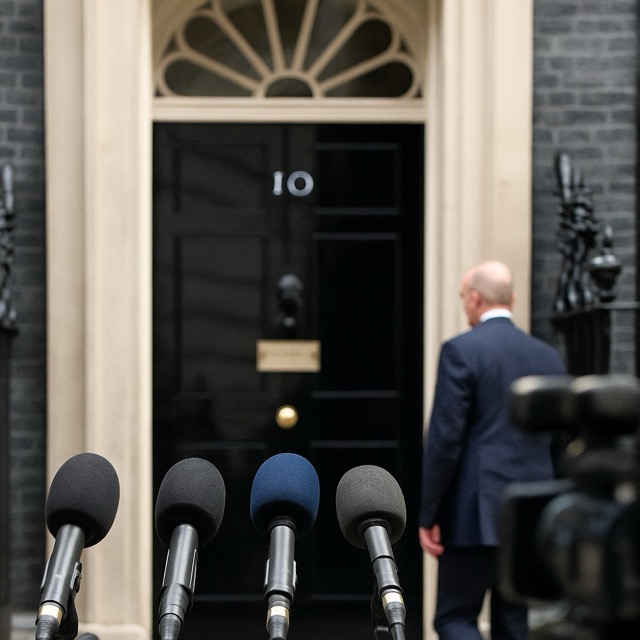
Downing Street’s press operation is entering another period of churn after Dave Pares, the prime minister’s official spokesperson, left No 10 to take up a communications role at the Treasury. His move follows the recent departure of James Lyons, one of Sir Keir Starmer’s most senior political media advisers, and comes as Labour grapples with sliding poll numbers and nervousness in its most reliably liberal, urban constituencies. The twin exits have sharpened questions at Westminster about whether Starmer can reassert control of the national narrative ahead of a difficult autumn budget and a volatile local-election year.
Pares, a seasoned government communicator with stints at the Treasury and in No 10 under previous administrations, is expected to lead messaging for Chancellor Rachel Reeves’s forthcoming budget package — a statement likely to be dominated by the hunt for revenue amid a stubborn fiscal shortfall. For Downing Street, the personnel change is being framed as a way to tighten the link between No 10 and the Treasury at a moment when economic credibility is the coin of the realm. For critics, it looks like another sign that the centre of gravity for political storytelling has shifted across Whitehall to the department that holds the purse strings.
Inside No 10, the immediate practical effect is a re‑wiring of daily operations: Tom Wells, an experienced media hand, has stepped in as acting spokesperson while the prime minister’s office reviews how it runs broadcast grid discipline, rapid rebuttal and stakeholder outreach. Those tasks have proved increasingly fraught as ministers attempt to tamp down speculation about tax rises and spending restraint while also selling flagship missions on growth, NHS recovery and crime reduction.
The stakes are significant because the story Labour is trying to tell about itself — as the adult in the room after years of political upheaval — has been blurred by competing pressures. Reform UK continues to bite into Labour’s working‑class support in parts of England and Wales, nudging the government rightward on migration and law‑and‑order rhetoric. That recalibration, however, is unsettling parts of Labour’s urban, university‑educated base, particularly in London boroughs that have served as the party’s ideological and organisational engines for a generation.
Several recent local contests and ward‑level swings point to a slow bleed in these liberal bastions — not a dramatic realignment, but enough to panic council leaders who fear that fragmented left opposition could chip away at Labour’s control. Green candidates have been posting stronger showings; independent and community‑based slates have sprung up around housing, transport and environmental rows; Liberal Democrats sense opportunities in inner‑city pockets where they haven’t been competitive in years. Add to that the aftershocks of foreign‑policy controversies and protest‑policing debates, and the picture is of a metropolitan coalition that feels taken for granted.
Starmer’s allies insist that what looks like drift is in fact a deliberate pivot to delivery. They argue that the government can withstand a few beltway‑style staffing headaches if the Reeves budget lands as a credible plan for growth and stability. In this telling, parachuting Pares into the Treasury is a pre‑emptive move to put broadcast and print operations on a war footing for budget week: clear lines to the chancellor, faster message discipline, a less cluttered grid. The goal is to own the airwaves when the numbers drop — and to avoid the vacuum that critics and rivals eagerly fill.
Yet media choreography, however slick, is not a substitute for political ballast. In Labour’s London heartlands, MPs and councillors describe a constellation of grievances that are more cultural than technocratic. Renters frustrated by the pace of planning reform; young parents angry about childcare costs; public‑sector workers demoralised by pay restraint; progressive activists alienated by the leadership’s cautious tone on civil liberties. Some are cross‑cutting and contradictory — which is precisely the point. The electoral genius of Labour’s 2024 coalition was that it held these tribes together under the promise of competence. Competence alone is a thinner glue in year two.
That is why the optics of No 10’s media machine matter. When the personnel carousel spins, it invites a narrative of fragility — especially compared with the image of discipline that Starmer cultivated in opposition. A senior Labour figure puts it this way: ‘Voters smell disorder. They don’t care who the spokesperson is, but they can tell when a government is firefighting.’ Restoring simplicity to the message — growth, security, fairness — requires not just a better script, but fewer competing authors.
There is also a Whitehall logic to shifting heft to the Treasury. For months, ministers have floated the idea of mission‑based budgeting, binding spending plans to delivery milestones and measurable outcomes. If Reeves is to sell a tough fiscal settlement as the necessary down payment for future investment — in rail, skills, clean energy — then communications must be fused with policy architecture from inception. That, in theory, is what Pares is being hired to do: ensure that what the Treasury designs is narratable outside the Beltway and digestible on broadcast breakfast sofas.
But a danger lurks in over‑Treasurification. British politics is littered with examples of governments that let the budget become the story, only to discover that fiscal rectitude reads as austerity in voters’ lives. In London, where high housing costs and stretched public services are daily realities, a message that over‑indexes on discipline can sound like denial. Labour strategists talk privately about the need for visible wins in the capital that signal progressive momentum — on affordable homes, cleaner streets, safer cycling — while avoiding the impression of hand‑wringing managerialism.
So what would it take to stabilise Labour’s urban coalition? Three things stand out. First, clearer price‑tags on the benefits of reform: if planning changes are supposed to unlock 300,000 homes nationally, what does that mean on a specific London street? Second, a sharper social contract for renters, students and precarious workers whose patience is not infinite. Third, a tone shift that acknowledges dissent on the left without caricaturing it as fringe. That may mean elevating surrogates outside No 10 — trusted city leaders, backbenchers and civil-society voices — who can sell trade‑offs in their own idiom.
None of this is to say that personnel moves are cosmetic. The identity of the spokesperson matters in a 24‑hour information ecosystem that punishes hesitation. Pares is known for calm briefings and a low‑drama style; those qualities could be valuable at the Treasury, where an errant line can move markets. But the test for No 10 is whether this latest reshuffle is the last for a while — a moment of consolidation rather than a prelude to another reset.
In the end, the risk for Starmer is not that he lacks a story to tell, but that too many versions are being told at once. A government elected on competence must now persuade its most values‑driven supporters that competence will deliver change they recognise. That case will not be made in the lobby alone. It will be made in neighbourhoods that powered Labour to office and could, if neglected, begin to look elsewhere. A leaner, clearer media machine is a start. What follows will decide whether the party’s urban heartlands remain Labour red — or shade into an unpredictable mosaic of greens, yellows and independents.




 The Tower Post