Dutch state-owned grid operator moves to shore up capital and reset valuation as Germany reconsiders a strategic minority stake
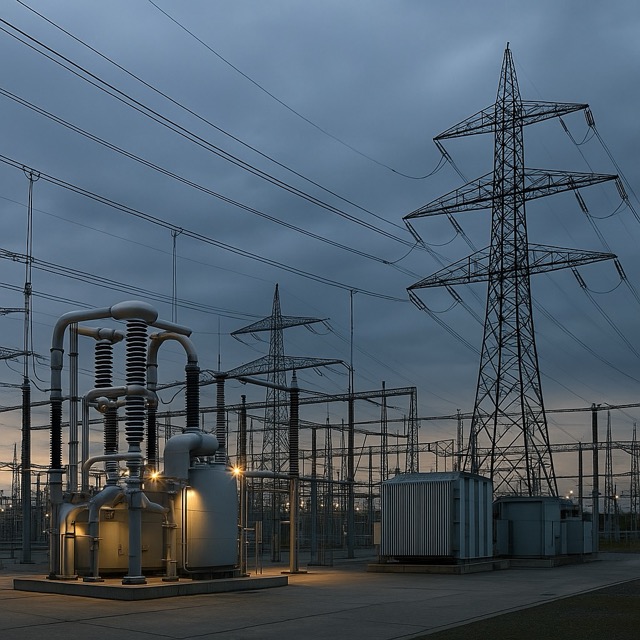
Dutch state-owned power grid operator TenneT’s German subsidiary is preparing to raise as much as €10 billion through a private placement that could serve as a prelude to a future sale of a strategic stake to the German government, according to people familiar with the plans. The capital raise, which market participants say implies a roughly €40 billion enterprise value, is designed to shore up the balance sheet ahead of a multi‑year surge in spending on high‑voltage lines and offshore connections that are central to Europe’s energy transition.
The move comes after months of deliberations in The Hague over how to finance the expansion needs of TenneT’s cross‑border system while reducing the budgetary burden on Dutch taxpayers. Officials have debated two pathways for TenneT Germany—selling a minority stake to cornerstone investors such as sovereign wealth funds and large pensions, or launching a partial initial public offering. The private route has now moved to the front of the queue, people briefed on the discussions said, with the Netherlands expected to retain a controlling interest and governance rights while opening the door to institutional backers with long investment horizons.
Among the names in the frame, according to bankers and advisers, are Norway’s sovereign wealth fund (Norges Bank Investment Management), at least one large Dutch pension investor, and an Asian sovereign fund. While allocations and ticket sizes remain fluid, the anchor group is expected to supply the majority of the equity raise. A second wave of infrastructure investors could follow once regulatory milestones are met and a clearer glide path for returns is articulated.
Berlin, for its part, has revived interest in acquiring a minority position—discussed around 25%—in TenneT’s German operations. The idea has been intermittently on the table since a proposed full transfer to Germany’s state development bank KfW unraveled last year over valuation and funding mechanics. Under the current thinking, officials in Chancellor Friedrich Merz’s coalition are weighing whether to match the terms offered to private investors in the placement or to negotiate a parallel buy‑in that would come after the capital increase sets a reference valuation.
TenneT Germany operates more than 14,000 kilometers of high‑voltage lines and is the country’s largest transmission system operator by area. Its network underpins Germany’s ambitions to integrate rapidly expanding wind and solar capacity, move power from the breezy north to industrial centers in the south, and maintain system stability as conventional baseload capacity recedes. The company’s investment plan runs into the tens of billions over the next decade as it builds out new onshore corridors, reinforces grid nodes, and connects a fleet of offshore wind hubs in the North Sea.
The funding challenge is two‑pronged: equity to absorb rising leverage and provide headroom for additional regulated debt, and a predictable regulatory framework that allows for timely cost recovery. People involved in the talks said the private placement is intended to accomplish both—by broadening the investor base beyond a single sovereign owner and by sending a market signal about the long‑term economics of regulated grid assets in Europe.
Valuation has been the sticking point. Dutch and German negotiators have sought a level that reflects the scale, complexity, and risk of the German build‑out without over‑promising on future returns that depend on regulatory approvals and execution timelines. A valuation anchor around €40 billion including debt has circulated among advisers, according to multiple people, with the Dutch state expected to hold roughly 55% after the raise. That would leave room for both private investors and a potential German state entry while preserving Dutch control—a politically salient point in The Hague.
For Berlin, a minority stake confers strategic influence over a critical asset without assuming full balance‑sheet responsibility. It would also align with Germany’s broader push to accelerate grid expansion to relieve bottlenecks that have driven up redispatch costs and contributed to price spreads between regions. The Federal Network Agency (Bundesnetzagentur) has pressed operators to accelerate projects and reduce permitting friction, while lawmakers explore mechanisms to de‑risk megaprojects and crowd in private capital.
Market practitioners view the transaction as part of a wider pivot in European energy infrastructure finance. With sovereign budgets constrained and decarbonization deadlines looming, grid companies are experimenting with hybrid capital structures, asset rotations, and targeted equity partnerships. Private placements to a small club of long‑term investors can be quicker than IPOs, avoid market window risk, and come with governance arrangements tailored to regulated assets.
Still, there are non‑trivial risks. Cost inflation in cables, transformers, and high‑voltage equipment has moderated from its 2022‑2023 peak but remains elevated. Supply chains for HVDC converter stations and specialized vessels are tight. Local opposition to new corridors can slow timelines, and the synchronization of offshore wind build‑outs with onshore landing points remains a complex choreography. Each of these variables can affect allowed returns, capex phasing, and ultimately equity needs.
TenneT and the Dutch finance ministry have declined to comment publicly on the latest plans. However, recent signals suggest momentum. Earlier this month, Dutch media reported that the government had decided in principle to pursue a minority sale in the German unit via private placement. People familiar with the process said that the choice reflected both market receptivity among large sovereign investors and a desire to lock in funding certainty ahead of the next wave of offshore connections.
If Berlin does join as a minority investor, it would likely do so under the same economic terms as the private anchors, according to people close to the talks. That approach would help reconcile prior disagreements over valuation while acknowledging Germany’s strategic interest in the asset. It could also pave the way for future collaboration on cross‑border interconnectors and coordinated planning for North Sea offshore hubs, where Dutch and German interests increasingly overlap.
Bankers say proceeds from the placement would be staged against project milestones, with scope to scale the raise depending on the final mix of investors. Some of the capital could be earmarked to de‑risk near‑term projects and to pre‑fund HVDC manufacturing slots, a tactic other European TSOs have adopted to secure delivery windows in a crowded supply pipeline.
Regulatory context will be critical for investor appetite. In Germany, the incentive‑based regulation of transmission system operators centers on a weighted average cost of capital calibrated by the Bundesnetzagentur. Recent adjustments to reflect higher funding costs have supported balance sheets, but investors will scrutinize how future reviews capture inflation, technology risk, and the system‑wide benefits of meshed offshore grids. In the Netherlands, policy makers are similarly weighing how to sustain the build‑out without pushing excessive cost onto households and industry.
Infrastructure specialists note that TenneT’s asset base offers features prized by long‑horizon investors: monopoly‑like concessions, regulated returns, high visibility on multi‑year capex, and significant barriers to entry. At the same time, execution risk on mega‑projects and political sensitivity around energy bills place a premium on conservative structuring. The presence of heavyweight sovereign and pension anchors is seen as providing credibility and discipline to the investment case.
Timing remains flexible. People involved said documentation for the placement could be prepared well before year‑end, with a closing targeted in 2026 to coincide with permitting milestones and supply‑chain commitments. That horizon would also give Berlin time to complete its internal assessment of whether and how to participate. Should market conditions deteriorate, advisers say the IPO route remains a viable fallback, with preparatory work already advanced enough to pivot quickly if needed.
Beyond the boardrooms, the stakes are tangible. Germany’s grid constraints have forced expensive redispatch and curtailment, weighing on consumer bills and industrial competitiveness. Faster build‑out of north‑south corridors and offshore links is a prerequisite for electrifying heavy industry and integrating surging renewable output. In that context, the TenneT deal is less a financial curiosity than a test of Europe’s ability to mobilize capital at the scale and speed the energy transition demands.
Investors, policy makers, and consumers will all be watching how the next steps unfold: terms for anchors, any role for Berlin, and the regulatory guardrails that shape returns. If the placement lands as outlined—and if a German minority buy‑in follows—it could offer a template for sharing the burden of energy‑transition infrastructure between states and institutional capital, while preserving public oversight of critical networks.
For now, all parties are keeping counsel in public. But the contours are clear: a large, club‑style equity raise; a potential German state on‑ramp; and a race against time to build the hardware of decarbonization. What happens next will reverberate well beyond the control rooms of a single grid operator.
Reporting draws on public disclosures and media reports, including the Financial Times and Reuters coverage on September 23–24, 2025; details remain subject to final negotiations among the Dutch state, prospective anchor investors, and the German government.



 The Tower Post