A New Era of Opulence in Airline Terminals
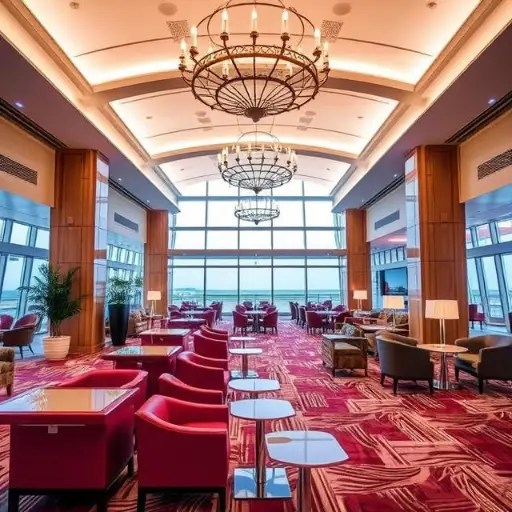
At New York’s JFK International Airport, Terminal 4 has become a battleground in the growing war for airport-lounge supremacy. Airlines and credit-card companies are transforming terminals into opulent spaces, offering everything from speakeasy-style bars and gourmet tastings to spa-like showers and private security lanes. These upgrades are part of a broader trend where exclusive lounges are driving loyalty and enticing customers to pay hundreds of dollars annually for high-fee credit cards.
Once characterized by “lamp farms” and basic amenities, modern airport lounges now aim to deliver a resort-like experience. Capital One, for instance, recently opened its largest lounge yet at 13,500 square feet in JFK’s Terminal 4, offering personalized samples and on-site bagel baking. Delta Air Lines has also expanded its presence with a 39,000-square-foot Delta One lounge featuring aromatherapy treatments, a private terrace overlooking the tarmac, and a brasserie serving three-course meals.
The competition is fierce, with airlines and financial institutions vying for space in airports. In Phoenix, a retrofitted Airstream trailer serves as a food truck in the Chase Sapphire Lounge, while in Seattle, airports are building upwards to accommodate growing lounge demand. The Amex Sidecar lounge in Las Vegas plans to serve signature drinks and gourmet small plates to fliers not planning to stay more than an hour or so.
Delta Air Lines, which moved all its JFK operations to Terminal 4 a few years ago, has two Sky Clubs there and is continuing to expand its presence. Last year, it opened its first 39,000-square-foot Delta One lounge, reserved for long-haul business class passengers. The lounge includes a private security lane, a terrace with a retractable roof, and aromatherapy treatments.
Chase Sapphire, a partnership between JPMorgan Chase and Etihad Airways, has a lounge in Terminal 4 with specialty cocktails and showers. Amex’s Centurion Lounge boasts a barista coffee bar, a tucked-away, dark-paneled cocktail bar, and a dedicated space for families. These lounges are not just for frequent fliers with top-tier airline status or people flying in first or business class—newer designs cater to a broader demographic, including younger travelers and families.
The surge in lounge access has also driven up card sign-ups. When Delta announced plans to build a lounge at the Kansas City airport in 2022, it saw a spike in co-brand new accounts. Once the lounge opened, card sign-ups climbed even more. JetBlue Airways is building its first lounges in New York and Boston, while Southwest Airlines, once a bastion of single-class flying, is considering building lounges to attract premium customers.
In recent years, credit-card companies have started opening lounges to lure big spenders to their own premium cards. These cards—like the Chase Sapphire Reserve, the Capital One Venture X, and the American Express Platinum card—offer travel perks that aren’t limited to a single airline. Amex built its first U.S. Centurion Lounge in Las Vegas in 2013 and now has 30 of them across the country.
As demand for lounge access grows, airports are finding creative ways to expand. Dallas Fort Worth International Airport has used a mezzanine floor to accommodate growing lounge space, while Seattle-Tacoma International Airport has built upwards, persuading dining and retail tenants to shift some storage space to build out a second story for an Amex lounge.
With little room to expand outward, airports are hitting up against a ceiling when it comes to space for lounges. The Port of Seattle’s Commissioner Sam Cho noted the challenge of accommodating the growing demand for premium lounge experiences. Yet, the lounge building boom is far from over, with American Airlines opening a new flagship business-class lounge in Philadelphia and announcing plans for a new one in Charlotte.
For travelers, the value of lounge access is clear. Henry Yu, a frequent flyer, keeps three cards in his wallet to ensure he can always get into a lounge on his roughly two dozen trips a year. “Being able to have lounge access is huge,” he said. “I’m not at a crowded gate or have to overpay for water or snacks.”
As the industry continues to innovate, the airport lounge has become more than just a place to wait—it’s a destination in its own right, offering a glimpse of luxury in the sky.



 The Tower Post