After a sudden U‑turn praising Kyiv’s chances “with the help of the EU,” European officials fear Washington is setting them an impossible mission—and a political fall guy.

PARIS/BRUSSELS—European officials spent this week trying to decode a striking shift by U.S. President Donald Trump: after months of hinting that Kyiv should strike a deal with Moscow, he abruptly declared on social media that Ukraine could “fight and WIN” back all its territory—“with the help of the European Union.”
The line landed with a thud in EU capitals. In public, leaders welcomed the rhetoric. In private, many read it as a cleverly positioned boomerang: if Ukraine falters militarily or runs short of cash, Trump can say Europe failed to do the job he assigned it. Senior diplomats from three EU countries used the same word to describe the strategy—“outsourcing”—and worried that the United States was edging away from leadership while keeping veto power over escalation.
The announcement came on the margins of the United Nations General Assembly, after Trump met Ukrainian President Volodymyr Zelenskyy and adopted markedly more bullish language about Kyiv’s prospects. The rhetorical U‑turn sparked immediate reactions across Europe. Some, including EU foreign policy chief Kaja Kallas, tried to see opportunity in the moment, praising the “strong statements” and the convergence on a basic end-state—Ukraine’s territorial integrity. Others warned that what sounded like encouragement also sounded like a pre‑emptive alibi.
“There’s a risk of being set an impossible mission,” said an official from an EU member state on NATO’s eastern flank. “If the U.S. constrains deliveries, slows approvals, or re-focuses resources elsewhere, and then tells the world Ukraine could have won ‘with EU help,’ where does the blame go when the front doesn’t move?”
For months, European governments have braced for volatility in Washington. The United States remains the indispensable arsenal for Ukraine’s high-end needs—from air defense interceptors and artillery ammunition to long-range strike enablers and battlefield surveillance. Even when Europeans write the cheques, much of the kit is American-made or requires U.S. export approval. That is why the shift in tone, without a matching policy architecture in Washington, rings hollow to many EU interlocutors.
Yet the pivot lands amid an unmistakable European effort to shoulder more of the load. In recent weeks, the European Commission and member states have floated a new “reparations loan” concept—potentially up to €130 billion—backed by cash balances generated by immobilized Russian sovereign assets held in Europe. The instrument would be designed so that repayment by Ukraine occurs only after Russia pays war reparations in a future settlement. The plan, still at a technical stage, underscores the scale of Europe’s financial commitment even as it navigates legal red lines to avoid outright confiscation of Russian state property.
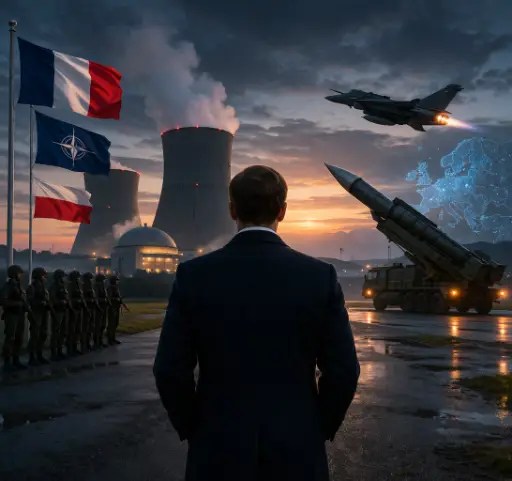
Berlin, Paris and several Nordic and Baltic capitals have also pushed fresh packages of air defenses, artillery shells and industrial co‑production. NATO allies have devised new mechanisms to route funding from European treasuries to replenish U.S. stockpiles drawn down for Ukraine—an attempt to keep American kit flowing even when U.S. budget politics turn choppy. But officials caution that money alone cannot conjure Patriot missiles, NASAMS launchers or 155mm shells overnight; production lines have physical limits, and permissions can be revoked with a single phone call.
That fragility helps explain why Trump’s sentence structure mattered as much as its spirit. By framing victory as achievable “with the help of the EU,” European officials fear he has created a political escape hatch: Europe becomes the protagonist of any success, and the scapegoat for any failure. The Kremlin appeared to hear the same thing, dismissing Trump’s comments while welcoming the implication that Europe—rather than the United States—was now the main counterparty. Moscow’s message: if Washington is stepping back, Europe will tire and fracture before Russia does.
Ukraine greeted the remarks with guarded optimism, seeing potential to lock in a U.S. baseline while rallying further European funding. Kyiv has campaigned for months to fuse Western support into a multi‑year framework insulated from electoral cycles. Ukrainian officials also note that European armies are getting better at backfilling one another: Germany’s Patriot batteries have rotated to protect urban centers; France and Italy have coordinated SAMP/T air defense deliveries; and the Czech-led shell initiative has begun to push more ammunition to the front. The question is whether these efforts can scale fast enough to blunt Russia’s drones, glide bombs and artillery weight through the winter.
The politics are as tricky as the logistics. Trump has criticized European allies in high‑profile forums, urging them to do more and faster—messaging that resonates with parts of his domestic base. European leaders counter that they already shoulder enormous costs: energy diversification from Russian gas, sanctions that dent industrial competitiveness, and tens of billions in budgetary and military aid to Kyiv. They also point out that the strategic stakes—security of the EU’s eastern frontier and the credibility of the post‑Cold War order—are inseparable from U.S. interests. “European security without U.S. leadership is a contradiction in terms,” one veteran diplomat said. “We can carry more of the weight, but we cannot replace the architecture.”
Ideally, the new rhetoric would be followed by a joint transatlantic compact: a shared victory definition; synchronized redlines; a production surge in air defense, artillery and counter‑drone systems; and clear burden‑sharing rules. The realistic near‑term outcome may be messier. Brussels will likely advance the reparations‑loan vehicle, even as legal services and central bankers haggle over how to ring‑fence Russian assets. Member states will keep scraping inventories and advancing co‑production with Ukrainian industry—especially in drones and ammunition—while pressing Washington to keep approvals and resupplies steady. And the White House will continue to calibrate its stance between pressure on Europe and signaling to Moscow.
There is, too, a risk that rhetoric moves markets faster than policy can move munitions. If the expectation sets in that Europe now owns the outcome in Ukraine, financial markets could price greater exposure to EU budgets and defense industries. Energy planners could brace for new embargo debates. Domestic politics—already prickly on migration, cost‑of‑living and defense spending—could harden in several EU states as opposition parties ask why Europe is underwriting an open‑ended war largely with American weapons systems.
At the same time, the opportunity is real. Europe’s defense awakening is no longer hypothetical: procurement ministries are placing longer-term orders; joint projects are creeping from PowerPoint to production; and publics are more accepting of defense outlays than at any point in a generation. If Europe can convert Trump’s rhetorical nudge into a durable industrial ramp‑up—without losing U.S. political cover—it could both help Ukraine and reduce the continent’s dependency on U.S. surges.
For Ukraine, the only metric that matters is what arrives at the front and how quickly. Kyiv needs interceptors to keep the lights on, shells to hold the line in the east and south, and deeper stocks for its own long‑range strikes. If European treasuries and factories, supplemented by predictable U.S. permissions and resupplies, can deliver those at scale, then Trump’s sentence may end up less a trap than a test Europe can pass. If not, the blame game will write itself.
For now, European officials are preparing for both possibilities. They welcome the words, but they will judge the policy by the manifests leaving European ports and American depots this fall. As one senior EU official put it: “Hope is nice. Schedules, signatures and shipments are better.”
 The Tower Post