With ANO leading ahead of the October 3–4 vote, the former Czech prime minister’s comeback bid could reshape power dynamics in the EU
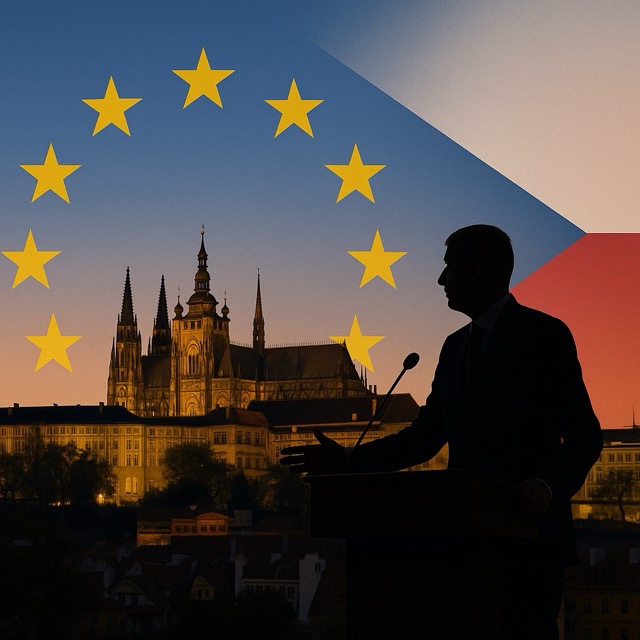
Prague — Former Czech prime minister Andrej Babiš is attempting a return to power with a sharper Eurosceptic edge and a promise to “protect Czech interests” at home and in Brussels. His ANO movement is leading national polls ahead of parliamentary elections on October 3–4, positioning the billionaire-turned-politician as the frontrunner to reclaim the premiership he lost in 2021. If he succeeds, his victory could immediately test the European Union’s cohesion on migration, climate policy and support for Ukraine — and tilt the balance of influence inside the bloc.
After four years in opposition, Babiš has recalibrated his pitch. The message is familiar — lower energy prices, a muscular approach to inflation and a businesslike promise to “run the state efficiently” — but the framing is now more openly skeptical of Brussels. On campaign stops he rails against what he calls “ideological” climate targets and EU-level migration rules, arguing they saddle Czech households and industry with costs set elsewhere. Advisers say a new Babiš government would seek opt-outs, slow-rolling and carve‑outs on green legislation, while tightening border management and opposing mandatory migrant redistribution.
At the same time, the former premier has cultivated ties with a growing constellation of hard- and soft‑Eurosceptic forces across the continent. In the European Parliament, ANO aligned this year with a more nationalist bloc, part of a broader realignment that has pulled Prague’s debate closer to Budapest and Bratislava on several headline issues. While Babiš insists he is a pragmatic dealmaker rather than an ideologue, his rhetoric has hardened: he now casts himself as a defender of Czech sovereignty who will not “take orders” from Brussels. The contrast with the current centre‑right coalition of Prime Minister Petr Fiala — aligned with Brussels on Ukraine, climate and fiscal policy — could hardly be starker.
Polls suggest the strategy is working. Surveys through September show ANO with a double‑digit lead over the governing Spolu alliance and a durable advantage in seat projections. No pollster expects an outright majority, but most scenarios put ANO in the lead position to form a government. That raises a practical question for Brussels and for Czech President Petr Pavel: how to handle a leader who will likely seek to dilute EU policies from within while remaining economically cautious and market‑aware at home.
The Brussels dilemma
For EU institutions, a Babiš return would be less a rupture than a slow‑motion stress test. The Commission has spent years refining conditionality tools, from rule‑of‑law linkages to funds oversight. With Hungary’s Viktor Orbán and Slovakia’s Robert Fico already complicating consensus on Ukraine and migration, another skeptical voice in the Council would strengthen a blocking minority on sensitive dossiers — especially if aligned tactically with Rome on parts of the Green Deal. Even if Babiš avoids Orbán‑style brinkmanship, the arithmetic of EU decision‑making would get harder.
Consider Ukraine. The outgoing government has been among Kyiv’s practical supporters, hosting training and backing ammunition initiatives. Babiš has criticized “blank‑cheque” military aid and signalled he would prioritize domestic needs over long‑term pledges. Officials in Prague and Brussels expect any Babiš government to keep humanitarian and reconstruction channels open while subjecting military packages and EU‑level financing to closer scrutiny. That could foreshadow tougher negotiations over the EU budget top‑ups and Ukraine facility refunds in 2026.
On migration, Babiš is likely to resist burden‑sharing mechanisms and to stiffen Czech participation in the re‑designed asylum system. Expect him to join a coalition of states arguing for stronger external border enforcement, expanded returns and more flexible solidarity contributions in place of relocations. On climate, ANO has campaigned against measures it says punish Czech industry — notably ETS extensions and combustion‑engine phase‑out timelines — and will push for transitional allowances and sectoral exemptions.
Coalition calculus in Prague
The first constraint on any Babiš agenda is arithmetic. Even a strong first place would force ANO into coalition talks — potentially with smaller centrist or conservative partners wary of radical breaks with EU policy. Freedom and Direct Democracy (SPD), a far‑right party that advocates referendums on EU and NATO membership, would be an arithmetically tempting but politically costly partner for ANO, complicating relations with the president and Brussels alike. Conversely, a tie‑up with more moderate parties could temper the government’s stance on Ukraine, media regulation and judicial reforms, at the price of policy concessions elsewhere.
Any coalition deal will unfold under the watch of President Petr Pavel, the retired general who has signalled he will scrutinize ministerial nominees for security risks and conflicts of interest. While the Czech president’s formal powers are limited, the appointment sequence — and Pavel’s determination to ensure a “pro‑constitutional, pro‑alliance” cabinet — could lengthen negotiations and filter out the most controversial figures.
Markets and money
Investors appear unruffled by the prospect of a Babiš comeback, pricing him as a populist who ultimately governs with an eye to fiscal credibility and Czech industry. Expect noisy fights with Brussels but technocratic continuity in the Finance and Industry portfolios. ANO has promised to keep inflation in check, cut red tape and shield households from energy volatility, financed in part by windfall taxes and spending reprioritization. Budget hawks warn that mixing generous welfare promises with lower taxes will force hard choices by spring 2026, particularly if growth underperforms.
EU funds are the second constraint. The Czech Republic is a net beneficiary and relies on cohesion and recovery cash for infrastructure and digitalization. Clashes with the Commission — whether over media law, public‑procurement rules or the energy transition — could slow disbursements. Babiš, who has long sparred with Brussels over conflicts of interest linked to his Agrofert conglomerate, would need to persuade both officials and markets that oversight will be watertight.
The European angle
The broader question is how a Babiš government would position Prague inside a re‑shaped right‑of‑centre landscape in Europe. The populist and nationalist right gained ground in the 2024 European elections and has since reorganized in Strasbourg. A Czech pivot towards a looser, transactional alignment with eurosceptic capitals could revive parts of the Visegrád dynamic, even as differences over Russia and industrial policy limit any formal bloc. In day‑to‑day Brussels trade‑offs, that would translate into a tougher Czech line in the Council and greater friction with the Commission on green regulation and migration implementation.
Yet Babiš’s pragmatism should not be underestimated. As prime minister from 2017 to 2021, he mixed confrontational messaging with incremental compromises, often striking late‑night deals once domestic political theatre had been satisfied. Officials who have worked with him expect similar choreography if he returns: loud objections, targeted carve‑outs and, more often than not, a signed conclusion at 3 a.m. The risk for Brussels is less an immediate breakdown than a steady erosion of momentum on files that require unanimity or broad political will.
What to watch next week
• Turnout and the countryside. ANO’s edge is widest outside Prague and among older voters. Strong rural turnout could widen its lead; a Prague surge might help the governing parties limit losses.
• Who courts whom. Early coalition statements — especially whether ANO rules in or out cooperation with SPD — will be the first test of Babiš’s governing intentions.
• Signals on Ukraine. The composition of the foreign‑policy team and the early tone toward Kyiv will set expectations in European capitals.
• First clash with Brussels. Expect a skirmish over climate or migration implementation in the opening weeks — an early case study in how hard Babiš intends to push.
Whether Babiš’s comeback amounts to a genuine pivot in Europe or a noisier version of pragmatic Czech politics will depend on coalition math and the economy’s glide path. But the implications are real: another skeptical, vote‑rich voice at the table would complicate Brussels arithmetic and embolden governments seeking to dilute common policies. For the moment, the EU’s message is the one it has sent to other difficult partners: we can work with you — but the rules, and the numbers, still matter.


 The Tower Post