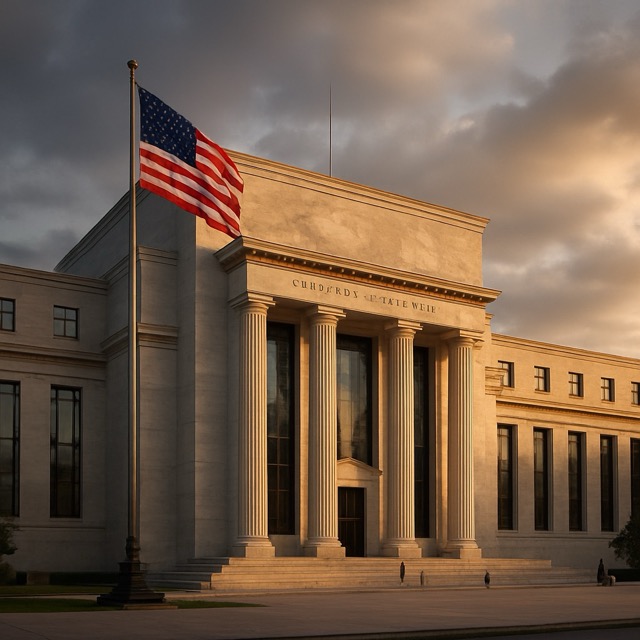
As fresh political attacks test the Fed in September 2025, the U.S. central bank’s autonomy looks robust in practice but soft in statute compared with the ECB and others.
For a generation, economists, market participants, and many elected officials have treated central bank independence as a cornerstone of sound policy. The premise is simple: when monetary policy is protected from day‑to‑day political pressure, inflation expectations stay anchored and growth is steadier. That is why the latest attacks on the Federal Reserve—public brow‑beatings over interest‑rate decisions, efforts to remake its Board, and even legal maneuvers to remove a sitting governor—have set off alarms. They pose an urgent question: just how independent is the Federal Reserve, really, and how does it stack up against its peers in Europe and Asia?
The timing of the debate is not academic. In mid‑September, the Fed cut its policy rate by a quarter point to support a softening labor market, resisting louder calls from the White House for steeper cuts. Chair Jerome Powell defended the decision as data‑driven and dismissed accusations of partisanship as “cheap shots.” Meanwhile, litigation over the attempted dismissal of Governor Lisa Cook has placed an unusual legal spotlight on the Fed’s institutional protections. Whatever the courts decide, the episode underscores a broader reality: the Fed’s practical independence is strong, but the legal armor around it is thinner—and easier to test—than that of some peers.
To gauge independence, scholars typically parse statutes into de jure indices, and observe practice through de facto behavior. On both fronts, the Fed looks middling. Recent updates to composite indices, such as the Central Bank Independence Extended (CBIE) series and new IMF measures, rank the European Central Bank (ECB) at or near the top, with sweeping treaty‑level protections against political influence and strict prohibitions on monetary financing. The Fed scores well on operational policy control and on limits to financing the Treasury, but it lags on structural safeguards: governors serve fixed terms yet are appointed by the president and confirmed by the Senate; the chair can be replaced as chair (though not removed as a governor) when a four‑year term ends; and the statutory basis for independence is found in ordinary legislation rather than constitutional treaties.
Europe’s design shows how far the legal perimeter can be pushed. Article 130 of the Treaty on the Functioning of the European Union bars the ECB and national central banks from seeking or taking instructions from governments or EU institutions. That wall is paired with accountability duties—regular testimony to the European Parliament, detailed minutes, and audit regimes—but the core monetary mandate remains insulated. The Bank of England, independent since 1997, sits between the ECB and the Fed on the spectrum: it enjoys operational autonomy to hit an inflation target set by the government, and is subject to robust parliamentary scrutiny and remit letters. Japan’s 1997 law reformed the Bank of Japan’s governance to respect policy autonomy, yet it preserves formal channels for government representatives to attend policy meetings and—even if rarely used—request a temporary postponement of a vote. India is a different case again: Section 7 of the RBI Act empowers the government, after consultation, to direct the central bank “in the public interest,” a clause that has occasionally been invoked in political tussles. China’s People’s Bank of China (PBoC) operates expressly under the State Council’s leadership; on paper, its statute nods to independent implementation of policy, but ultimate control sits within the government hierarchy.
What truly matters, however, is not just black‑letter law but behavior in crises. The modern record suggests the Fed’s de facto independence remains resilient. Since 2018, presidents have blasted interest‑rate decisions on social media and from podiums; yet FOMC outcomes have clustered around the Committee’s reading of the data. Even this September’s cut—controversial in size—was backed by a broad majority of policymakers, signaling unity amid pressure. By contrast, Europe’s political compact has mostly shielded the ECB from overt interference, though its aggressive balance‑sheet policies have regularly drawn legal challenges that test the edges of its mandate. In Tokyo, the BoJ’s long experiment with yield‑curve control was sustained as a joint endeavor with fiscal authorities, blurring the line between independence and coordination. In New Delhi, headline debates over reserves transfers and liquidity windows remind observers that statutory levers for government direction still exist.
Why defend independence so fiercely? The evidence base is broad, if not iron‑clad. Cross‑country studies associate higher legal independence with lower and less volatile inflation over time, particularly in emerging markets that once struggled with fiscal dominance. More recent work suggests that transparency—clear communication, published forecasts and minutes—complements independence by anchoring expectations. The lesson for 2025 is pragmatic: guardrails work best as a package. Strong statutes, credible mandates, and practiced norms together produce policy space that can withstand the political cycle.
Yet today’s threats are evolving. One is overt political pressure—the tweets, speeches and personnel battles aimed at steering near‑term decisions. Another is stealthier: fiscal dominance. With debt piles large and interest costs rising, governments face a structural temptation to lean on central banks to keep rates low or to engineer inflations that erode debt burdens. Legal insulation cannot fully neutralize that macro reality. The United States is not unique here, but the combination of polarized politics and elevated deficits makes the Fed’s tightrope especially narrow.
What would a sturdier U.S. framework look like? Several ideas recur in academic and policy circles: statutory clarification that Federal Reserve governors can only be removed for cause, with an express bar on policy‑related dismissals; term‑staggering safeguards that prevent a single administration from filling a super‑majority of Board seats at once; guardrails around emergency lending that preserve speed while limiting fiscal encroachment; and a more formalized remit letter or statement of objectives, agreed with Congress, that updates infrequently and buffers the Committee from short‑run pressures. None of these would put the Fed beyond accountability. On the contrary, stronger independence should be matched with deeper reporting—clearer ex‑post evaluations of forecast errors, stress‑testing of policy frameworks, and routine public reviews of unconventional tools.
How does the Fed stack up, in one line? Compared with peers, it enjoys strong operational control, robust transparency, and well‑developed norms; but it lacks the treaty‑level insulation of the ECB, the single‑target clarity of some inflation‑targeters, and the explicit statutory prohibitions that make political meddling harder even to attempt. That is why America’s central bank can feel simultaneously powerful and fragile: powerful in practice, fragile in its legal perimeter.
The current skirmish will pass. Courts will resolve personnel disputes. Interest‑rate paths will bend to the data. But the episode should prompt a sober refresh of the social contract that underpins monetary policy. Independence is not a technocratic privilege; it is a public good earned through competence, transparency, and humility. The Fed should keep doing its part. Congress—and, crucially, future administrations—should do theirs, too.
Sources (selected): European Central Bank, Article 130 TFEU materials; Bank of England Act and UK parliamentary reviews of independence; Bank of Japan Act (1997) provisions on government attendance and postponement requests; Reserve Bank of India Act Section 7 and related government communications; IMF and academic updates to central bank independence indices; recent reporting on Fed governance disputes and public statements by Chair Jerome Powell.



 The Tower Post