Why the price is so low, who gets control, and what the 120-day runway means for users, creators, and geopolitics
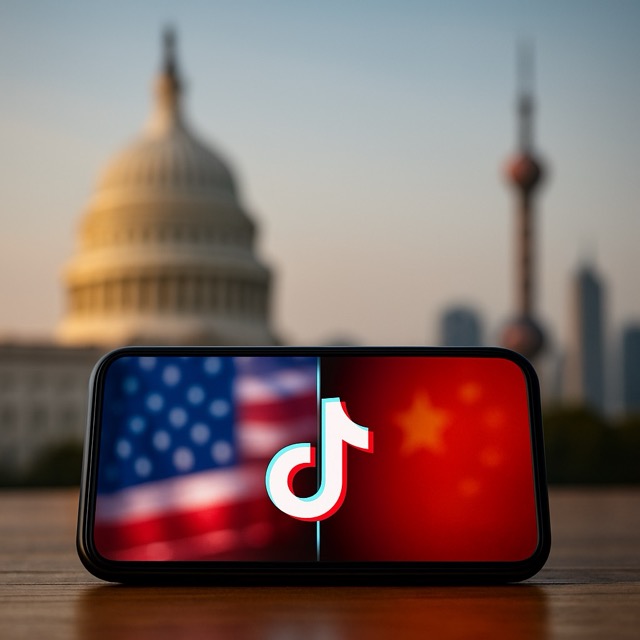
WASHINGTON — TikTok’s long-running collision course with Washington reached a decisive turn this week, as President Donald Trump signed an executive order clearing a path for a divestiture that would spin the app’s U.S. operations into a new company valued at about $14 billion. The figure, confirmed by Vice President JD Vance, stunned analysts who had penciled in far higher numbers, but the structure of the deal helps explain the discount: ByteDance, TikTok’s Beijing-based parent, is expected to walk away with roughly half of the profits from the U.S. business through an algorithm licensing fee and a minority equity stake, even as American investors assume majority ownership and governance.
The order, part of a broader strategy to keep Chinese-controlled technology out of critical U.S. data flows, gives the parties roughly 120 days to finalize the transaction and implement stringent data safeguards. Officials say the new joint venture will be incorporated in the United States, overseen by a board with national-security credentials, and ringfenced from ByteDance’s operational reach. According to people familiar with the talks, Oracle and Silver Lake are poised to anchor the investor consortium, joined by a roster of prominent U.S. backers including figures in the technology and media industries. The White House has emphasized that ByteDance’s ownership will be capped below 20 percent, keeping the new entity under American control.
One eye-catching wrinkle is overseas money with close ties to U.S. partners: Abu Dhabi’s MGX, chaired by Sheikh Tahnoon bin Zayed Al Nahyan, is expected to take a significant minority position and a board seat, adding Gulf sovereign capital to a cap table already heavy with Silicon Valley veterans. That global flavor underscores a paradox of the deal: even as Washington seeks to reduce exposure to Chinese influence, the United States is leaning on international pools of cash to secure a homegrown solution for a platform with 170 million American users.
The $14 billion price tag, which values TikTok U.S. at a fraction of what some investors once argued it could fetch, has fueled charges of a fire-sale bargain. At that figure, the implied price-to-sales multiple lands closer to a mature blue-chip than a high-growth social-media engine. Supporters of the deal counter that headline valuations are misleading, because the new company will shoulder heavy compliance costs, navigate uncertain advertising and commerce trends, and pay a recurring fee to license the core recommendation algorithm from ByteDance. In other words, the sticker price is only part of the economic reality.
Policy, not pure market logic, is steering this transaction. In 2024, Congress passed divest-or-ban legislation aimed squarely at foreign-adversary-controlled apps, placing TikTok under a regulatory sword. ByteDance sued, arguing the law violated the First Amendment and exceeded national-security authorities. The new order seeks to thread the needle: preserve TikTok’s presence in the U.S. while erecting hard barriers between American user data and any foreign influence. Congressional hawks, meanwhile, say they will haul the new leadership before oversight hearings to test whether promises about code separation, data localization, and algorithm independence hold up under scrutiny.
For creators and advertisers, the immediate question is continuity. The White House insists Americans will not see TikTok go dark, and the 120-day runway is designed to provide a clean handoff. Ad buyers say spending paused during the legal limbo could reaccelerate if the governance path is credible and stable. Still, the prospect of algorithm licensing raises practical questions: How is the code audited? Who can update it? Can the new company tune the system without ByteDance’s teams? If the answers are murky, creators may hedge their bets across YouTube Shorts, Instagram Reels, and emerging rivals, dulling the momentum TikTok has enjoyed in U.S. social video.
The deal architecture represents a studied compromise. U.S. investors would own and control more than 65 percent of the company, ByteDance less than 20 percent, with the remainder potentially held by international allies and existing stakeholders. The operational firewall is meant to address the government’s core concerns: that the Chinese state could pressure ByteDance to snoop on Americans or weaponize the algorithm for propaganda. By forcing corporate and technical separation—while still paying ByteDance for the algorithm’s use—Washington hopes to neutralize those risks without detonating a cultural phenomenon used daily by one in two Americans.
Skeptics call it a legal and technical tightrope. The law underpinning the split restricts any collaboration between ByteDance and the successor company, including on algorithm development, to prevent covert influence. Yet the business case hinges on ByteDance continuing to license that very algorithm to the U.S. spinout. The distinction—that licensing can be arms-length while collaboration is barred—may be tested quickly in court and in Congress. Enforcement will likely come down to the design of code repositories, access permissions, and audit trails that are robust enough to satisfy national security reviewers.
Geopolitically, the TikTok carve-out is a case study in managed de-risking, not full decoupling. Beijing has historically treated content recommendation technologies as controlled exports, and any tacit acceptance of this structure—Trump has cited personal assurances from China’s Xi Jinping—would be a notable concession amid broader tech friction. For China, allowing a U.S.-led consortium to operate TikTok domestically may be preferable to a ban that fractures the app’s global brand and bleeds value. For Washington, the arrangement claims a win on data sovereignty while avoiding a consumer backlash from an outright shutdown.
For all the political theater, the most durable effects may be industry-wide. If a licensed-algorithm model becomes a template, it could normalize a new category of cross-border IP relationships in which code stays home but its behavior is rented abroad under audit. That would mark a shift from the era of cloud-first, borderless platforms toward a patchwork of national operating companies bound by compliance contracts. Rivals would need to price geopolitical risk into their expansion plans, and investors would rethink how to value social-media assets that rely on foreign-controlled engines.
The operational to-do list is long. The new company must stand up U.S.-only data pipelines, security operations centers, and engineering teams; migrate or clone code bases into domestically controlled repositories; and renegotiate a thicket of music, creator, and advertising contracts under a fresh corporate entity. It must also reassure state attorneys general, federal agencies, and skeptical lawmakers that content moderation and recommendation practices will not be steered by foreign interests. Early missteps could trigger enforcement, spook advertisers, or invite copycat legislation at the state level.
Users, for their part, are likely to notice little in the near term. The For You feed will keep scrolling; trends will continue to churn. But subtle shifts could creep in as the new owners recalibrate policy to U.S. norms. Expect louder transparency reports, thicker data-access walls for employees, and more visible labeling around sponsored content and political material. Behind the scenes, risk committees and outside auditors will become as central to the product as creators and community managers.
Whether $14 billion proves prescient or preposterous will hinge on execution. If the governance structure holds and the U.S. business keeps compounding—through ads, shopping, and payments—the investor group will have captured a generational asset at a discount. If compliance drags and the algorithm becomes a political football, the company could sputter just as rivals close the gap. Either way, the TikTok split may become the template for how the United States polices foreign influence in consumer technology: not by smashing products, but by rewiring ownership, accountability, and code.
The next 120 days will show whether that wiring can carry the load. For now, Washington has found a way to keep TikTok’s lights on while bringing its most sensitive circuitry within reach of U.S. law.

 The Tower Post