A week of sightings and airport closures shows how quickly small unmanned aircraft can paralyze a highly connected region — and how far Europe still has to go on counter‑UAS
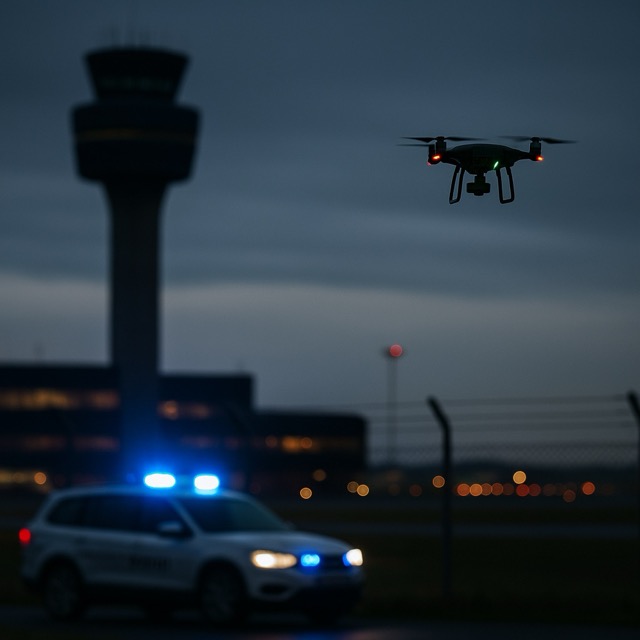
COPENHAGEN – Denmark spent the week scanning its skies. In the span of days, suspected drones were reported over Copenhagen Airport and later across Jutland at Aalborg, Esbjerg and Sønderborg, as well as above Skrydstrup Air Base — home to Denmark’s F‑16s and new F‑35s. At times, airports temporarily halted traffic; elsewhere, military sites shifted to heightened alert. No one has claimed responsibility and no damage has been confirmed. But the effect was unmistakable: a modern European country had to partially stop moving because of small unmanned aircraft, some possibly no larger than a seagull.
Officials called it a “hybrid attack,” even as attribution remains murky. The government weighed whether to consult NATO under Article 4 and quietly told allies it suspected a state actor was testing Denmark’s defenses, according to regional officials. Copenhagen Airport’s brief shutdown early in the week was followed by hours‑long disruption at Aalborg; other facilities reported sightings and precautionary restrictions. By mid‑week, police and air traffic authorities were fielding hundreds of public tips, a flood that mixed credible reports with misidentifications — including, memorably, a “shining star” that briefly prompted a closure at Billund before being ruled harmless. The confusion itself became part of the story.
For Prime Minister Mette Frederiksen’s government, the incidents landed at an awkward moment — just ahead of a high‑profile European summit in Copenhagen and amid an ongoing military‑spending ramp‑up. Defence Minister Troels Lund Poulsen conceded that Denmark lacks enough tools to detect, identify and defeat small drones in civilian airspace, calling the counter‑UAS challenge a “massive task.” The remark captured a wider European unease: if Denmark, with integrated civil‑military aviation and NATO’s backing, can be rattled by a handful of cheap flying devices, what does that say about the resilience of the continent’s airspace?
The vulnerabilities are structural. Europe’s air traffic management was built to keep track of aircraft that file flight plans and talk to controllers. Small drones don’t. They fly low, slow and often quiet, hugging terrain or skimming coastlines. Many are commercially available; others are hastily assembled. The sensors that watch the skies — primary radar, secondary radar, ADS‑B receivers — were not designed to reliably see plastic and carbon‑fiber devices with minimal radar cross‑section. When they do spot something, it can be hard to tell bird from balloon from quadcopter. The result is a dilemma: either ignore ambiguous returns and risk a safety incident, or over‑react and shut down precious infrastructure.
Denmark is a particularly sensitive target. It hosts critical energy and data corridors, from offshore wind farms and petroleum platforms in the North Sea to the Baltic gas pipelines and international fiber cables that crisscross nearby waters. Its airports double as military logistics hubs; Aalborg supports both civil traffic and NATO movements. That converging map of assets invites probing. Security services across Scandinavia and the Baltic have warned for years that Russia and other state actors blend espionage with harassment — what strategists brand “gray‑zone” tactics — using cheap kit and deniable operators to sow doubt and force costly responses.
The week’s events also highlighted the human factor. Once public alerts spiked, social feeds filled with lights in the sky; police encouraged citizens to photograph suspected drones to help investigators. Crowd‑sourced vigilance can help — but it also generates noise that can overwhelm. At Billund, the ‘drone’ that wasn’t turned out to be a celestial object. Separating signal from the swarm of sightings requires disciplined triage, interoperable databases, and clear thresholds for action. In Denmark, those processes are still maturing.
European policymakers have promised fixes before. After drone disruptions at London Gatwick in 2018 and repeated suspicious overflights of Norwegian energy sites in 2022, governments rolled out registries, geofencing rules, and “U‑space” corridors meant to integrate drones safely. Progress has been real in civilian management. But the hard part — defending critical sites from hostile or unknown drones — remains patchy and uneven. Some militaries field portable jammers, RF detectors and radar‑electro‑optical fusion towers. Others rely on ad hoc police units and vendor demos. Legal authorities to jam or kinetically defeat drones vary by country, and handoffs between airport operators, national police and defense forces are often slow.
Denmark’s tools mirror Europe’s gaps. RF direction‑finders and short‑range radars exist in limited numbers; mobile jamming vehicles can disrupt control links under tight legal controls but risk collateral interference with legitimate communications. Kinetic options — nets, birdshot, interceptor drones — are sparse around civilian hubs and raise safety concerns in congested airspace. And attribution technology is still immature: a sophisticated operator might use pre‑programmed waypoints, passive navigation and relay links to hide their tracks. Investigators may eventually sift logs, RF spectra and thermal imagery to piece together a trail, but that is post‑hoc forensics, not real‑time defense.
What would “good” look like? Aviation and security officials sketch a layered system: persistent low‑altitude surveillance around airports and critical sites; fused sensing that combines low‑power radar, RF sniffing, electro‑optical and acoustic cues; real‑time data sharing across police, air navigation service providers and militaries; and pre‑authorized effects — from geofencing overrides to calibrated jamming — under a single operational picture. Crucially, these layers must extend offshore. Denmark’s energy platforms, wind farms and seabed cables lie where jurisdictional seams multiply and response times stretch. Without maritime and coastal coverage, defenders are blind where it matters.
Cost and coordination are the twin obstacles. Buying sensors is one thing; paying for analysts, training, maintenance and 24/7 watch cells is another. Europe’s patchwork of national rules also complicates the task. In Brussels, talk of a continent‑wide “drone wall” has picked up again, and the European Commission has floated funding for counter‑UAS networks. But stitching together standards, procurement cycles and sovereignty concerns will take years. Meanwhile, adversaries can adapt in weeks.
For the airline industry, the risk calculus is shifting. Safety culture demands conservatism; if anything unusual appears near a runway, traffic stops. That gives a small attacker extraordinary leverage: a few drones can trigger cascading delays, diversions and security sweeps that cost millions. Insurers, airport operators and carriers will press for clearer playbooks and investments that reduce false alarms without blunting safety. Expect more rapid‑response counter‑UAS teams at major airports and tighter coordination with air navigation service providers to minimize disruption windows.
Denmark’s political debate is already sharpening. The opposition has accused the government of under‑investing in air defense while pouring billions into long‑range strike systems for NATO commitments. Ministers counter that counter‑UAS is precisely what they intend to scale, and they’ve welcomed offers from Sweden, France and other partners to loan equipment and expertise. Whether the public buys it may hinge on how quickly visible capability appears at airports and bases — and whether future incidents are handled with less drama and fewer closures.
If the week’s mystery drones were meant to test where Europe is weak, the test worked. The more troubling lesson is how little force is required. A handful of cheap platforms, flown by a skilled operator or even misperceived by a primed public, can stretch authorities, snarl travel, and erode confidence. Building real resilience will require the boring, expensive work of integration: common data standards, joint centers, routine exercises, and legal clarity about who can push the “off” button on a rogue quadcopter. Denmark has discovered, in bracing fashion, that this is not a niche problem for airports or the military. It’s now a whole‑of‑society job — and a massive one at that.
Sources:
Reuters; Le Monde; AP News; ABC News; Al Jazeera; The Guardian; France 24. Reporting through Sept. 27, 2025.



 The Tower Post